


Home Eyelash Extension Supplies Guide
W-Lashes vs. YY Lashes: Choosing the Right Texture Geometry

W-Lashes vs. YY Lashes: Choosing the Right Texture Geometry
In the rapidly evolving eyelash extension market—currently experiencing a significant compound annual growth rate according to Grand View Research—professional artists are moving beyond traditional 1:1 classic and handmade volume fans. The industry is shifting toward "specialized geometry" lashes, specifically W-lashes and YY-lashes. These pre-made structures are designed to solve the two most persistent challenges in a high-volume salon: maintaining technical precision while reducing application time.
As a professional lash artist or salon owner, your choice between these two geometries is not merely aesthetic. It is a technical decision that impacts adhesive performance, mechanical load on the natural lash, and long-term ocular health. This guide provides a deep dive into the structural engineering of W and YY lashes to help you optimize your service menu for 2025.

1. Structural Engineering: Defining W and YY Geometries
To choose the right tool, we must first understand the "architecture" of the fiber. Both W and YY lashes are technically "pre-made" fans, but their fiber alignment creates entirely different visual and mechanical outcomes.
The W-Lash Architecture (3D/4D/5D)
The W-lash is characterized by a multi-dimensional layering system. In a 3D W-lash, three fibers are joined at the base; however, unlike a traditional fan where fibers splay out in a flat horizontal plane, W-lashes often feature a vertical and horizontal offset. This creates a "spike" effect that adds immediate depth.
- Vertical Density: The arrangement allows for a "stacked" appearance, which is essential for creating the "Kim K" or "Wispy" look.
- Base Geometry: Typically features a narrow, pinched base that requires a perpendicular placement.
The YY-Lash Architecture (The Double-Y Cross)
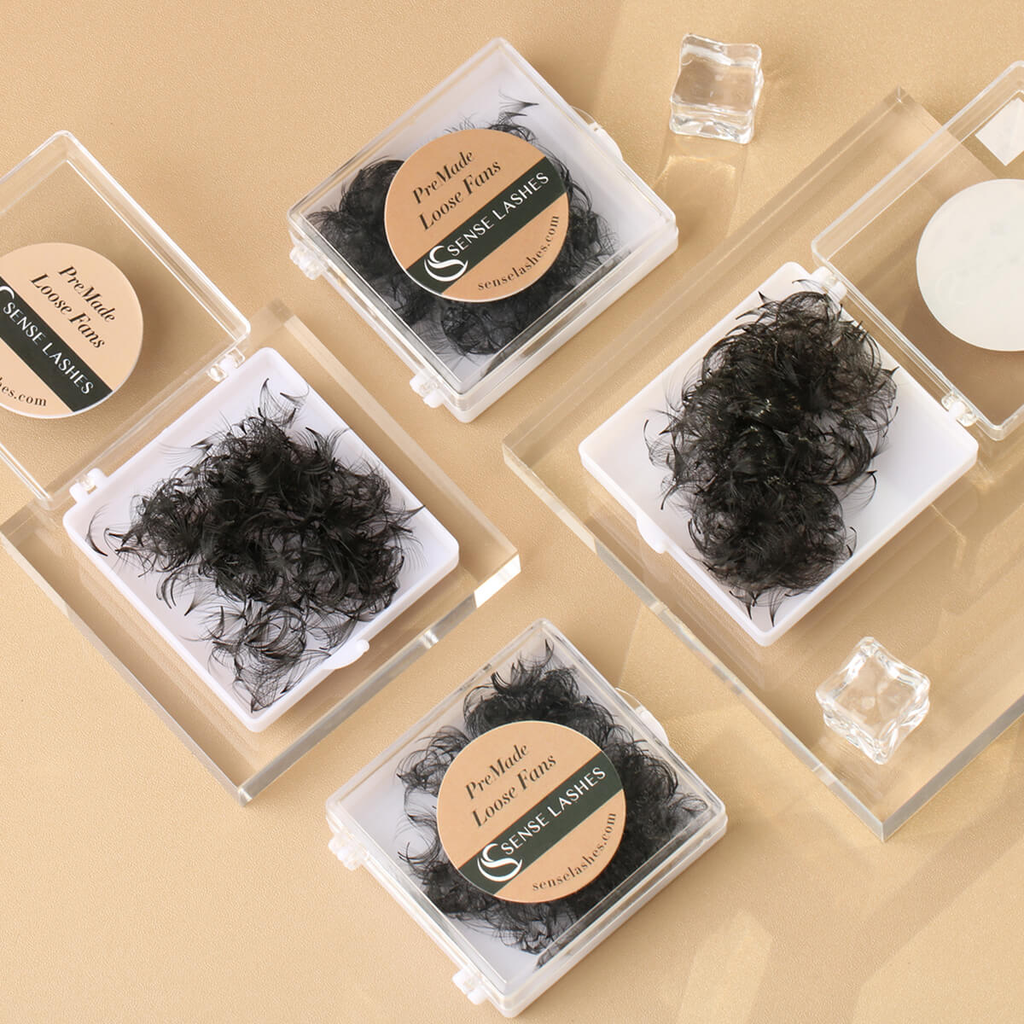
The YY-lash consists of four fibers that are "braided" or crossed to form two distinct "Y" shapes on a single base. This creates a flat, wide fan that provides horizontal coverage.
- Lateral Coverage: The YY geometry excels at filling gaps in the natural lash line because the fibers splay wider than a W-lash.
- The "Forgiving" Base: The YY-lash typically has a longer, flatter base, offering a larger bonding surface area which can be advantageous for beginners or when working with difficult natural lash angles.
Logic Summary: Geometric Modeling Our comparison of W vs. YY geometries is based on structural analysis of fiber tension and base surface area.
- Assumption 1: Standard cyanoacrylate adhesive with a viscosity of 20-30 cPs.
- Assumption 2: Natural lash diameter of 0.07mm (average healthy lash).
- Boundary Condition: These observations may vary if using ultra-low humidity adhesives or "mega-volume" 0.03mm fibers.
2. The Mechanics of the W-Lash: Vertical Density and the 'Wet Look'
In our experience managing high-traffic salons, W-lashes are the preferred choice for clients seeking "texture" rather than "fluff." Because the fibers in a product like the 0.07mm Cashmere Volume Wispy Eyelash Extensions are bundled closely, they mimic the appearance of a wet-look set without the artist having to manually "close" fans with primer.
Technical Placement Heuristics
A common mistake we see with W-lashes is an "angled" attachment. Because the W-lash has a multi-point top, any slight tilt at the base is magnified at the tips, leading to a "messy" lash line. To correct this, artists should ensure the base is perfectly flush with the natural lash. For clients with downward-facing natural lashes, consider Strategic Spike Placement to lift the eye's outer corners.
Weight Distribution and Safety
A 5D W-lash in 0.07mm diameter carries a significantly higher mechanical load than a 3D version. According to a 2024 study published in PubMed, mechanical damage to the hair follicle is a leading cause of traction alopecia in long-term lash wearers.
Pro Tip: If a client has fine or "baby" (anagen phase) lashes, we recommend switching to 0.03MM Cashmere Premium Mega Volume Eyelash Extensions. The 0.03mm diameter allows you to build density while keeping the total weight below the threshold of natural lash stress.

3. The Architecture of the YY Lash: Maximizing Bonding Surface
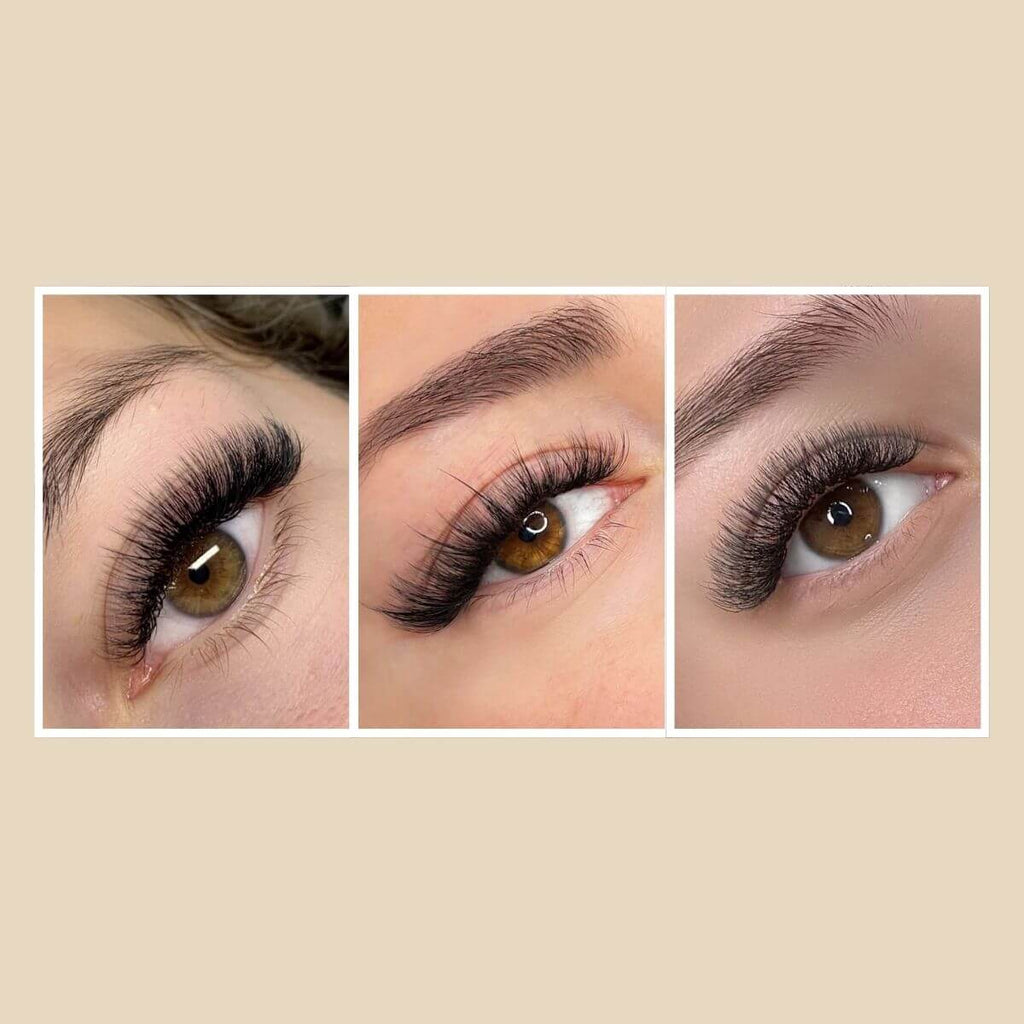
While the W-lash builds "up," the YY-lash builds "out." For clients with sparse natural lashes or large gaps, the YY-lash is the superior choice. The "criss-cross" design creates a mesh-like effect that obscures the lash line, providing a perceived fullness that classic lashes cannot achieve.
The Bonding Advantage
The primary technical benefit of the YY-lash is its long, straight base. This increases the contact area between the extension and the natural lash.
- Retention: Larger surface area = stronger chemical bond.
- Application Speed: The YY-lash is more "forgiving" of slight placement errors because the long base naturally aligns itself with the natural lash shaft.
If your clients desire more than the standard YY look, we recommend the 3D U Shaped Eyelash Extension or the 4D U Shaped Eyelash Extension. These "U-shaped" variations provide the same easy-bonding base as a YY but with higher fiber counts (3D or 4D) for a denser, fluffier finish.
Avoiding "Splayed" Tips
A frequent issue with YY lashes is the fibers splaying unevenly upon dipping into the adhesive. This usually occurs if the artist picks up the fan too quickly or uses an adhesive with too low a viscosity.
- The Heuristic: Gently run the base of the YY fan between your tweezers after pick-up to ensure fiber alignment before the dip.
4. Clinical Safety and Ocular Health: A Professional Mandate
Beyond the "look," professional lash artists must act as the first line of defense for eye health. The use of specialized geometries increases the surface area for potential bacterial accumulation and chemical exposure.
Preventing Blepharitis and Infection
Poor hygiene combined with the dense structure of W or YY lashes can lead to Blepharitis—an inflammation of the eyelids often caused by bacteria or Demodex mites. The Mayo Clinic identifies poor eyelid hygiene as a primary trigger.
We must educate clients that "water is not enough." The dense "mesh" created by YY lashes can trap oils and skin cells. Daily cleansing with a professional lash shampoo is non-negotiable. Furthermore, following CDC guidelines on sanitation by using disposable wands and sterilized tweezers for every client is the only way to prevent the spread of conjunctivitis.
Chemical Sensitivity and pH Balance
The adhesive used to bond these complex geometries often contains Ethyl Cyanoacrylate, which can cause allergic contact dermatitis in sensitive clients (PubMed Study).
Historically, lash glues were known to release formaldehyde and have acidic pH levels that could cause keratoconjunctivitis (Amano et al. 2012). Modern professional formulas, however, have evolved. When working with the larger bases of YY or W lashes, ensure your adhesive is pH-balanced and compliant with Health Canada’s cosmetic regulations to minimize fume irritation and chemical burns.
5. Technical Mapping Strategies for Specialized Geometry
To achieve a professional result, you cannot map W and YY lashes the same way you map classic sets. You must account for the "visual weight" of the geometry.
The 70/30 Hybrid Rule (Heuristic)
For a textured, modern set that isn't "too heavy," we often employ a 70/30 ratio:
- 70% YY Lashes: Used as the foundation to provide a dark, full lash line.
- 30% W Lashes: Used as "spikes" or accents to add vertical height and wispy texture.
Eye Shape Optimization
- Asian Monolid Clients: The 0.05mm YY-lash is highly effective here. It adds perceived fullness without the weight that could cause the lid to droop.
- Deep-Set Eyes: These require straighter curl bases to avoid the lashes hitting the brow bone. Use W-lashes in the center of the eye to create a "wet look" spike that brings the eye forward. For more on this, see Why Deep-Set Eyes Require Straighter Curl Bases.
- Mature Eyes: When managing skin laxity, the lightweight nature of 0.07mm W-lashes is safer than heavy classic lashes. Refer to our guide on Curl Mapping for Mature Eyes for specific curl transitions.

6. Total Cost of Ownership and Business Efficiency
For a salon owner, the decision to stock W or YY lashes is also a financial one. While the cost per tray may be higher than classic lashes, the "Total Cost of Ownership" (TCO) is often lower due to:
- Reduced Application Time: A full volume look can be achieved in "classic" timing (approx. 60-90 minutes), allowing for more client turnovers per day.
- Higher Retention Rates: Especially with YY lashes, the increased bonding surface reduces the frequency of "emergency" touch-ups.
- Simplified Inventory: Products like the 4D U Shaped Eyelash Extension offer nearly 2,000 fans per box, reducing the cost per fan to approximately $0.006.
Scenario Modeling: Efficiency Gain
We modeled a standard salon day comparing Handmade Volume vs. Specialized Geometry (YY/W).
| Parameter | Handmade Volume | Specialized Geometry (YY/W) | Unit | Rationale |
|---|---|---|---|---|
| Application Time | 150 | 90 | Minutes | Industry average for full sets |
| Sets per 8hr Day | 3 | 5 | Count | Based on 15-min turnover |
| Material Cost/Set | ~$2.00 | ~$4.50 | USD | Tray cost + adhesive |
| Revenue/Day ($150/set) | $450 | $750 | USD | Gross revenue |
| Daily Profit Potential | $444 | $727 | USD | Efficiency ROI |
Methodology Note: This model assumes a fixed hourly rate and a standard 15-minute sanitation window between clients. Actual results may vary based on artist speed and local market pricing.
Final Decision Framework
Choosing between W and YY lashes comes down to the specific goals of the set:
- Choose W-Lashes if: Your client wants a "Wet Look," "Kim K Wispy" style, or vertical height. These are best for clients with strong natural lashes who want a high-fashion, "spiky" aesthetic.
- Choose YY-Lashes if: Your client has gaps in their lash line, sparse natural lashes, or wants a soft, criss-cross "eyeliner" effect. These are the "safe bet" for maximum retention and horizontal coverage.
Regardless of the geometry you choose, prioritizing ocular health through proper sanitation and high-quality, compliant materials is what separates a technician from a professional artist. By mastering these specialized geometries, you position your salon as a leader in both technical innovation and client safety.
YMYL Disclaimer: This article is for informational purposes only and does not constitute professional medical or legal advice. Eyelash extension application involves risks of infection and chemical irritation. Always consult with a licensed healthcare professional regarding eye conditions and ensure compliance with local cosmetic regulations.
References
- CDC: Prevention of Conjunctivitis
- Mayo Clinic: Blepharitis Symptoms and Causes
- American Academy of Ophthalmology: Eyelash Extension Safety
- Health Canada: Cyanoacrylate Compliance Report 2023-2024
- PubMed: Ocular Disorders Caused by Eyelash Extensions (2024)
- Grand View Research: False Eyelashes Market Size & Share