


Home Eyelash Extension Supplies Guide
Mastering Directional Flow in Textured Hybrid Applications

Mastering Directional Flow in Textured Hybrid Applications
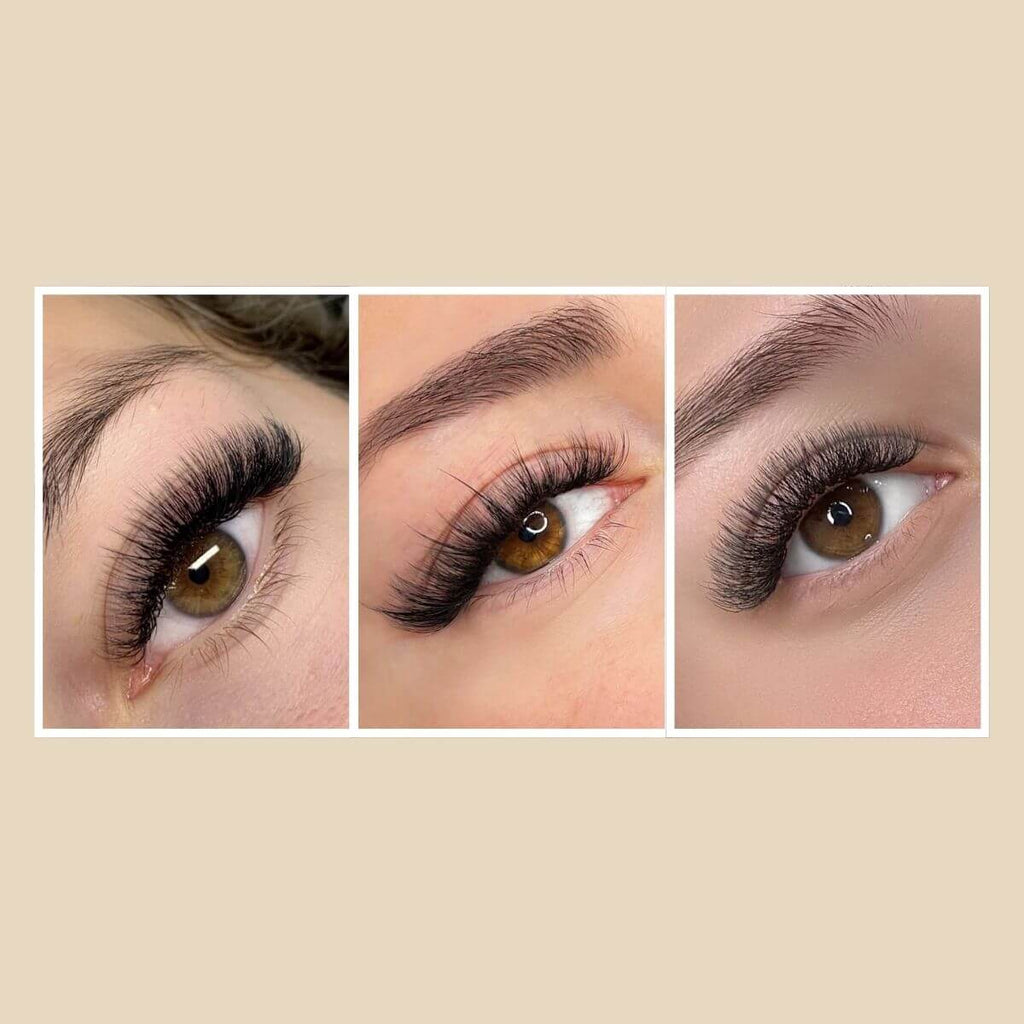
In the high-stakes world of professional lash artistry, the distinction between a standard hybrid set and a premium, multi-dimensional masterpiece lies in the intentional management of directional flow. For years, the industry focused primarily on length and curl. However, as client expectations evolve toward more "organic" and "textured" aesthetics, the technical focus has shifted to the geometry of placement.
Mastering directional flow involves more than just following a mapping sticker; it requires an expert understanding of how varying the application angles of classic and volume extensions can create visual depth. By strategically angling extensions, we can manipulate light and shadow, resulting in a set that appears fuller, more vibrant, and technically superior.
The Geometry of Texture: Angulation Specifications
A common mistake observed in high-volume salon settings is the "flat-plane" approach—applying every extension at a uniform 90-degree angle to the eyelid. While this creates neatness, it lacks the dynamic texture that defines modern hybrid artistry. To achieve a sophisticated "wispy" or "textured" look, we must differentiate the angles between the foundational classic lashes and the decorative volume fans.
The 55-65 Degree Anchor (Classics)
Classic extensions serve as the "skeleton" of a hybrid set. To provide structural support and a clear directional lead, these should be placed at a slightly steeper angle, typically between 55 and 65 degrees relative to the natural lash line. This steeper angle ensures that the longer "spikes" in a hybrid set remain upright and visible, preventing them from drooping into the volume layer.
The 35-45 Degree Flow (Volume Fans)
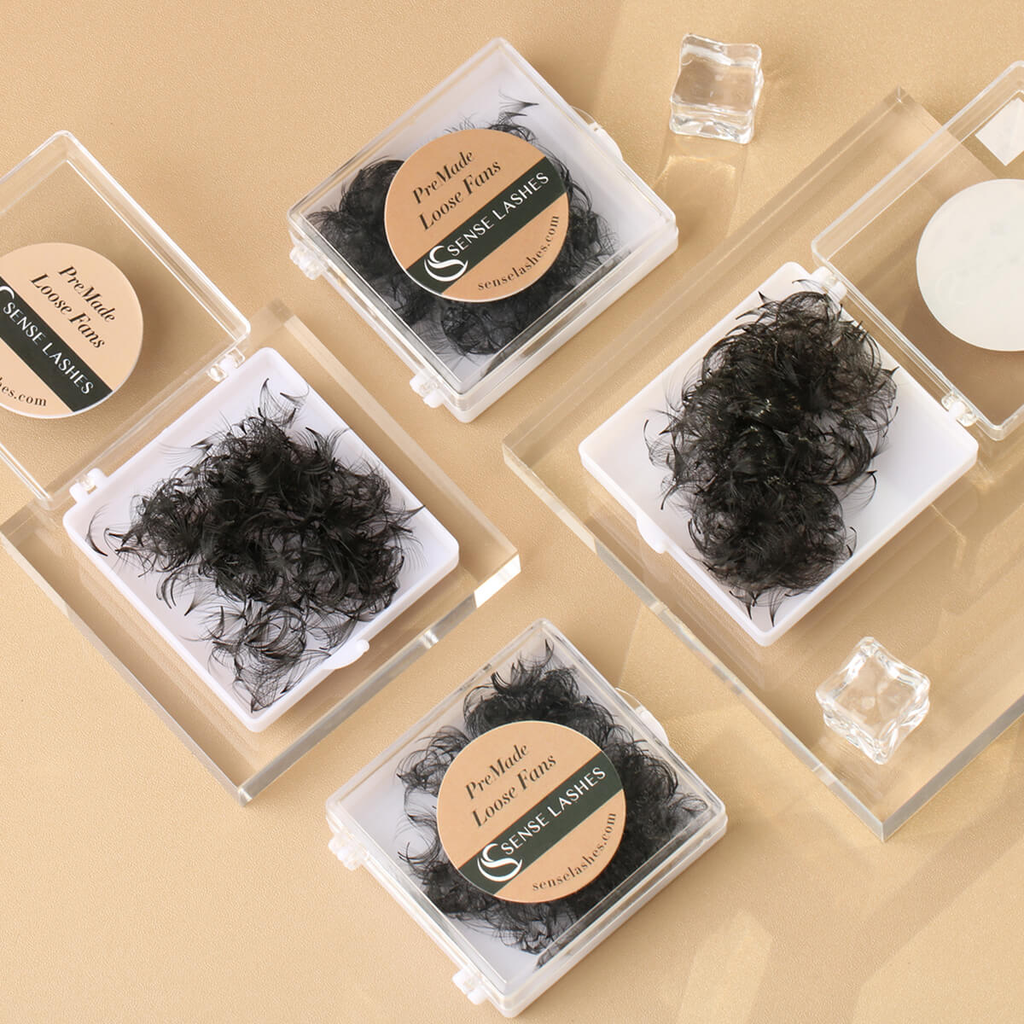
Volume fans, such as those created with 0.07MM Cashmere Premium Mega Volume Eyelash Extensions, are designed to provide density and "fluff." By applying these fans at a wider angle (35-45 degrees), we create a multi-directional flow that fills gaps horizontally while the classics provide verticality. This contrast is what the human eye perceives as "texture."
Logic Summary: Angulation Modeling
- Assumptions: Healthy natural lash growth; average lash cycle (Stage: Catagen/Telogen).
- Method: Scenario modeling based on typical "Wispy Kim K" mapping patterns.
- Boundary Conditions: This heuristic assumes the artist is working on the middle and top lash layers. Lower layer lashes may require flatter angles to avoid ocular interference.
| Extension Type | Recommended Angle | Primary Function | Ideal Product |
|---|---|---|---|
| Classic/Spike | 55–65° | Structural Definition | 0.15mm Flat or Classic |
| Volume Fan | 35–45° | Horizontal Coverage | 0.07MM Cashmere Premium Mega Volume Eyelash Extensions |
| YY Hybrid | 45–55° | Crisscross Texture | 0.05MM YY Volume Eyelash Extensions |

Adhesive Viscosity and Curing Dynamics
The ability to "lock" these specific angles depends entirely on your adhesive's performance. In our experience troubleshooting retention issues for professional artists, we've found that adhesive viscosity is the most overlooked variable in directional flow.
A high-performance adhesive like the 0.5-1 Second Diamond Eyelash Extension Glue is critical for textured sets. With a 0.5-1 second drying time, it allows the artist to place the extension at the precise desired angle and have it "freeze" instantly. Thicker, slower-drying glues often allow the extension to "lean" or "slump" before fully polymerizing, which destroys the intended directional flow.
Furthermore, environmental factors—specifically humidity—dictate how quickly these angles set. In high-humidity environments (above 60%), cyanoacrylate cures faster. Artists must reduce their angulation by approximately 5-10 degrees to account for the "snap-set" that can trap extensions at unnatural angles if not adjusted quickly.
Mapping Logic: The Ratio Heuristic
Achieving a seamless hybrid texture requires a calculated ratio of classic to volume lashes. This isn't a "one-size-fits-all" calculation; it must be adapted to the client's eye shape.
- Almond Eyes: Typically benefit from a 60/40 classic-to-volume ratio. This emphasizes the natural elegance of the shape while providing enough volume to soften the look.
- Hooded Eyes: Often require a 50/50 ratio. Because the hood of the eyelid can "hide" the base of the extensions, a higher volume density is needed to ensure the texture remains visible. For these clients, using 0.05MM Easy Fanning Eyelash Extensions can help build that necessary density quickly without adding excessive weight to the natural lash.
For those looking to bridge the gap between classic and volume with even more ease, the 0.05MM YY Volume Eyelash Extensions offer a unique crisscrossed look. The long base of the YY lash functions like a classic for easy attachment, while the split tips provide the multi-directional flow of a volume fan. This is a highly effective tool for blending C and D curls effectively and creating a textured finish with less manual fanning.
The Health Imperative: Beyond Aesthetics
As professional artists, our commitment to "directional flow" must never compromise ocular health. A set that is technically beautiful but biologically damaging is a failure of professional ethics.
Blepharitis Prevention
According to the Mayo Clinic, Blepharitis (eyelid inflammation) is frequently caused by bacteria buildup at the base of the lashes. When we create dense, textured hybrid sets, we inadvertently create more "pockets" where debris can collect. This makes the use of a professional lash shampoo non-negotiable. We must educate clients that "water is not enough"—proper hygiene is the only way to prevent the meibomian gland dysfunction often associated with long-term extension wear.
Ocular Surface and Microbiome
Recent 2024 studies published in PMC suggest that long-term extension wear can alter the ocular surface microbiome and tear film stability. This is why mastering row identification is vital; by ensuring extensions are not placed too close to the lid margin (maintaining a 0.5mm to 1mm gap), we protect the meibomian glands and the delicate balance of the tear film.
Chemical Safety and Compliance
The chemistry of our tools is just as important as our technique. A 2012 study by Amano et al. highlighted that early lash glues often released high levels of formaldehyde and had acidic pH levels, leading to keratoconjunctivitis. Modern professional standards have evolved significantly. For instance, the 0.5-1 Second Diamond Eyelash Extension Glue is formulated without latex or formaldehyde, prioritizing safety alongside performance.
Furthermore, global distributors must stay vigilant regarding compliance. A recent Health Canada Enforcement Report (2023-2024) showed high non-compliance rates for cyanoacrylate-based adhesives regarding labeling and chemical safety. Choosing a manufacturer that prioritizes these standards is the only way to ensure your inventory isn't seized at the border or, worse, causes harm to a client.

Troubleshooting Common Directional Pitfalls
Even the most experienced artists encounter "friction points" when mapping complex textures. Based on patterns from our technical support and professional community feedback, here are the most common "gotchas":
- The "Staircase" Effect: This occurs when transitions between different lengths or curls are too abrupt. To fix this, use multi-curl lash mapping to blend transitions across at least three natural lashes.
- Angle Droop: Often caused by using extensions that are too heavy for the natural lash. If a natural lash is in the early Anagen phase, it cannot support a heavy 0.15mm classic. Switching to a 0.05MM YY Volume Eyelash Extension provides the visual impact of a classic with a fraction of the weight, preserving the intended angle.
- Chemical Burns vs. Irritation: As noted in PubMed studies on Dermatitis, there is a critical difference between a fume-based irritation and a true allergic reaction to Ethyl Cyanoacrylate. If a client experiences immediate burning, it is likely a fume issue—often exacerbated by dry eye syndrome. If the reaction is delayed (48+ hours), it is likely a contact dermatitis issue, as detailed in recent late-2024 research.
Salon Sanitation: The Professional Standard
To truly embody E-E-A-T principles, your salon's hygiene protocols must be as precise as your directional flow. Following the CDC guidelines on conjunctivitis prevention, every professional should implement a strict Sanitation SOP:
- Disposable Consumables: Use fresh mascara wands, micro-brushes, and gel patches for every client.
- Sterilization: All non-disposable tools (tweezers) must be cleaned with hospital-grade disinfectant between every service.
- Client Screening: Use an AAO-aligned safety consent form to screen for pre-existing conditions like recent eye surgery or chronic infections.
Final Technical Takeaways
The mastery of directional flow is a journey from "applying lashes" to "sculpting eyes." By understanding the geometric requirements of 55-65 degree anchors and 35-45 degree flow, and by supporting those angles with high-performance adhesives like 0.5-1 Second Diamond Eyelash Extension Glue, you elevate your artistry to a level of technical precision that commands premium pricing.
Remember that texture is intentional. Whether you are fixing visual 'steps' in length transitions or integrating L-curls with round curls, every placement should serve the overall directional narrative.
For the professional artist, the goal is consistency. Each set should not only look stunning on day one but also remain healthy and comfortable until the client returns for their fill. This balance of aesthetics, chemistry, and biology is the hallmark of a premier lash technician.
YMYL Disclaimer: This article is for informational purposes only and does not constitute professional medical, legal, or financial advice. Eyelash extension application involves risks of infection, allergic reaction, and ocular injury. Always consult with a qualified healthcare professional regarding eye health concerns and ensure compliance with local licensing and safety regulations.
References
- CDC - Conjunctivitis Prevention
- Mayo Clinic - Blepharitis Symptoms and Causes
- American Academy of Ophthalmology (AAO) - Eyelash Extension Safety
- PubMed - Chemical injury from eyelash adhesives (Amano et al.)
- Health Canada - Cosmetic Regulations Compliance Report 2023-2024
- PMC - Ocular Surface Changes and Extension Wear (2024)