


2026 Natural Lash Extensions Buyer's Guide: How to Choose High-Quality Eyelash Extensions for a Natural Look That Lasts

Professional natural lash sets depend on PBT fiber selection, eye-shape alignment, manufacturer quality audits, and growth-cycle based retention strategies.
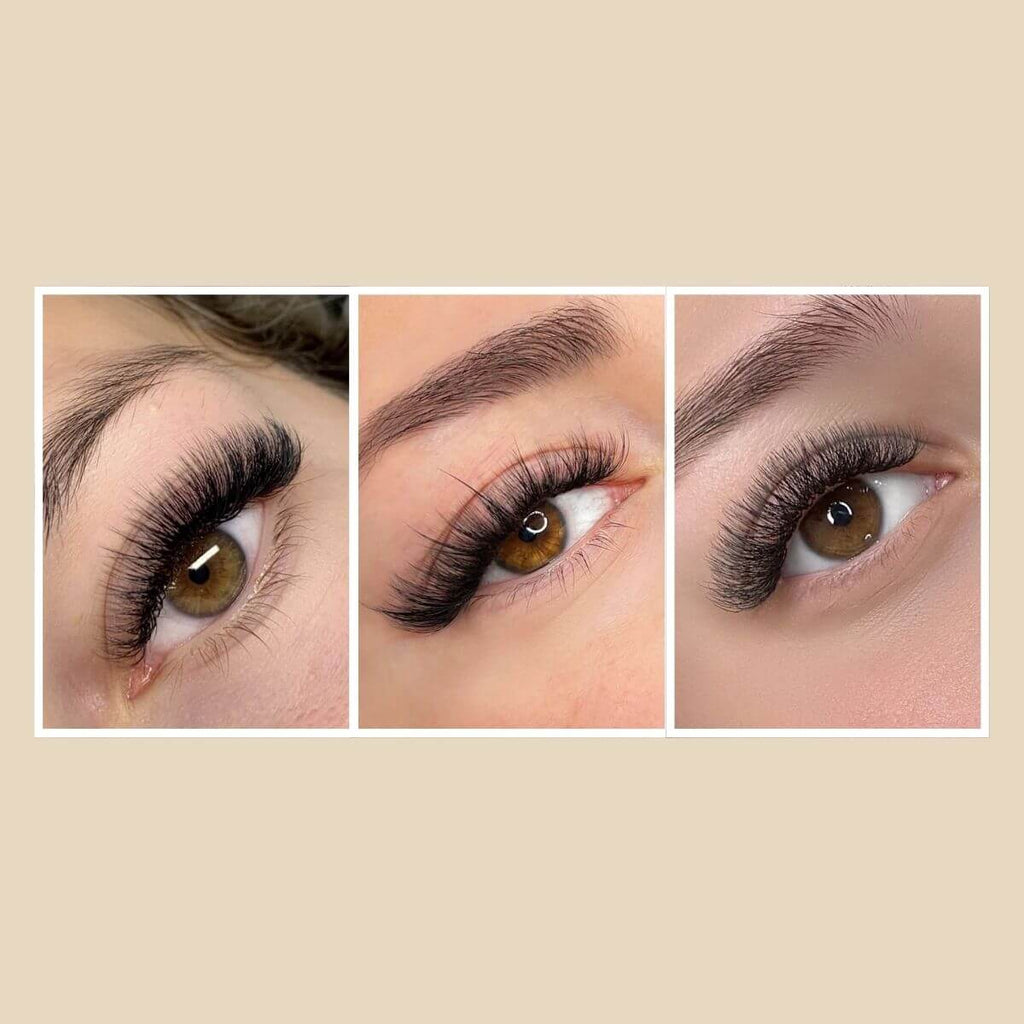
The natural look is the top client request in 2026, and delivering it consistently starts with what you put on your lash tray. Choosing the right extensions requires more than picking a soft curl. Material grade, fiber diameter, curl-to-eye-angle fit, and supplier reliability all determine whether your sets look seamless or artificial. This article covers material grade, fiber parameters, eye-shape matching, supplier evaluation, and retention strategy.
What Makes Natural-Looking Eyelash Extensions Actually Look Natural?
Natural results come from matching extensions to the eye, not just selecting a subtle style. Three factors determine whether a set reads as real: proportion, finish, and fiber quality.
The Length-to-Eye Ratio
The average natural lash measures 7–8mm, with most falling in the 7–10mm range. Anything consistently above 10mm is considered notably long for the majority of clients. Extensions that push well beyond this range shift the eye's visual balance and immediately look artificial.
A good rule: no extension should exceed the client's natural lash length by more than 2–3mm per zone.
Sheen and Color Accuracy
Glossy extensions reflect light differently from natural hair. They tend to read as plastic under daylight, especially in photos. Semi-matte fibers mimic the soft sheen of real lashes and hold color more accurately.
True black matters too. Low-grade fibers often carry a blue or gray tint visible under natural light. High-quality PBT holds a consistent, true black color without the blue or gray tint common in lower-grade fibers.
Fiber Softness and Movement
Extensions that feel stiff behave differently from natural lashes. Soft, flexible fibers move with the natural lash, creating a blended result that holds up to daily movement. Stiffness usually points to lower-grade raw material or insufficient processing.

What Are the Right Parameters for Natural Lash Extensions in 2026?
The skinimalist trend has shifted client demand toward lighter, finer, and more precise sets. Knowing the exact parameters gives you a consistent framework across all client types.
Diameter
| Style | Recommended Diameter | Best Use |
|---|---|---|
| Classic natural | 0.12–0.15mm | Strong, healthy natural lashes |
| Light hybrid | 0.07mm base | Mixed density or transitional clients |
| Soft volume | 0.03–0.07mm | Fine or sparse natural lashes |
For clients requesting a barely-there finish, 0.05mm volume fans in a 3D–5D configuration deliver fullness without visible weight.
Diameter selection should always account for natural lash condition. Overloading fine lashes with 0.15mm extensions causes premature shedding and long-term density loss.
Curl Type
| Curl | Effect | Best Client Profile |
|---|---|---|
| B curl | Minimal lift, closest to natural | Straight or slightly upward lashes |
| C curl | Moderate open-eye effect | Most common natural lash angle |
| CC curl | Slightly more lift than C | Downward-angled lashes needing definition |
| D curl | Noticeable curl, still wearable | Clients with hooded lids or strong downward growth |
B and C curl cover the majority of natural-look sets across most client profiles. CC and D curl can still deliver a natural result when the client's natural lash angle calls for it.

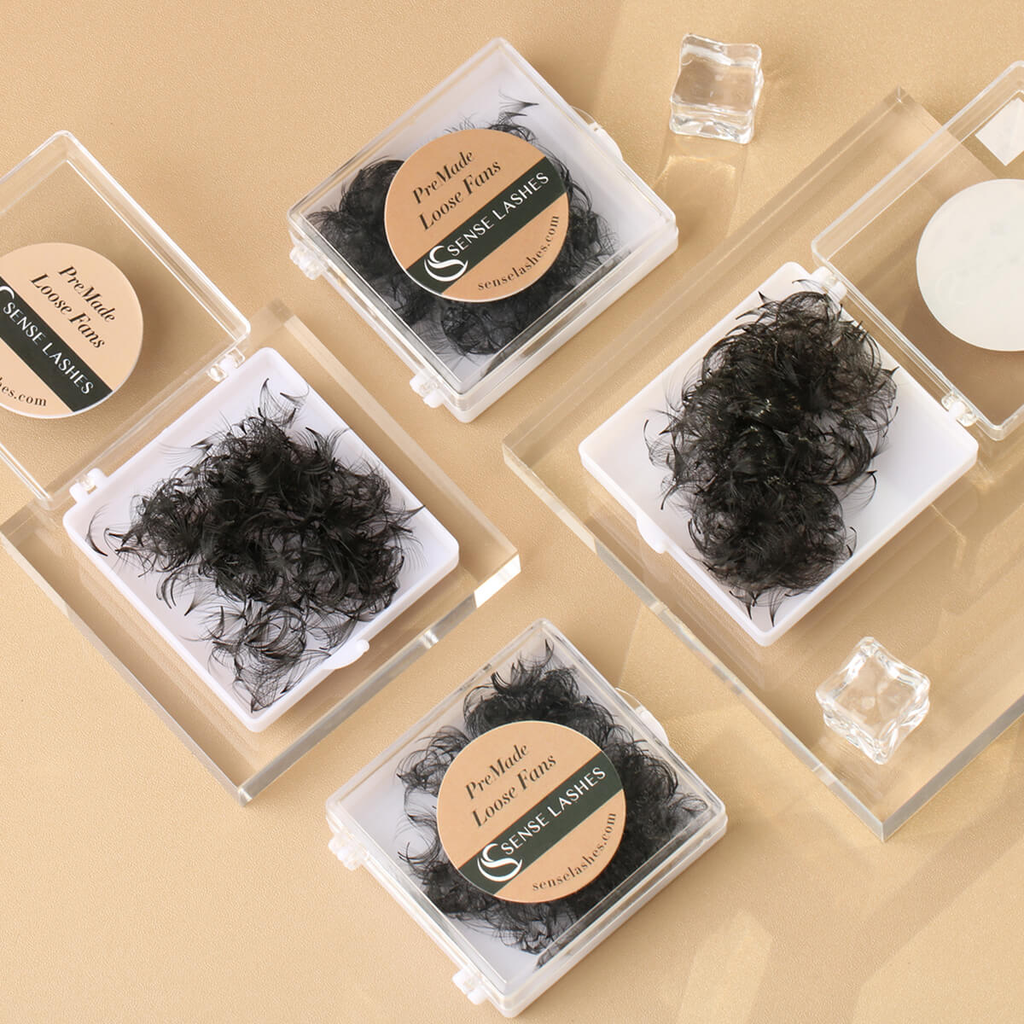
0.05MM Cashmere Premium Mega Volume Eyelash Extensions
Curl: C
Length: Mix8-15mm
Length Zoning for Natural Mapping
For natural-look sets, keep extensions within 2–3mm longer than the client's natural lashes in each zone. A typical range, assuming an average natural lash length of 7–9mm, is 8–12mm across most zones, with inner corners at 7–9mm and outer corners at 10–11mm. A maximum of 12mm at the outer corner applies only to clients with naturally longer lashes.
Using the same length across all zones creates a uniform, one-dimensional result that doesn't follow the eye's natural contour. Staggered mapping adds dimension without drama. A standard natural map uses a graduated increase from inner to mid-lash, holds peak length for 3–4 lashes, then steps down slightly toward the outer corner.
How to Choose Natural Lash Extensions by Client Type
The best natural lash extensions for one client may not work for another. Eye shape, natural lash condition, and lifestyle all affect parameter selection.
By Eye Shape
Almond eyes handle most curl types well. C curl at mid-length delivers a clean, symmetrical result. Avoid over-mapping the outer corner, which can distort the natural almond proportion.
Hooded eyes benefit from L or LC curl at the outer two-thirds to lift the lash line above the lid. Standard C curl on heavily hooded clients often disappears under the fold.
Round eyes look best with cat-eye mapping: shorter lengths at the inner corner and a graduated increase toward the outer edge. This elongates the eye shape without dramatizing it.
Monolid clients need more curl to create visible lift. CC or D curl paired with a mid-length cap works well. Length without curl flattens the eye on a monolid profile.
By Natural Lash Condition
Fine or sparse lashes: Use 0.05mm or lighter. Classic sets with individual placement tend to look cleaner than volume fans, which can expose gaps between sparse natural lashes.
Dense or coarse lashes: 0.15mm classic at B or C curl sits flush with the natural lash. Volume fans may look too full if the natural lash base is already dense.
Damaged or recovering lashes: Drop down in diameter and length. A lighter load supports recovery while still giving clients a finished look.
How to Evaluate Eyelash Extensions Manufacturer Quality Before You Buy
Product consistency is the single biggest variable between a supplier worth reordering and one that costs you time and retention. Here is what to check before committing to wholesale volume.
PBT Grade and Curl Retention
Most professional lash extensions are made from PBT, a synthetic fiber known for holding its shape over time. Not all PBT is the same. High-grade PBT holds its curl geometry over time. Low-grade PBT relaxes within weeks, especially in warm or humid environments.
Ask suppliers about their curl-setting process during manufacturing. You can test curl retention by storing sample trays unsealed for two to three weeks and checking for deviation at the tip.
Diameter Consistency Across a Strip
Pull extensions from three different positions on a strip. If the thickness varies visibly between lashes, the production tolerance is too wide. Inconsistent diameters cause fan slippage in volume work and uneven adhesive coverage in classic application.
Fiber Surface Texture and Adhesive Bond Quality
Higher-quality PBT fibers have a finer surface texture at the micro level that increases adhesive contact area, resulting in stronger and longer-lasting bonds. Overly smooth fibers from low-grade raw materials reduce adhesive contact, which shortens retention cycles regardless of application technique.
Retention performance across multiple clients is the most reliable indicator of fiber surface quality.
The Pre-Order Sample Checklist
Before placing a wholesale order, verify the following:
- Curl angle is consistent from base to tip across all extensions in the tray.
- Each strip is clearly labeled with diameter, curl, and length.
- The adhesive strip has even tack without residue buildup on the backing.
- Extensions release cleanly from the strip without bending or trailing fibers.
- Color is consistent across the full tray with no blue or gray tint under natural light.
How to Source Natural Lash Extensions from a Wholesale Supplier
Finding a reliable wholesale natural lash extensions supplier takes more than comparing prices per tray. Consistency, communication, and technical support determine long-term value.
What to Prioritize in a Wholesale Supplier
Batch-to-batch consistency matters more than a good first sample. Request two separate sample batches from different production runs and compare them against each other. A supplier with strong quality control will produce identical results across batches.
Full product specifications are a baseline requirement. Any supplier worth ordering from can provide exact diameter tolerance, curl type specifications, and strip density per tray. Vague product descriptions signal limited quality control documentation.
Technical support access matters for troubleshooting. If a product performs differently than expected, you need a supplier who can explain their material and processing specs rather than just offering a replacement.
Minimum Order Quantities (MOQ) and Lead Times
MOQ flexibility is important for studios that rotate seasonal stock or test new styles before committing. A supplier willing to offer smaller initial orders signals confidence in their product.
Confirm average lead times and whether they hold during peak periods. Lead time reliability affects inventory planning directly.
Sustainability Standards in 2026
More clients are asking about the products used in their appointments. Cruelty-free fiber sourcing and eco-conscious packaging are increasingly relevant to client-facing studios.
Request documentation for any sustainability claims. Vegan fiber certification and recyclable packaging should be verifiable, not just stated.
How to Make Natural Lash Extensions Last Longer
Retention is always a combination of product quality, application precision, and aftercare. All three need to work together for natural-look sets that last through a full fill cycle.
The Natural Lash Growth Cycle and Its Impact on Retention
Natural lashes go through three growth phases: an active growth phase (30–45 days), a short transition phase (2–3 weeks), and a resting phase (up to 100 days or more) before the lash naturally falls out. Extensions applied to lashes near the end of their resting phase will shed sooner, regardless of application quality.
This is worth explaining to clients whose retention varies between appointments. Shedding cycles differ across the lash line, which means some extensions always shed faster than others.
Application Variables That Affect Bond Life
Isolation is the most controllable retention variable. A single extension bonded to a single natural lash has no competing forces pulling against it. Stickies create mechanical stress that shortens retention on every lash involved.
Adhesive placement length matters. Applying adhesive over 1–1.5mm of the natural lash creates a strong bond without accidentally gluing it to neighboring lashes.
Studio humidity should sit between 45–65% for consistent adhesive performance. Below 45%, curing slows noticeably and lashes may slip during placement. Above 65%, the adhesive may cure too quickly, reducing bond strength. Always verify the optimal range for your specific adhesive formulation.
Aftercare for Natural-Look Sets
Natural-look sets use finer fibers. Those fibers show oil-based product buildup faster than heavier extensions. Clients need clear instructions on lash-safe cleansing.
Key aftercare points to communicate to every client:
- Cleanse the lash line with a foaming, oil-free cleanser at least three times per week.
- Use a clean spoolie after cleansing to restore natural alignment.
- Avoid sleeping face-down, which causes mechanical friction against extensions.
- Book fills every two to three weeks to replace shed extensions before the set looks sparse.
Common Mistakes That Make Lash Extensions Look Unnatural
Even high-quality products produce artificial-looking results when applied without the right parameters. These are the errors that appear most often in professional settings.
Overextending Length Beyond the Client's Natural Lash Limit
Extensions significantly longer than the natural lash, beyond 2–3mm per zone, create visible leverage that causes faster shedding and a detached, stiff appearance. For natural-look sets, length restraint is a quality decision.
Part of the consultation process is setting realistic expectations. Part of the consultation process is helping clients understand why a length closer to their natural lashes will look better and last longer.
Mismatching Curl to Natural Lash Angle
Applying C or D curl to forward-facing or upward-angled lashes causes the extension tip to point away from the face instead of curving upward. The result reads as unnatural and often irritates the lid.
Check natural lash angle before selecting curl. For forward-angled lashes, a B or J curl sits flush. For downward-angled lashes, C or CC creates lift without overcorrecting.
Using Glossy Extensions for a Natural Finish
Semi-matte is widely preferred for natural-look sets. Glossy extensions tend to work better for glamour or volume styles. For natural sets, a semi-matte finish more closely mimics the appearance of real hair. If your current supplier only carries one finish, that is worth noting when evaluating alternatives.
Choose Natural Lash Extensions That Deliver Consistent Results
Natural-looking results depend on material quality, parameter precision, and supplier reliability working together. The right fiber diameter, curl type, and length mapping only perform as intended when the underlying product is consistent batch to batch.
FAQs About Natural Lash Extensions
Q1. How Can Clients Reduce Morning Lash Tangling?
Encourage clients to use a clean, silicone-tipped spoolie to gently brush lashes upward starting from the mid-shaft. Avoid aggressive brushing at the base to prevent tension on the adhesive bond.
Q2. Should Clients With Sensitive Skin Use Clear Adhesive?
Clear adhesive is often preferred for sensitive eyes as it lacks carbon black, the pigment used in most black adhesives and a known allergen for some clients. However, it can be harder to see during application, requiring higher precision.
Q3. What Are the Signs of an Allergic Reaction to Lash Glue?
Redness, itching, swelling of the eyelid, or persistent stinging are primary indicators. Advise clients to stop using the lashes and seek professional advice immediately if these symptoms appear after application.
Q4. Why Are Some Lash Fans Collapsing Before Attachment?
This often results from poor adhesive quality, incorrect dipping techniques, or insufficient base saturation. Ensure the adhesive is fresh, and use a consistent, light touch when picking up fans.
Leave a comment