


How Left Handed Lash Artists Can Choose the Right Tweezers

The right eyelash extension tweezers depend on your grip, not the demo video. Here's how left handed artists test tip alignment, curve, and sweet spot.
Left handed lash artists choose eyelash extension tweezers by deciding which hand does which job, then checking tip direction, sweet spot, and closure in their own grip. Almost every tutorial gets filmed from a right handed seat, so the demo pair rarely carries over. The steel is usually fine. The fit to your hand is what needs a second look.
How Should Left Handed Artists Assign Their Isolation and Placement Hands?
Sort out which hand does which job before you shop for shape or tension.
Isolation means holding one natural lash apart from the rest so you have a clean spot to work on. Placement means picking up the extension and setting it on that lash.
Since about one in ten people are left handed, most classroom setups teach isolation with the left hand and placement with the right. Many lefties mirror that and place with the left.
Mirroring works, though the other way around is worth a try. Isolation asks for a steady hold more than fine control, so some lefties keep isolation in the right hand and place with the left. Non dominant hand skill improves with structured practice, so one rough week says very little either way.
Things to watch while you test:
- Which hand keeps the isolation tweezer still while the other one moves
- Which side of the client feels like a reach
- Whether one shoulder creeps up after half an hour

ISO PRO Lash Isolation Tweezer
Go with the setup that still feels good at the end of a full set, since the first ten minutes will lie to you.
Which Tweezer Shapes Can Support Different Lash Techniques?
Most lash extension tweezers fall into five tip shapes, and each one suits a different part of the job.
| Tip shape | What it looks like | Common use | What lefties notice |
|---|---|---|---|
| Straight | Tips meet in a line with the handle | Isolation | Symmetrical, so it acts the same in either hand |
| Curved | Tips bend gently to one side | Classic placement, meaning one extension per natural lash | The curve sits closer to or farther from your sight line depending on the hand |
| Angled | Tips bend at a sharp fixed angle | Classic placement and lash pickup | Angle direction matters more here than on a straight pair |
| Boot or L shaped | A short flat section meets the body at a right angle | Volume work, where several fine extensions form a fan | The flat shelf supports the fan, and that shelf faces one way |
| Fiber tip | Tip surface has a lightly textured grip coating | Fine fans and thin diameters | Holds thin fibers with less squeeze pressure |
Any of these can work in a left hand. Curved and angled tips were drawn around one working angle, so check those in your own grip first.

Onyx Series | Fiber Tip Eyelash Extension Tweezer Bundle
How Can You Check Tip Alignment and the Tweezer Sweet Spot?
The sweet spot is the small area near the tip where both arms meet with even pressure. If it sits somewhere your fingers never aim, pickup gets flaky. Run these checks before a new lash tweezer joins your rotation.
- Close the tips slowly under a good light. The arms should meet flat. A thin line of light between the points means uneven contact.
- Hold one extension and slide it back along the tip. See how far from the point you can still grip it cleanly. That stretch is your usable grip zone.
- Do the same pickup with your left hand in its real working position. If your wrist has to twist to find the sweet spot, the alignment is working against you.
- Squeeze the tips shut. Light finger pressure should close them all the way, which saves your grip strength across a long day.
A pair that fails any of the four belongs in practice use.
How Does Tweezer Direction Affect Left Handed Pickup and Placement?
A curve that opens away from a right hand opens toward a left hand. That one difference changes your sight line and how the fibers move.
Check Whether the Curve Blocks Your Working View
Hold the tweezer the way you would during placement and look right at the tip. On a curved or angled pair, the body can park itself between your eye and the bonding point when the curve faces the wrong way for your hand. You will feel it as leaning to see, and across back to back appointments that turns into neck strain.
A small rotation usually clears the view. If you have to rotate far enough that your grip goes wobbly, that shape belongs in your other hand.
Compare Pickup Angles on the Client’s Left and Right Eyes
Set a few extensions on each eye of a mannequin head. Most left handed artists find one side opens right up while the other one crowds, since your working arm crosses the face on a different path than a right handed arm.
Watch what the tip does to the lashes around it. A tip that nudges fibers toward your working hand keeps the field clear. A tip that sweeps them into your path hands you extra isolation work.
Keep the shape that clears both your view and your field on either eye.

How Should Left Handed Artists Adjust Their Grip and Wrist Position?
Precision work uses a pinch grip, which means the tool sits between your thumb and fingertips while your palm stays open, and a neutral wrist position lowers strain in pinch grip tasks.
- Keep your wrist in a straight line with your forearm, so a long reach never bends it inward
- Rest the outer edge of your hand on something stable and let your fingers do the fine work
- Set your stool and the client’s head so your left arm comes in at an angle
- Ease off the grip pressure between lashes
The eyelid area is delicate and reacts easily to irritation, so a steady wrist counts as a safety habit too.
How Can You Test New Tweezers Before Using Them on Clients?
A trial run in this order tells you more than any spec sheet.
- Run the alignment and closure checks on a clean table.
- Set twenty extensions on a practice strip or training head using your normal hand setup.
- Repeat with the diameters you reach for most, since thin fibers show tension problems that thick ones hide.
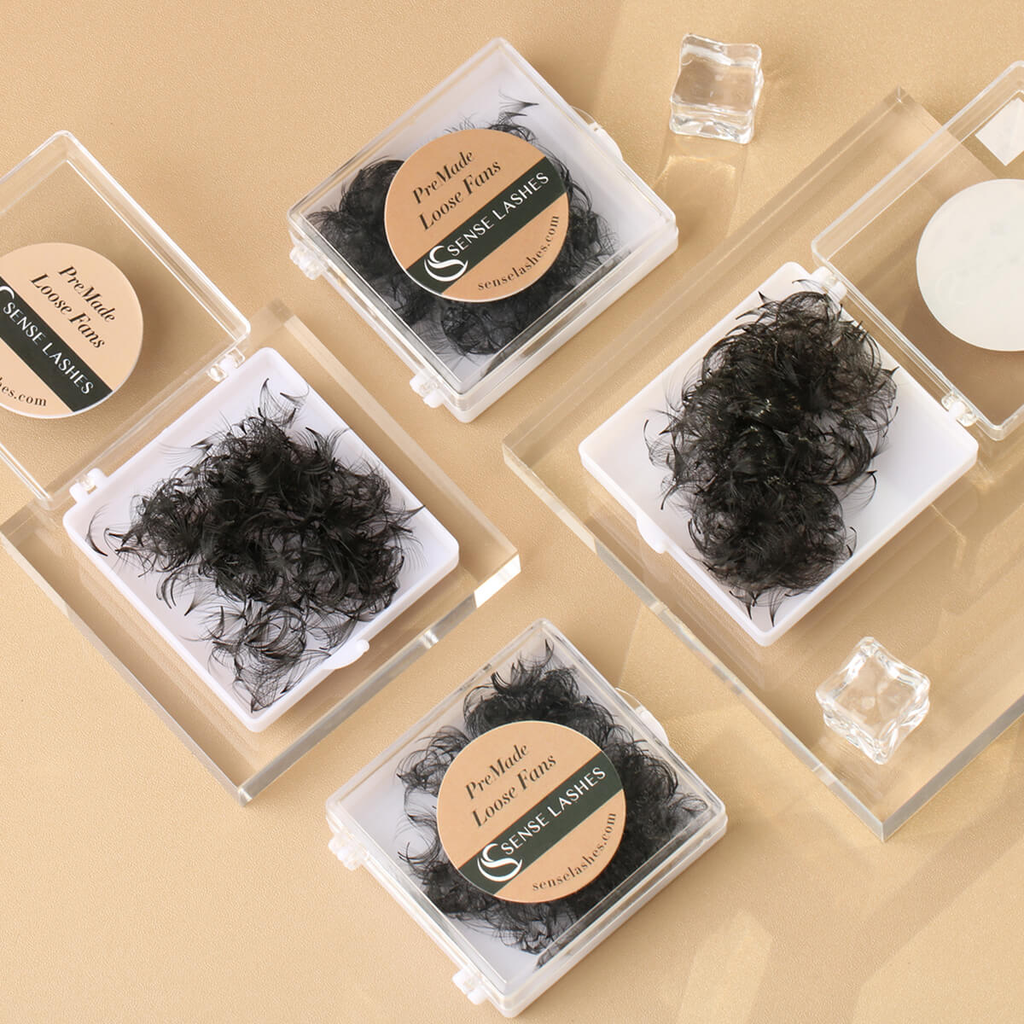
- Test with the fan style you build most often. Prebuilt fans behave differently from hand made ones, and our piece on promade fans for lash artists breaks that down.
- Wipe the tips, take a short break, then pick up again. Your grip shifts as your hand warms up.
Tools that clear all five earn a daily spot. The ones that clear part of it make solid backups.
Build a Left Handed Tweezer Setup That Supports Consistent Work
Pair a symmetrical isolation tool with a placement tool that fits your angle, then keep both in rotation only as long as the tips stay aligned.
Have a look at tweezers for lashes by working style, and add a tweezer cleanser so adhesive buildup stays off your tips between clients.

FAQs
Q1. Do Left Handed Lash Artists Need Special Tweezers?
Mirrored left handed tweezers for eyelashes are rare in lash supply, so most artists shop the same catalog as everyone else. Buy a new shape one pair at a time, test it in your own grip, then reorder the ones that pass.
Q2. How Often Should Eyelash Extension Tweezers Be Replaced?
There is no set schedule, since it depends on your cleaning routine, how often they hit the floor, and how many sets you do. Most artists swap a pair out once the tips stop meeting flush or the closing pressure feels softer than it used to. A spare on the shelf saves you from a rushed call mid appointment.
Q3. What Should You Do After Dropping Lash Tweezers?
Check the tips under a good light before you use them again, since even a short fall can knock the points out of line. Give the tool a full clean too, because floor contact is a hygiene issue on top of an alignment one.
Q4. Does Tweezer Weight Affect Comfort During Long Appointments?
Weight changes how hard your fingers work to hold position, so it shows up most on days packed with full sets. Lighter tools cut fatigue and give you less feedback, while heavier ones feel more planted in the hand. Trying both across a normal workday beats comparing gram numbers.
Leave a comment