


What Lash Length and Curl Work Best for Deep-Set Eyes?

Struggling with recessed eyes? Unlock pro mapping tips and diameter secrets to enhance deep-set eyes with a bright, open look, no more unwanted shadow effects.
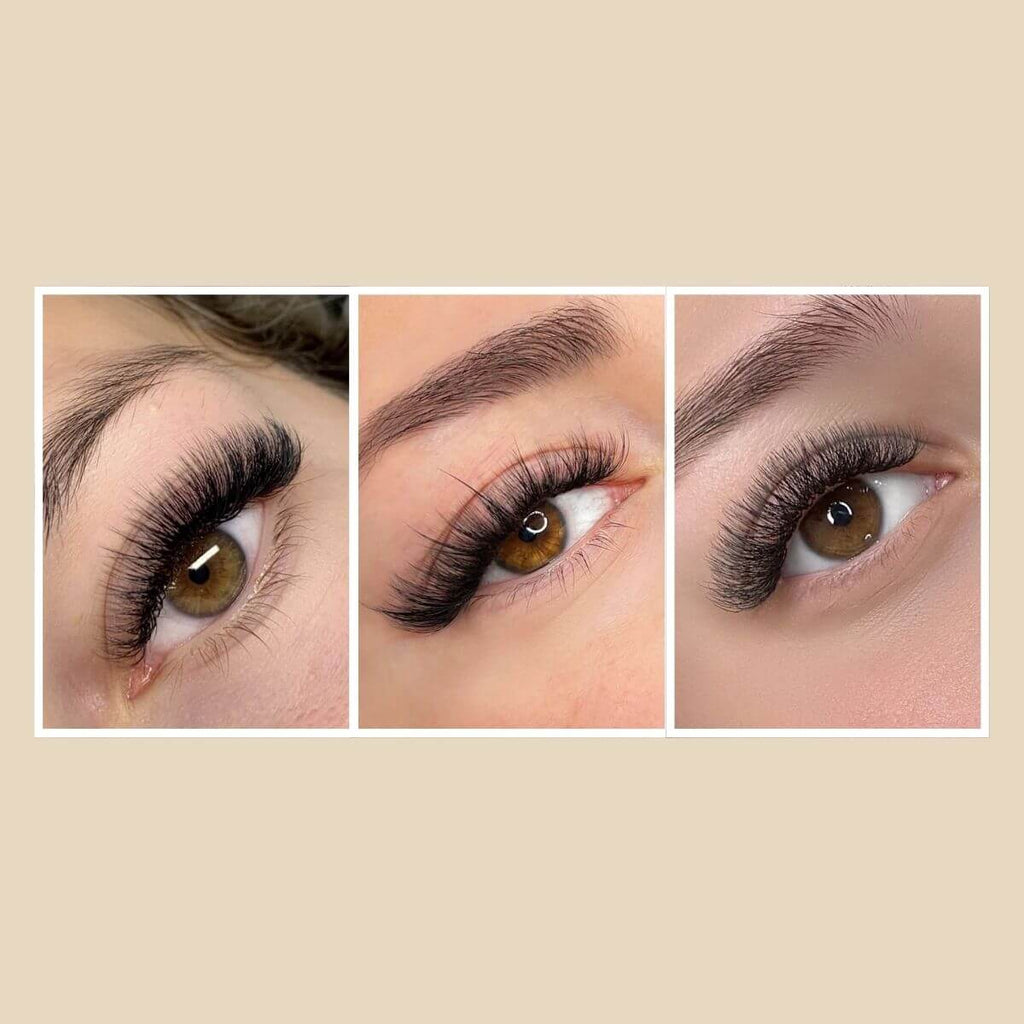
For deep-set eyes, C curl is the default starting point, and center-zone length should stay within 2 to 3mm above the natural lash. Going longer or curlier without factoring in brow bone height is the leading cause of poor retention and flat-looking results on this eye shape. This article gives you the lash mapping framework, curl selection logic, and length guidelines you need to handle deep-set eye clients with precision.
What Are Deep-Set Eyes, and How Do You Identify Them
Deep-set eyes sit further back in the socket, with a more prominent brow bone that casts a shadow over the lid. This is not the same as hooded eyes, where excess skin folds over the lash line.
Quick identification at consultation:
- Ask the client to look straight ahead. If the brow bone visibly projects beyond the eyeball, the eyes are deep-set.
- From a side profile, the eyeball should appear recessed behind the brow bone.
- If the natural lashes already graze the brow bone area above, you are looking at a retention risk before you even begin.
Deep-set eyes can range from mild to pronounced. That degree of depth directly affects which curl and length combination is appropriate.
Which Curl Types Work Best for Deep-Set Eyes
C Curl: The Standard Choice
As a widely recommended starting point for mild to moderate deep-set profiles, the C-curl delivers a visible, polished lift without the risk of an aggressive angle. Its moderate trajectory makes it the ideal choice for clients with standard brow bone projection, ensuring the extension tips maintain safe clearance from the brow bone area. This reduction in physical rubbing is exactly why C-curl consistently yields the most predictable results and the best retention record for this specific eye shape.
D Curl: Use with Caution and Shorter Length
While D-curl creates a more dramatic, open-eyed effect, it requires a shorter overall length to remain clear of the brow bone. This curl is best suited for pronounced deep-set eyes where the socket depth provides additional clearance; however, the center-zone length must be reduced by 1 to 2mm compared to a C-curl map. To protect retention, avoid D-curls entirely on clients with low-hanging or heavily projecting brow bones, as the increased curvature will force the extension tips into the brow bone area.
B Curl: When to Use It
B-curl is not a default choice for deep-set shapes, as C-curl is almost always more effective at creating a visible lift. It remains relevant only as a corrective tool when a client’s natural lashes already have a moderate upward bend, where adding a C-curl would result in over-curling relative to the natural growth direction. In these specific cases, B-curl ensures a seamless, natural transition without the risk of an over-processed appearance.
Curls to Avoid
L curl and LC curl are designed for straight or downward-pointing natural lashes with very flat profiles. They are not appropriate for standard deep-set eyes and are more relevant for monolid clients.
How Do Length and Curl Work Together on Deep-Set Eyes
The rule: As curl strength increases, maximum safe length decreases.
| Curl Type | Recommended Center-Zone Length | Notes |
| B Curl | Up to 13mm | Rarely needed; low lift yield |
| C Curl | 11 to 13mm | Standard for most deep-set clients |
| D Curl | 10 to 12mm | Reduce by 1 to 2mm vs. C curl |
Length references are for the center zone. Inner and outer corners should taper down from the center. Adjust based on individual brow bone projection.
Before finalizing length, check clearance in the open-eye position. If the extension tip comes within 1mm of the brow bone area, shorten by 1mm and recheck.
What Lash Mapping Style Works Best for Deep-Set Eyes
Lash mapping for eye shapes should prioritize visual openness in deep-set clients. The brow bone shadow can make the eyes look smaller or half-closed, so the mapping strategy needs to counteract that.
Open Eye Mapping: The Default
As the industry-standard mapping for deep-set eyes, Open Eye Mapping places the longest extensions in the center zone to lift the focus and counteract the heavy shadows cast by the brow bone. This technique works effectively for the majority of deep-set clients regardless of the chosen curl, provided the inner and outer corners are gradually tapered 2 to 3mm shorter than the central peak. By concentrating the maximum length in the middle of the lash line, you create a wide-eyed effect that balances the recessed brow bone area.
Doll Eye Mapping: When More Openness Is Needed
Doll Eye mapping is the superior choice for deep-set clients requesting a more dramatic, wide-eyed effect. By concentrating both volume and length in the central third of the lash line, this style creates a strong vertical focus that counteracts the depth of the eye socket. To avoid a heavy, dragging appearance, ensure the inner corner lashes remain noticeably shorter, and never extend the center-zone length beyond the safe clearance threshold identified during your initial consultation.
Cat Eye Mapping: Use Selectively
While popular, Cat Eye mapping is not the default recommendation for deep-set eyes, as placing the longest extensions on the outer corners can add visual weight that reinforces a heavy or downward appearance. This style should be used selectively—only if the client possesses a naturally upturned outer corner to offset the potential drooping effect. For the vast majority of deep-set profiles, prioritizing an Open Eye or Doll Eye map will yield a more balanced, lifted result.
Special Cases: Deep-Set Eyes with Other Factors
Mature Clients with Age-Related Deep-Set Eyes
As clients age, volume loss in the brow region makes the eyes appear more recessed. This causes the brow bone to project further, which lowers your 'safe length ceiling' for extensions. To manage this, the safest technical approach is a C-curl with a conservative center-zone length of 10 to 11mm, paired with lighter lash weights or finer diameters. This combination minimizes mechanical stress on potentially fragile natural lashes while providing a lifted, refreshed look that accounts for the increased prominence of the brow bone.
Deep-Set Eyes with a Monolid
Managing deep-set eyes combined with a monolid requires extra technical attention, as the lack of a visible crease removes a key spatial reference for the lash artist. Because this eye shape can appear flat even with correct curl selection, a D-curl—applied with a shortened length—is often preferred over a C-curl for its superior visual lift. To achieve the best results, mapping weight should be focused toward the center of the lash line, while volume at the inner corners should be kept minimal to avoid a heavy, closed-off appearance.
Deep-Set Eyes Combined with Downturned Outer Corners
Addressing the common combination of deep-set eyes with downturned outer corners requires a highly balanced mapping strategy to avoid emphasizing a drooping effect. Open eye mapping is strongly preferred over cat eye styles for this profile, as long extensions on the outer corners will only reinforce the eye's downward angle. Instead, slightly extend the center zone and maintain the outer corners at a medium length with a consistent curl to create a lifted, more symmetrical appearance.
Common Mistakes in Deep-Set Eye Clients
- Choosing curl and length independently. Always evaluate them together. A long D curl on a prominent brow bone is a high risk for poor retention.
- Overloading the inner and outer corners. Heavy corner volume makes deep-set eyes look smaller, not bigger.
- Applying the same mapping used for hooded eyes. Hooded eyes have excess skin over the lid; deep-set eyes have a recessed eyeball. The correction strategies are different.
- Not checking clearance before the appointment ends. Always ask the client to open their eyes fully and check for any contact between extensions and the brow bone area.
Apply These Tips to Every Deep-Set Eye Client
For deep-set eyes, C curl with center-zone length between 11 and 13mm is the most reliable starting point. Move to D curl only when the client's socket depth allows safe clearance, and always reduce length by 1 to 2mm when you do. Open eye mapping is the default style, and retention conversations should happen at every appointment for this client profile.
FAQs
Q1: What Lash Mapping Style Opens up Deep-Set Eyes the Most?
Open eye mapping is the most effective choice. It concentrates length in the center zone and tapers toward both corners, drawing attention upward and counteracting the shadow cast by the brow bone.
Q2: Does the Adhesive Choice Matter More for Deep-Set Eye Shapes?
Yes. Because deep-set eyes experience more eyelid friction and often trap more heat/moisture in the eye socket, you should opt for an adhesive with high flexibility (rubberized components) rather than one that cures into a brittle bond. A flexible bond can better withstand the micro-movements of the lashes brushing against the brow bone, significantly extending the time between fills.
Q3: How Do I Choose the Right Lash Diameter (Weight) for a Deep-Set Profile?
Deep-set eyes benefit from narrower lash fans or finer diameters (0.05mm - 0.07mm). Heavy, thick extensions (0.15mm+) create a "shadow-on-shadow" effect that makes the eyes look even more recessed. Using finer diameters allows you to build a soft, multi-dimensional texture that catches the light, brightening the eye area rather than darkening it.
Leave a comment