


How to Speed Up Your Lash Application Without Sacrificing Quality

Tired of slow lash applications? Master the workspace setups and isolation drills to cut your timing in half while maintaining high-quality, pro results.
Time drains in specific places: a disorganized workspace, the wrong eyelash extension tweezers for the task, or adhesive that doesn't match your current skill level. Speed in professional lash extensions is a system, not a trait.
Where Are You Losing Time During a Lash Set
Most sets don't run slow across the board. The time loss concentrates in specific phases.
Breaking the Lash Set Into Timed Phases
Most lash artists don't lose time across the whole set. They lose it in one or two specific phases.
Break your process into measurable stages: pre-appointment setup, eye pad placement, isolation, extension attachment, brushing and finishing, and client turnover. Treating the set as one block makes it impossible to spot the real problem.
How to Use a Timer to Find Your Bottleneck
Time each eye separately and record how long isolation and attachment each take. Once you identify the slowest phase, you can practice it in isolation rather than trying to speed up your entire process at once.
Speed Benchmarks by Experience Level
| Experience Level | Classic Full Set | Volume Full Set |
| Beginner (0–6 months) | 3–4.5+ hours | 4–5.5+ hours |
| Intermediate (6–18 months) | 2–3 hours | 2.5–3.5 hours |
| Experienced (18+ months) | 1.5–2.5 hours | 2–3 hours |
These ranges vary based on client lash condition, service type, and working style. Treat these as directional ranges, not fixed targets.
How Does Workspace Setup Speed Up Your Lash Application
Your physical setup determines how much time you spend moving instead of lashing.
Arranging Tools and Supplies for Minimal Hand Travel
Every tool you need during the set should be within arm's reach before the client sits down. Keep your lash trays, adhesive, tape, and backup tweezers close to the working area.
Position your glue stone as close to the client's face as possible. For right-handed artists, tools typically sit to the right; left-handed artists should mirror this layout. Unnecessary hand travel adds up over a full set.
What to Prepare Before the Client Arrives
Sort your lash trays by the lengths and curls needed for that specific client before they arrive. Pre-cut tape, shake your adhesive, and have a backup pair of eyelash extension tweezers ready.
Searching for supplies during application breaks your rhythm and adds to total chair time.
Lighting and Ergonomics That Directly Impact Precision
Overhead or adjustable lighting eliminates shadows and makes isolation faster and more accurate. Poor lighting forces you to reposition repeatedly, which costs time.
Chair height, client head position, and your seated posture all affect how quickly fatigue accumulates across a full day. For clients with sparse or fine lashes, a magnifying lamp reduces the time spent searching for individual natural lashes.
Workspace efficiency handles the external variables. The core speed factor is the isolation technique itself.
How Does Isolation Speed Affect Your Lash Application Time
Isolation is where most artists lose the most time, and where targeted practice delivers the fastest results.
The Two Most Common Habits That Slow Down Isolation
The first habit is over-weaving: moving through the lash line repeatedly before picking a target. The motion feels productive but adds no value.
The second habit is spending too long on a difficult lash instead of moving on and returning to it later. Paired with eye pads that aren't secured correctly, lower lashes pop up and trigger repeated re-isolation.
Three Isolation Techniques and When to Use Each
| Technique | Best For | Speed Characteristic |
| Weaving method | Experienced artists with muscle memory | Fastest, requires precise tweezer control |
| Double-handed isolation | Situations needing stable grip control | High efficiency, needs coordination between both hands |
| Layer-by-layer (tape-up) | Volume sets or clients with thick, layered lashes | Reduces stickies, improves coverage on dense lashes |
Choose your technique based on the client's lash condition, not habit. Switching methods mid-set when a zone requires it is a skill in itself.
Isolation Drills That Build Measurable Speed
Practice isolation on a mannequin head with a focus on accessing bottom-layer lashes and maintaining a consistent tweezer angle. Set a target time per lash and record your weekly baseline.
Practice isolation as a standalone drill, separate from attachment. Mixing both actions in practice makes it harder to identify which one is slowing you down.
Skipping proper isolation creates lash stickies, which damage natural lashes and generate correction appointments. That time cost far exceeds anything gained by rushing.
The other half of isolation efficiency comes from the tool in your hand.
How Do Eyelash Extension Tweezers Speed Up Your Lash Application
The tweezers you use determine how precisely and how long you can work without losing speed or accuracy.
Isolation Tweezers vs. Application Tweezers
Isolation tweezers need a fine, precise tip with minimal drag resistance. Application tweezers need grip control and the ability to open for fan placement.
Using one pair for both tasks is one of the most common hidden time losses in professional lash work. Many artists don't recognize it because the slowdown spreads across hundreds of small movements. No single pause makes it obvious.
Straight vs. Curved Tweezers
Straight lash extension tweezers suit classic applications and precise isolation work. Curved or angled tweezers are better suited for inner corner work and volume fan creation.
There is no universal answer. Testing multiple tip angles and shapes is the most reliable way to find the setup that matches your technique.
How Tweezer Weight, Tension, and Tip Type Affect Speed and Fatigue
Lighter tweezers reduce hand fatigue across a full day of work. Fatigue that builds through the morning directly affects your speed and accuracy in afternoon appointments.
Tension that is too tight causes hand strain. Tension that is too loose causes lashes to drop and need re-picking. Fiber tip tweezers offer a practical advantage for fast lash pickup without extra grip pressure.
The right time to upgrade your eyelash extension tweezers is when the tool is limiting your speed rather than your technique.
Once your tools are sorted, adhesive management is the next variable affecting application flow.
What Adhesive and Glue Management Habits Slow You Down
Adhesive variables are controllable, but only if you treat them as active decisions rather than background conditions.
Matching Adhesive Cure Speed to Your Current Skill Level
A slow-cure adhesive (2–4 seconds) suits artists who are still building consistent isolation and placement habits. A fast-cure adhesive (0.5–1 second) suits artists whose technique is already stable.
Switching to a fast adhesive before your movements are consistent creates more correction time than it saves in cure wait time. The speed gain only applies when placement is accurate on the first attempt.
How Temperature and Humidity Affect Cure Time
Adhesive cure speed changes noticeably with room temperature and humidity. Higher humidity accelerates curing; lower humidity slows it down.
A hygrometer and thermometer are required lash extension supplies, not optional additions. In low-humidity environments, use a primer or adhesive booster to maintain a stable cure response throughout the set.
Glue Drop Management for Uninterrupted Flow
Use the correct drop size to avoid over-dipping and re-dipping, and to prevent adhesive buildup on the tweezer tip. Position your glue stone close to the client's face to minimize hand travel.
When adhesive builds up on a tweezer tip, switch to a backup pair immediately rather than stopping to clean mid-set. Refresh your glue drop based on room conditions, not a fixed time interval.
Adhesive volume cannot be estimated by eye. Too much or too little directly affects retention, and the client return cost from poor retention is higher than the time spent getting the amount right.
With tools and materials set, the planning system you build before each appointment determines how fast your decisions happen in the chair.
How Does Lash Mapping Save Time During Application
Every minute spent making design decisions mid-set is a minute that could go toward application.
Pre-Mapping at Consultation to Remove In-Session Decisions
Complete the lash map design before the appointment begins, not after the client is lying down. Confirm eye shape, natural lash condition, and style preference in advance so design decisions are removed from application time entirely.
In-session design choices fragment your focus and extend chair time without improving results.
Building a Consistent Mapping System for Common Eye Shapes
Build standard map templates for four to six of the most common eye shapes you see. Most clients fit an existing template with minor adjustments.
A standardized mapping system compresses design time from several minutes to a few seconds per client. Consistency across your client base also reduces the mental load of each appointment.
Client Profile Cards That Eliminate Repeat Consultation Time
Record each returning client's preferred lengths, curl types, adhesive type, and eye pad size after each visit. Pull the archived map at the next appointment instead of re-measuring and re-consulting.
Profile cards also reduce application errors and keep results consistent across visits. Clients notice when results are repeatable, and that consistency reduces correction requests.
With design decisions handled in advance, the application sequence itself becomes the next area with speed potential.
Which Lashing Patterns Speed Up Your Lash Application
The pattern you choose affects both coverage consistency and how efficiently you move through the set.
Classic vs. Volume Lash Extensions
For classic lash extensions, the bottleneck is isolation accuracy and single-lash placement. Speed gains come from faster, more precise isolation.
For volume lash extensions, the bottleneck is fan-making speed and adhesive management. Applying classic speed strategies to a volume set is a common misdirection in practice.
Three Lashing Patterns for Even Coverage and Time Control
| Pattern | Best For | Key Consideration |
| Back-and-forth | Beginners, consistency across both eyes | Maintains symmetry even if time runs short |
| Alternating eye | Artists with a stable rhythm | Work one eye while adhesive cures on the other |
| Easy zones first | Experienced artists | Complete roughly 70% of the set in the first hour; leave corners for when focus is highest |
Select the pattern that matches both your experience level and the specific service. Switching patterns mid-set when a zone changes is a practical skill, not a problem.
When to Use Premade Fans and Pre-Made Batching
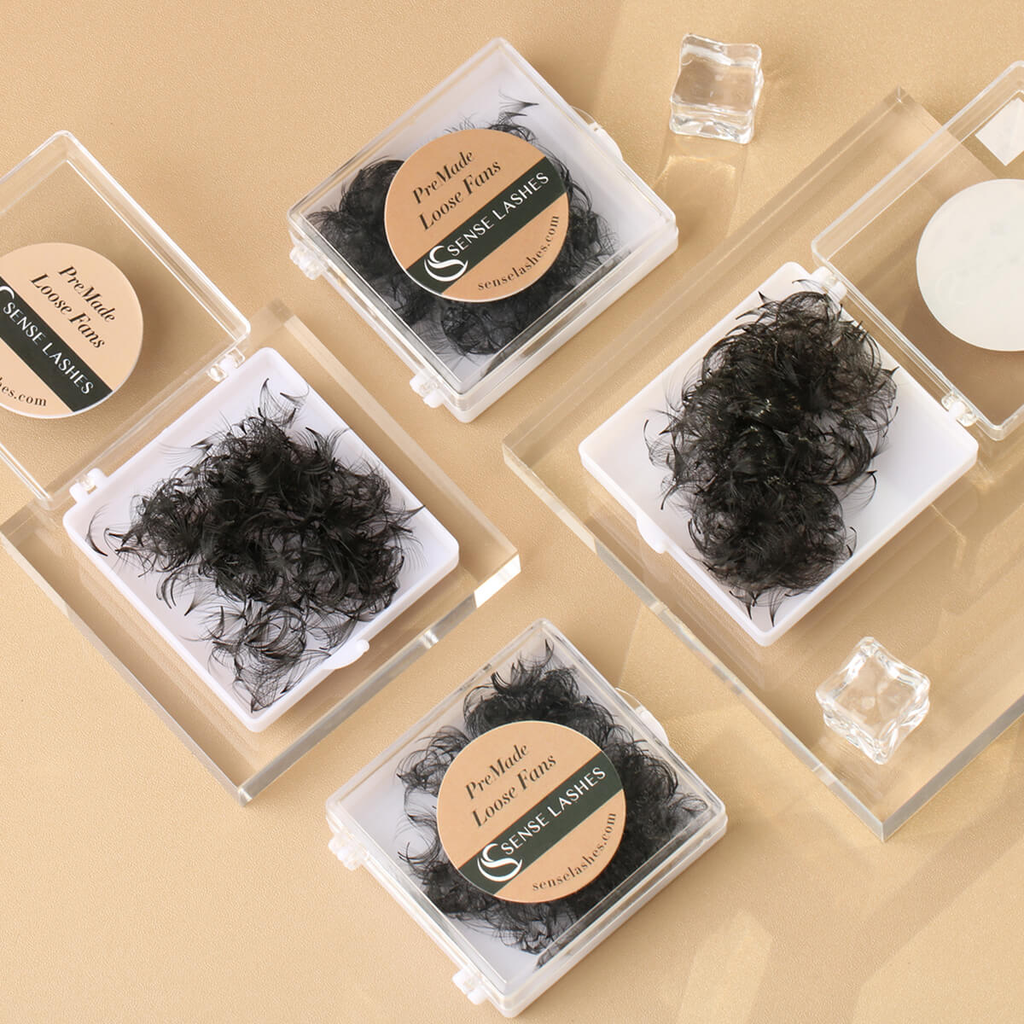
Premade and promade fans are a legitimate professional choice for high-volume days or when handmade fan consistency is not yet stable. They are a workflow tool, not a shortcut.
Batch-making handmade fans between appointments moves fan creation out of active service time. Easy fan lashes are a practical transition tool for classic-trained artists building volume technique.
What You Should Never Rush
Isolation cannot be approximate. Lash stickies damage follicles and generate correction appointments, which cost more time than proper isolation ever would.
Adhesive volume cannot be guessed. Over- or under-application affects retention directly, and the complaint and rebooking cost exceeds any time saved.
Brushing during the set must be intentional. Random brushing weakens the adhesive bond before it fully cures.
Client-side variables affect appointment length just as much.
How Can Client Management Reduce Appointment Time
Artist-side efficiency only goes so far. Client behavior directly affects how much of your scheduled time you actually spend lashing.
Pre-Appointment Instructions That Protect Your Schedule
Require clients to arrive with clean lashes, no eye makeup, and no residue. Dirty lashes add significant prep time that was never scheduled.
Confirm the lash style, preferences, and allergy history before the appointment day. When clients arrive prepared, you skip the repeat consultation entirely.
Set a clear late policy and communicate it at booking. Lateness that compresses your actual application time affects quality, not just schedule.
Managing Conversation to Maintain Focus
Client talking causes facial movement, which is one of the most overlooked causes of slow application. Movement forces re-isolation and disrupts adhesive placement.
Complete all consultations and conversations before the client is positioned. Offer music or a podcast as an alternative during the set itself.
Framing a quiet application environment as a premium service experience is more effective than presenting it as a restriction. Clients who understand why cooperate more consistently.
When all of these strategies are in place, a single reference table makes it easy to match the right approach to the right service type.
Quick Reference: Lash Application Speed by Service Type
| Service Type | Primary Bottleneck | Top Speed Strategy | Key Tools |
| Classic | Isolation accuracy | Timed isolation drills + dedicated isolation tweezers | Straight isolation tweezers |
| Volume (standard) | Fan-making speed | Premade fans + matched adhesive cure speed | Volume tweezers + fast adhesive |
| Volume (dense/multi-layer) | Accessing layered lashes | Tape-up layering technique | Tape + curved tweezers |
| Hybrid set | Both bottlenecks present | Pre-segmented workspace + reused profile cards | Full lash extension supplies kit |
Speed has no universal formula, but every service type has a fixed primary bottleneck. Targeting that bottleneck directly is more effective than trying to speed up every phase at once.
Build a Faster Lash Practice With the Right Supplies and Systems
Faster professional lash extensions come from fixing the right things, not from moving faster overall. The core areas are workspace setup, isolation technique, eyelash extension tweezers selection, adhesive management, lash mapping, and client systems.
FAQs About How to Do Lash Extensions Faster
Q1: How Do I Handle Clients Who Arrive With Dirty Lashes?
Set a clear pre-appointment policy: clean lashes, no eye makeup. If a client arrives with residue, add the cleaning time to the service duration or charge separately. A written policy prevents the need to negotiate it each time.
Q2: What Lash Extension Supplies Have the Most Direct Impact on Speed?
The highest-impact supplies are: adhesive matched to your skill level, dedicated isolation and application eyelash extension tweezers, an organized lash tray system, overhead lighting, and superbonder to shorten end-cure time. These are baseline requirements, not upgrades.
Q3: How Do I Handle Talkative Clients Who Slow Down the Process?
Client movement from talking causes shaky lids, which ruins precision. Gently explain that total relaxation ensures better retention. Many artists use a hydrating lip mask or soothing music to encourage a lash nap. This keeps the eye area still, allowing you to work continuously without interruptions.
Leave a comment