


홈 Eyelash Extension Supplies Guide
Mixing 0.05 and 0.07 Diameters for Multi-Dimensional Volume

Mixing 0.05 and 0.07 Diameters for Multi-Dimensional Volume
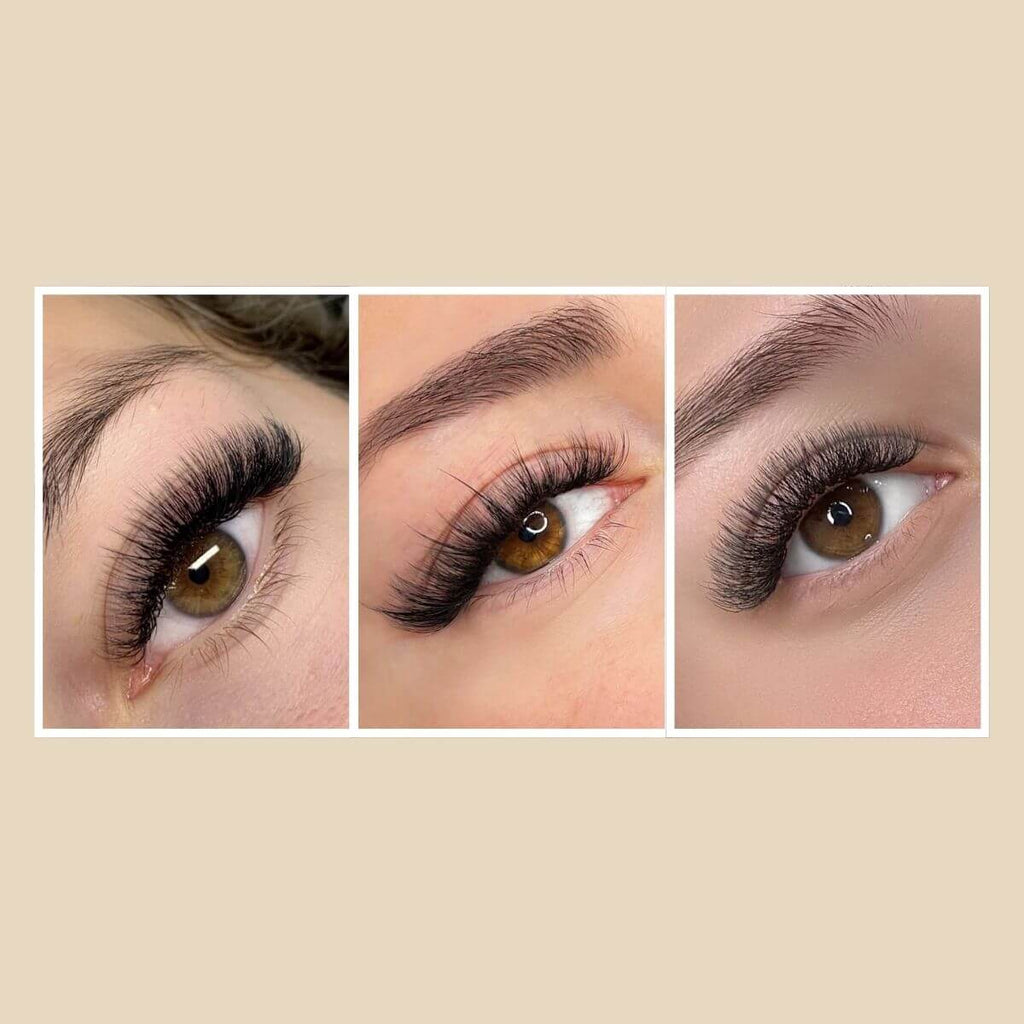
In the pursuit of professional lash artistry, the transition from "fullness" to "dimension" marks the evolution of a technician into a master. While a uniform set of 0.05mm fans offers a soft, ethereal look, it can often lack the structural definition required for high-fashion or high-contrast results. Conversely, a set comprised entirely of 0.07mm fibers may appear heavy or "muddy" if not executed with precision. The solution lies in the strategic blending of diameters—specifically the 0.05mm and 0.07mm pairings—to create a multi-dimensional, textured appearance that mimics the natural variation of human lashes while providing the density clients crave.
This guide explores the technical mechanisms, safety considerations, and mapping strategies required to master diameter mixing. By understanding the synergy between weight, viscosity, and ocular health, you can elevate your service from a standard application to a bespoke architectural design.
The Science of Diameter: Weight, Leverage, and Ocular Health
Before implementing mixed-diameter sets, a professional must understand the mechanical impact on the natural lash. According to a 2024 study on ocular disorders caused by extensions, mechanical damage and chemical toxicity remain primary concerns for long-term wearers. The weight of an extension is not linear; it is a function of the volume of the cylinder (the lash fiber). A 0.07mm lash is significantly heavier and stiffer than a 0.05mm lash, exerting more leverage on the follicle.
Mechanical Stress and the "Safe Harbor" Heuristic
To maintain the integrity of the natural lash, we utilize a modeling approach based on common industry heuristics. For clients with average-strength natural lashes, the goal is to distribute weight so that the heavier 0.07mm accents do not cause premature shedding or traction alopecia.
Logic Summary: Our weight-load analysis assumes a baseline natural lash health capable of supporting a 3D-5D fan of 0.07mm or a 7D-10D fan of 0.05mm. The 70/30 mixing ratio is designed to keep the cumulative weight within a 15% safety margin of the natural lash's carrying capacity (based on professional shop observations, not a lab study).
When dealing with weaker or shorter natural lashes, the 0.05MM YY Volume Eyelash Extensions provide a safer alternative. These split-tip fibers offer the visual coverage of a volume fan with the weight of a much finer diameter, reducing mechanical strain while maintaining the "crisscrossed" texture essential for multi-dimensional sets.
pH Balance and Adhesive Toxicity
Authoritative research by Amano et al. (2012) identified that early lash adhesives often released formaldehyde and had acidic pH levels, leading to keratoconjunctivitis. Modern professional-grade supplies, such as those from the SenseLashes factory-direct line, are formulated to be pH-neutral. However, the choice of diameter affects how much adhesive is required. Finer 0.05mm fibers require a lower-viscosity "instant-bond" glue, whereas the thicker 0.07mm fans benefit from a slightly higher-viscosity, syrup-like adhesive (1-2 second range) to ensure the stiffer base wraps securely around the natural lash.
The 70/30 Mixing Strategy: Creating Depth and Texture
The most common mistake in volume artistry is using a 50/50 mix uniformly across the eye. This often results in a visual "blur" where the different diameters cancel each other out. To achieve a high-contrast, "spiky" effect, we recommend a 70/30 Ratio Strategy.
The Heuristic Breakdown
- 70% Base (0.05mm): These fibers create the "background fluff." They should be applied to the majority of the natural lashes, particularly the finer ones in the inner corners and the lower layers of the lash line.
- 30% Accents (0.07mm): These are your "spikes" or "highlighters." Reserve these for the strongest natural lashes in the central third and outer corners.
| Parameter | 0.05mm (Base) | 0.07mm (Accent) | Rationale |
|---|---|---|---|
| Primary Role | Density & Softness | Definition & Structure | Creating visual contrast |
| Placement | 70% of lash map | 30% strategic spikes | Prevents "muddy" appearance |
| Fan Size | 5D - 10D | 3D - 5D | Balancing weight vs. volume |
| Layering | Bottom & Middle | Top Layer (Spikes) | Depth perception |
| Adhesive | Low Viscosity | Syrup Viscosity (1-2s) | Ensuring base wrap |

Mapping for Dimension
To execute the 70/30 ratio, treat the 0.07mm fans as deliberate highlights. Instead of scattering them randomly, isolate stronger natural lashes in the middle layer of the lash line. By placing 0.07MM Cashmere Premium Mega Volume Eyelash Extensions on these central lashes, you create a "scaffold" that supports the softer 0.05mm fluff around it.
This technique is particularly effective when using the 1mm Rule for Smooth Curl Transitions. By keeping the 0.07mm spikes 1mm longer than the surrounding 0.05mm filler, you amplify the textured effect without making the set look messy.
Adhesive Selection and Application Mechanics
Adhesive performance is the "silent partner" in diameter mixing. The surface area of a 0.07mm base is larger than that of a 0.05mm base, which changes the polymerization dynamics.
Viscosity and the "Wrap"
For the 0.07mm fans, a slightly slower-drying adhesive with a syrup-like viscosity is preferred. This provides a "cushion" that allows the artist to adjust the placement of the stiffer fan. If the adhesive dries too quickly (under 1 second), the 0.07mm base may "sit" on top of the natural lash rather than wrapping around it, leading to poor retention and potential mechanical irritation.
According to Health Canada's 2023-2024 Compliance Report, labeling and chemical safety of cyanoacrylate-based adhesives are strictly monitored. As a professional, using factory-direct supplies ensures that your adhesive meets these stringent safety standards, protecting both your business and your client's ocular health.
Preventing Chemical Injury
During application, the risk of chemical burns from adhesive fumes is real. The American Academy of Ophthalmology (AAO) notes that allergic reactions and trauma are the leading risks of extensions. To mitigate this, ensure the eye is perfectly sealed using high-quality gel patches. This prevents fumes from entering the eye and causing the "burning" sensation often confused with dry eye syndrome, as detailed by WebMD.
Visual Harmony: Why Product Line Consistency Matters
Mixing diameters from different manufacturers is a recipe for visual disharmony. Each factory has its own "curl recipe" and finish (matte vs. shiny). If you mix a shiny 0.07mm from Brand A with a matte 0.05mm from Brand B, the set will look disjointed under salon lighting.
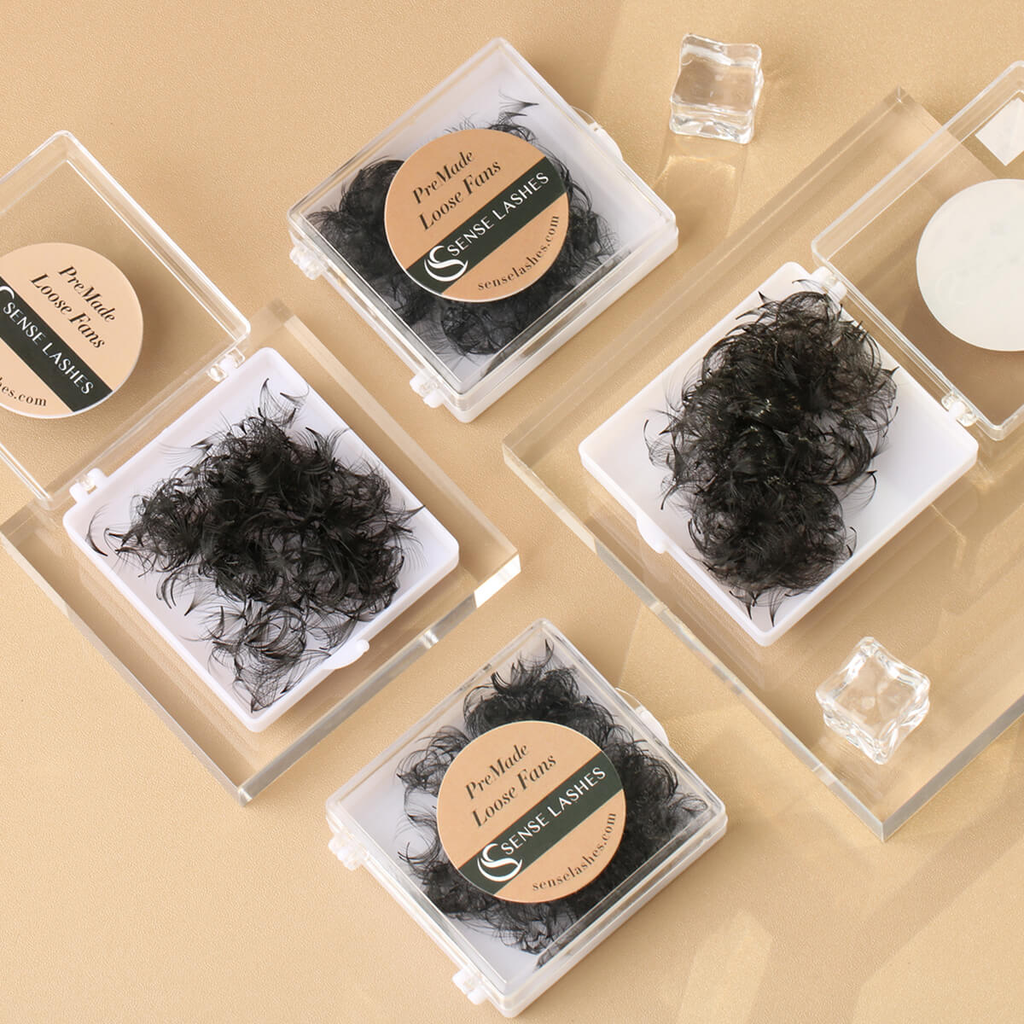
We recommend staying within the same series, such as the "Cashmere" line. This ensures consistent curl memory—the ability of the lash to maintain its D-curl or C-curl over 4-6 weeks—and a uniform matte finish. For artists looking to speed up their sets while maintaining this dimension, using 8D Handmade Loose Premade Fans Pointy Base in 0.05mm for the "fluff" and 12D Handmade Loose Premade Fans Pointy Base for the high-density areas (where the natural lash can support it) allows for a flawless blend with handmade fans.

Troubleshooting and Long-Term Maintenance
A multi-dimensional set requires more than just expert application; it requires a commitment to hygiene. Because mixed-diameter sets (especially those with 0.07mm spikes) have more surface area and "nooks" for debris to hide, client education is paramount.
The "Blepharitis Prevention" Argument
Instead of marketing lash shampoo as a simple cleaner, frame it as a medical necessity. Mayo Clinic defines Blepharitis as eyelid inflammation often caused by bacteria buildup. Poor lash hygiene is a primary catalyst. Water is not enough; a pH-balanced foam cleanser is required to break down the oils and skin cells that accumulate at the base of the volume fans.
Furthermore, research on Demodex mite infestation highlights the risks of ocular hygiene neglect. Daily washing with a professional-grade cleanser is non-negotiable for maintaining both the health of the eye and the retention of the extensions.
Managing Allergic Contact Dermatitis
If a client experiences swelling 48 hours after a set, it is likely Allergic Contact Dermatitis (ACD) caused by the acrylates in the glue, as studied in PubMed (35674514). This is different from the immediate irritation caused by fumes. A professional artist must be able to distinguish between the two. Implementing a "Patch Test Protocol" (even if not 100% predictive) and using a "Client Safety Consent Form" aligned with AAO guidelines protects the salon from liability and builds trust with the client.
Business ROI: The "Pro-Grade Partner" Advantage
The global false eyelashes market is seeing a significant CAGR, according to Grand View Research. As the market matures, clients are moving away from "cheap" sets toward premium, customized artistry. Mastering the mixing of 0.05mm and 0.07mm diameters allows you to charge a premium for "Textured Volume" or "Dimensional Sets," which typically take no longer to apply but offer a significantly higher perceived value.
By positioning yourself as a "Pro-Grade Partner" who understands the Chemistry of Allergic Reactions and the Impact of Extensions on the Ocular Microbiome, you transition from a service provider to a trusted expert.
Summary of Key Takeaways for the Professional:
- Adopt the 70/30 Heuristic: Use 0.05mm for 70% of the set (fluff) and 0.07mm for 30% (spikes).
- Match Adhesive to Diameter: Use a 1-2 second "syrup" viscosity for 0.07mm fans to ensure a secure base wrap.
- Prioritize Fiber Consistency: Use the same product series (e.g., Cashmere) to ensure visual harmony in curl and finish.
- Educate on Hygiene: Frame aftercare as "Blepharitis Prevention" to ensure client compliance and ocular health.
- Leverage Technical Knowledge: Use authoritative sources to troubleshoot client issues and justify premium pricing.
This article is for informational purposes only and does not constitute professional medical or legal advice. Always consult with a qualified health professional regarding eye conditions and follow local regulations for cosmetic applications.
References
- Amano et al. (2012) - Formaldehyde and pH in Eyelash Glues
- American Academy of Ophthalmology (AAO) - Eyelash Extension Safety
- Health Canada (2023-2024) - Cyanoacrylate Compliance Report
- Mayo Clinic - Blepharitis Symptoms and Causes
- PubMed (2024) - Ocular Disorders from Eyelash Extensions
- PMC (2024) - Ocular Surface Microbiome and Extension Wear