


홈 Eyelash Extension Supplies Guide
Lifting Monolid Profiles: The Role of L+ and M Curls

Lifting Monolid Profiles: The Role of L+ and M Curls
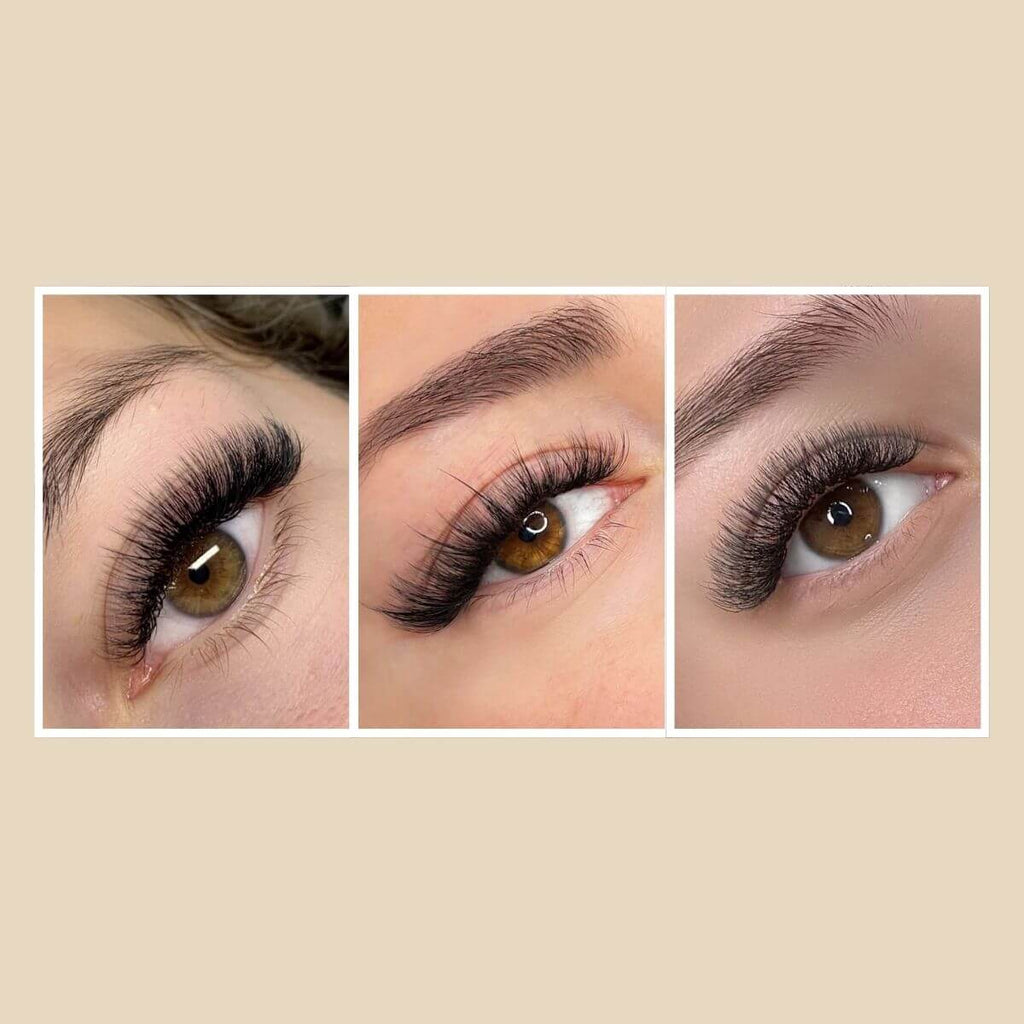
For the professional lash artist, the monolid—or single eyelid—represents one of the most technically demanding anatomical profiles. Unlike the double eyelid, where the crease provides a natural "shelf" for lash extensions to sit beneath, the monolid often features a heavy epicanthic fold or significant lid tension that pushes downward on the natural lashes. This anatomical pressure can cause standard C or D curls to disappear entirely behind the lid or, worse, irritate the ocular surface.
In this technical guide, we evaluate the strategic application of L+ and M curls. We will analyze how these specialized curls interact with monolid anatomy, the chemical considerations for retention on typically oilier lids, and the clinical safety protocols required to protect the ocular surface.

Understanding the Monolid Anatomy: Epicanthic Folds and Lid Tension
The primary challenge with monolid artistry is the absence of a supratarsal crease. In many cases, the eyelid skin extends over the lash line, partially or fully covering the base of the natural lashes. According to a review on Eyelash Extension Methods and Aesthetic Considerations, the mechanical interaction between the eyelid and the extension is a critical factor in both aesthetics and safety.
When working with monolids, we must account for two specific factors:
- Lid Tension: The downward force exerted by the eyelid skin. This tension can "straighten" a curl over time or cause the extensions to poke the lower lid.
- Epicanthic Fold: A skin fold of the upper eyelid that covers the inner corner of the eye. This requires precise mapping to avoid the extensions rubbing against the fold, which can lead to contact dermatitis or mechanical irritation.
Logic Summary: The "Center-Lift" Mapping Heuristic
Based on patterns observed in high-volume lash studios, we utilize a specific mapping heuristic for monolids to avoid the common "wind-swept" or "droopy" look at the outer corners.
- Primary Zone (Center): Use L+ curls to provide maximum vertical lift where the lid is heaviest.
- Transition Zone (Inner/Outer Corners): Transition to M curls or softer L curls to follow the natural tapering of the eye without creating harsh angles.
The Mechanics of L+ vs. M Curls
Both L+ and M curls feature a flat base, but their "elbow" or transition point differs significantly. This flat base is the "secret weapon" for monolids because it allows the extension to sit flush against the natural lash for a longer distance before the curl begins, providing a more secure bonding area under the pressure of the eyelid.
L+ Curl: The High-Impact Lift
The L+ curl has a sharp, almost 90-degree angle. This is ideal for clients with very straight or downward-pointing natural lashes. The sharp angle ensures the lash "pops" out from under the heavy monolid skin, creating a visible lash line where none existed.
M Curl: The Sophisticated Transition
The M curl offers a smoother, more rounded transition compared to the L+. It provides a similar lift but with a softer aesthetic. We find that the M curl is often the superior choice for the outer corners of a monolid eye. Using a sharp L+ on the outer edge can often look unnatural or "spiky" as the eye tapers.
| Feature | L+ Curl | M Curl |
|---|---|---|
| Base Shape | Long, Flat | Short to Medium, Flat |
| Angle Sharpness | High (Aggressive) | Moderate (Smooth) |
| Best Use Case | Center of eye, heavy lids | Inner/Outer corners, transition |
| Lash Direction | Vertical Lift | Outward & Upward Flare |

Technical Application: Angle and Placement
For monolids, the standard perpendicular attachment often fails. The downward pressure of the lid acts as a lever; if the extension is attached only at the very base, the lid will eventually push it down.
The "Lower Third" Attachment Rule: We recommend placing the extension on the lower third of the natural lash, almost parallel to the skin. This provides better leverage against the lid. Furthermore, maintaining a precise gap is vital. As detailed in our guide on The Gap Rule and Allergic Reactions, placing the extension too close to the lid can cause the flat base of an L+ curl to rub against the skin as the client blinks, leading to micro-abrasions.
Chemical Integrity and Retention on Oily Lids
Monolid clients frequently present with oilier eyelids due to the way the skin folds over the sebaceous glands. Sebum (skin oil) is the enemy of cyanoacrylate retention. To combat this, the choice of adhesive and the application method must be precise.
For advanced technicians working with these profiles, we recommend a high-viscosity, fast-drying adhesive like the 0.5-1 Second Diamond Eyelash Extension Glue.
Methodology Note: Adhesive Management for Monolids
- Viscosity: A "syrup-like" viscosity (like the Diamond Bond formula) allows the adhesive to wrap around the natural lash more effectively, creating a 360-degree bond that resists sebum transfer.
- Micro-Dot Technique: Rather than dipping the entire base of the L+ lash, apply a micro-dot of adhesive 1mm from the base. This prevents the adhesive from "wicking" up into the fan or down onto the skin when the lid presses on it.
- pH Balancing: Research from Amano et al. (2012) highlighted that the pH of glue can affect ocular health. Modern formulas, such as the 1-2 Second Gold Eyelash Extension Glue, are designed to be more pH-neutral to reduce the risk of keratoconjunctivitis while maintaining strong bonds.
Clinical Safety: Protecting the Ocular Surface
The interaction between extensions and the ocular surface is not merely aesthetic; it is a matter of ocular health. Recent studies in PMC (2024) show that extensions can alter tear film stability and affect the meibomian glands, especially when the lid weight is significant.
1. Preventing Blepharitis and Demodex
Poor hygiene on monolids is common because the fold makes the lash line harder to reach. According to the Mayo Clinic, blepharitis is often caused by bacteria buildup at the base of the lashes. For monolid clients, daily cleansing with a professional lash shampoo is non-negotiable. Without it, the "pocket" created by the fold becomes a breeding ground for Demodex mites, which thrive on excess sebum and skin debris.
2. Managing Chemical Risks
The American Academy of Ophthalmology (AAO) warns of the risks of formaldehyde exposure and allergic reactions. When applying L+ or M curls, the flat base stays in closer proximity to the lid for a longer period during polymerization. Using a nano-mister or a specialized sealant can help cure the adhesive faster, locking in fumes and protecting the client’s ocular microbiome.
3. Avoiding Mechanical Damage
Because L+ curls provide such a dramatic lift, artists are often tempted to use heavier diameters. However, we must respect the Safe Weight Limits for Mega Volume. For monolids, using lightweight fibers like 0.07MM Cashmere Premium Mega Volume Eyelash Extensions is essential. The "Cashmere" finish provides the deep black look of a thicker lash without the weight that could cause traction alopecia under the added pressure of the eyelid.
Advanced Styling: The Role of 3D U-Shaped Lashes
For clients desiring a "wispy" or textured look on a monolid, the 3D U Shaped Eyelash Extension offers a unique solution. The criss-cross design creates a feathery effect that disguises the "shelf" created by the eyelid fold. These are particularly effective when mixed with M curls in the transition zones to create a multi-dimensional look that doesn't feel "heavy."
Salon Sanitation and Professional Responsibility
Maintaining a sterile environment is the foundation of a successful lash business. The Centers for Disease Control (CDC) provides strict guidelines on preventing the spread of conjunctivitis. For monolid applications, where you may need to use more tape or gel patches to "lift" the lid during application, the risk of corneal abrasion increases.
Safety Protocol for Monolid Lifting:
- Tape Placement: Ensure the tape used to lift the lid does not prevent the eye from closing fully. This prevents the "dry eye" effect caused by adhesive fumes entering an open eye, as noted by WebMD.
- Removal Safety: When removing L+ curls, the flat base can be stubborn. Always use a non-drip cream remover. Case reports in PMC have shown that liquid removers can easily seep into the eye during the mechanical rubbing required for flat-base lashes, leading to painful corneal abrasions.
Troubleshooting Retention and Allergic Reactions
If a monolid client experiences a reaction, it is vital to distinguish between irritation and a true allergy. A study on Eyelid Dermatitis (2024) emphasizes that acrylate-containing cosmetics can cause delayed contact dermatitis.
- Irritation: Usually occurs within 24 hours and is often due to fumes or the "gap" being too small.
- Allergic Reaction: Can be delayed (48-72 hours) and involves the immune system.
Using a Patch Test Protocol is highly recommended for monolid clients, as their unique anatomy may trap fumes in the lid fold longer than other eye shapes.
Summary of Professional Outcomes
Mastering the monolid profile requires a shift from "standard styling" to "anatomical engineering." By leveraging the flat base of L+ and M curls, you provide the structural integrity needed to overcome lid tension.
Key Takeaways for the Professional:
- Curl Selection: Use L+ for central lift and M for corner transitions.
- Adhesive Strategy: Opt for higher viscosity (Diamond Bond) to combat sebum on oilier lids.
- Placement: Use the "Lower Third" rule and maintain a safe gap to prevent mechanical irritation.
- Client Education: Emphasize blepharitis prevention through daily cleansing.
- Weight Management: Prioritize lightweight fibers like 0.07mm Cashmere to protect natural lash health.
By focusing on these technical nuances, you move beyond being a "lash tech" and become a specialized lash artist capable of transforming the most challenging profiles with confidence and clinical precision.
Disclaimer: This article is for informational purposes only and does not constitute professional medical or legal advice. Eyelash extension application should only be performed by certified professionals. If a client experiences persistent pain, redness, or vision changes, they should consult an ophthalmologist immediately.
References
- Centers for Disease Control (CDC) - Conjunctivitis Prevention
- Mayo Clinic - Blepharitis Symptoms and Causes
- American Academy of Ophthalmology (AAO) - Eyelash Extension Safety
- PubMed - pH and Formaldehyde in Lash Adhesives (Amano et al.)
- PMC - Ocular Surface Changes and Extensions
- ResearchGate - Review on Eyelash Extension Methods