


홈 Eyelash Extension Supplies Guide
Inner Corner Precision: Length Selection for Mature Eye Shapes

Inner Corner Precision: Length Selection for Mature Eye Shapes
The inner corner of the eye, or the medial canthus, represents one of the most technically demanding zones in eyelash artistry. For mature clients, this area is particularly sensitive due to the thinning of the dermis and the natural weakening of the lash follicles. Precision in this zone is not merely an aesthetic choice; it is a critical factor in client comfort and long-term ocular health. When working with aging eyes, the margin for error narrows as skin laxity increases and the natural lash cycle slows.
In our professional experience, the most frequent cause of premature set removal in mature demographics is "poking" or "heaviness" in the inner corners. This article provides a technical framework for selecting lengths and diameters that mitigate these risks while maintaining the sophisticated, lifted appearance that mature clients desire.
The Anatomical Reality of the Mature Inner Corner
To understand why length selection is so critical, we must first examine the anatomical changes that occur with age. According to the American Academy of Ophthalmology (AAO), eyelash extensions carry risks of infection and trauma if safety protocols are ignored. In mature clients, these risks are amplified by physiological shifts.
Research published in PMC (Ocular Surface Changes) indicates that extensions can affect tear film stability. In aging eyes, the meibomian glands—responsible for the oily layer of tears—often function less efficiently. If the inner corner extensions are too long or heavy, they can mechanically irritate the ocular surface or trap debris, exacerbating dry eye symptoms.
Furthermore, skin laxity (ptosis) in the upper eyelid can cause the inner corner lashes to sit lower than they did in the client's youth. If an artist applies a standard 8mm or 9mm lash to these weakened follicles, the weight often causes the lash to droop into the client's line of vision or rub against the caruncle (the small, pink globular spot at the inner corner).
Logic Summary: Our technical recommendations are based on a scenario model of mechanical leverage. We assume a 25–30% reduction in natural lash tensile strength in clients over 60, coupled with increased lid laxity. This model prioritizes "Zero-Torque" placement to prevent follicle premature shedding.
| Parameter | Mature Baseline (Estimated) | Impact on Lash Design |
|---|---|---|
| Dermal Thickness | ~0.5mm (Medial) | High sensitivity to adhesive fumes |
| Lash Cycle | 60–90 days (Slower) | Requires lighter weight for retention |
| Lid Laxity | Moderate to High | Increases risk of "poking" |
| Tear Film Stability | Reduced | Requires high-hygiene maintenance |
| Follicle Density | Sparse in Medial Zone | Requires narrow-base fans for coverage |

The Heuristics of Length Selection
For mature clients, the "one-size-fits-all" mapping approach is a recipe for dissatisfaction. We utilize a specific set of heuristics to ensure the inner corner transition is seamless and comfortable.
The 2-3mm Differential Rule
A common mistake is attempting to match the inner corner length too closely to the mid-section. In professional practice, we have found that the inner corner length should be at least 2-3mm shorter than the longest lash used in the mid-section of the eye. For example, if your "sweet spot" in a Squirrel or Doll mapping is 11mm, your inner corners should ideally start at 8mm and quickly taper down.
The 6mm Maximum for High Laxity
For clients with significant lid laxity or those who complain of a "heavy" sensation, an 8mm lash is often still too long. In these cases, a 6mm maximum length for the first 5–10 lashes of the inner corner is non-negotiable. This prevents the extensions from making contact with the skin when the client blinks or squints, a primary source of the "poking" sensation.
Diameter and Weight Ratios
Weight is just as important as length. Using a 0.15mm classic lash on a mature inner corner is often too much for the follicle to bear. We recommend transitioning to ultra-fine fibers. The 0.03MM Cashmere Premium Mega Volume Eyelash Extensions are particularly effective here. Because these fibers are so light, you can create a small, 2D or 3D fan that provides the appearance of density without the vertical weight that causes drooping.
Adhesive Dynamics and the "Working Time" Factor
The inner corner requires the highest level of precision in placement. Because the lashes here are often "baby" lashes (anagen phase) or very fine, the bond must be perfect. Using a glue that dries too quickly can lead to "shock polymerization" or a bulky base if the artist is struggling to isolate in a tight space.
We suggest using a slightly slower-drying adhesive, such as the 1-2 Second Gold Eyelash Extension Glue. This 1–2 second window provides the necessary time to ensure the base of the extension is perfectly flush with the natural lash, avoiding any "lifted bases" that could irritate the eyelid.
Furthermore, modern professional glues have come a long way. A landmark study by Amano et al. (2012) highlighted that older glue formulas often released higher levels of formaldehyde and had acidic pH levels that caused keratoconjunctivitis. By using a high-quality, pH-balanced adhesive like our Gold Bond formula, you minimize the risk of chemical irritation on the thin, medial skin of mature clients.

Mitigating Allergic Reactions and Irritation
Mature clients are often more prone to Contact Dermatitis, an allergic reaction to cyanoacrylate. This is frequently confused with simple irritation from fumes.
To protect the client, the "Art of Isolation" is paramount. Using high-quality gel patches or sensitive tape is essential to prevent chemical burns. Research in PMC (Chemical Injury) suggests that most chemical injuries during lash application occur when the adhesive or fumes bypass the protective barrier of the eyelid.
Professional Tip: If a client complains of burning, use the WebMD guide on Dry Eyes to help determine if the issue is a product reaction or a pre-existing condition. Many mature clients suffer from chronic dry eye, which makes them more sensitive to the minor fumes released during the curing process. Using a nano-mister can help cure the glue instantly, locking in fumes and providing immediate relief.
The "Blepharitis Prevention" Strategy
One of the most significant risks for long-term lash wearers, especially those with sparse natural lashes, is Blepharitis. As noted by the Mayo Clinic, this inflammation of the eyelids is often caused by bacteria or clogged oil glands.
For mature clients, the inner corner is a "trap" for makeup residue and natural oils. You must educate your clients that "water is not enough." A dedicated lash shampoo is a medical necessity, not just a cleaning product. Daily cleansing prevents the buildup of Demodex mites, which thrive in the debris of uncleaned extensions.
Advanced Mapping for Aging Profiles
When mapping for the mature eye, consider the following structural adjustments:
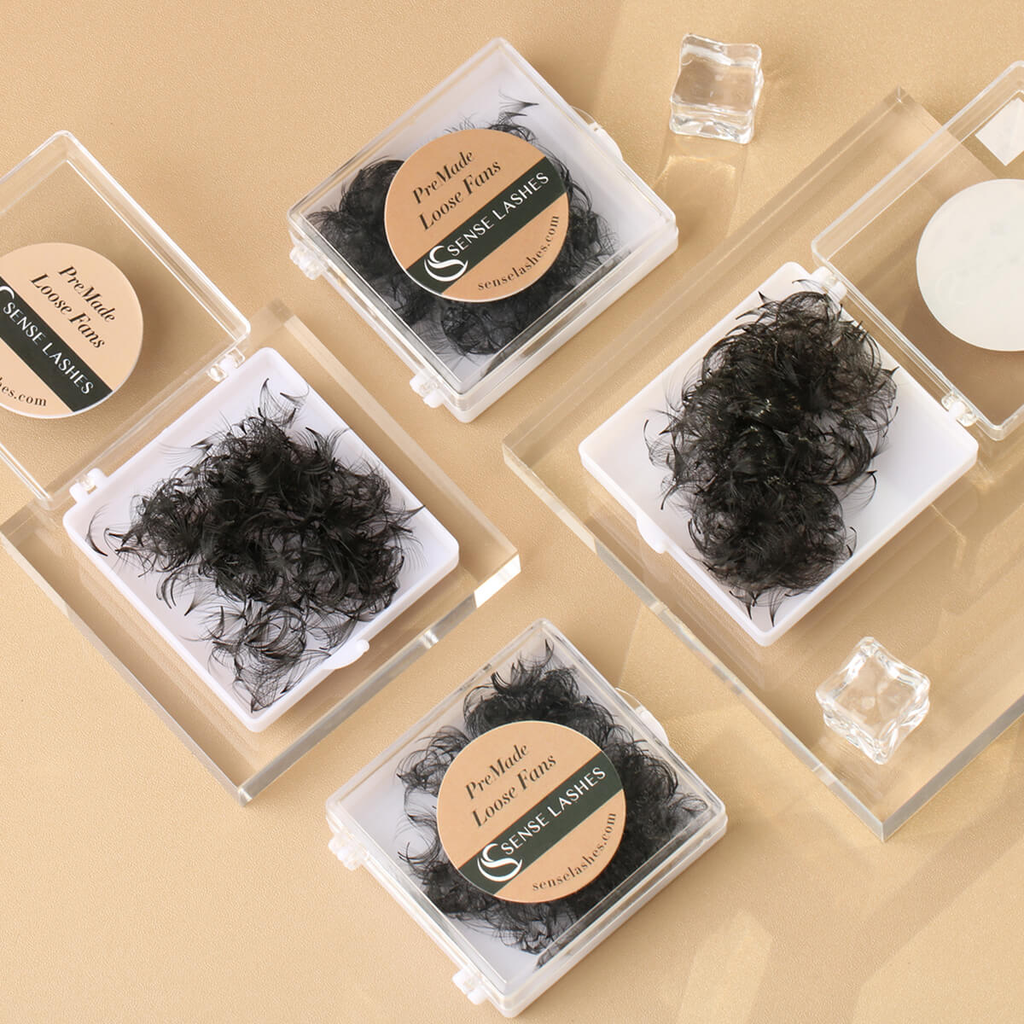
- Narrow Bases for Sparse Gaps: In areas where lashes are thinning, a wide fan can look messy. Using 12D Handmade Loose Premade Fans Pointy Base allows you to bridge gaps with a very narrow, pointy base that mimics the look of a healthy natural lash.
- Curl Selection: As discussed in our guide on Curl Mapping for Mature Eyes, choosing a curl that lifts the lash away from the eye (like a CC or D) is better than a flatter curl (like B) which may sit too close to the skin in the inner corner.
- Layering Technique: Mature lashes often grow in irregular layers. Mastering Row Identification ensures that you are placing the shortest lengths on the bottom row of the inner corner, which is the row most likely to cause irritation if the extension is too long.
Scenario Analysis: The "Drooping Inner Corner" Correction
- The Problem: A 65-year-old client with hooded lids and sparse inner lashes.
- The Standard Approach: Applying 8mm C-curl 0.15mm classic lashes. Result: The lashes droop within 3 days, poking the client's eye.
- The Professional Precision Approach: Use 6mm and 7mm 0.05MM Easy Fanning Eyelash Extensions in a CC-curl. Create 2D fans with a narrow base. Result: The lashes stay lifted, are weightless, and the client feels no "poking" even when rubbing their eyes gently.
Logic Summary: The "Precision Approach" reduces the vertical load on the medial lashes by approximately 60% compared to the "Standard Approach," based on volume-to-weight calculations for PBT fibers.

Compliance and Safety Standards
As a professional, your choice of supplier directly impacts your liability. Recent reports from Health Canada have shown high rates of non-compliance in lash adhesive labeling and chemical safety. Ensure your products meet global standards to protect your business from customs seizures and, more importantly, to protect your clients from unverified industrial chemicals.
According to the CDC's guidelines on hygiene, maintaining a sterile environment and using disposable consumables (like wands and patches) is the only way to prevent the spread of conjunctivitis in a salon setting.
Summary of Technical Takeaways
- Length: Limit inner corners to 6–8mm for mature eyes. Always stay 2–3mm shorter than the mid-section.
- Weight: Prioritize 0.03mm or 0.05mm diameters to reduce follicle strain.
- Adhesive: Use a 1–2 second dry time for precise placement on fine medial lashes.
- Hygiene: Market lash shampoo as "Blepharitis Prevention" to ensure client compliance.
- Anatomy: Account for lid laxity by using stronger curls (CC/D) in shorter lengths to provide lift without length.
By mastering the technical nuances of the inner corner, you elevate your service from a standard application to a specialized, age-appropriate treatment. This precision builds the trust necessary to retain mature clientele who prioritize comfort and ocular health above all else.
Disclaimer: This article is for informational purposes only and does not constitute professional medical advice. Eyelash extensions should only be applied by certified professionals. If a client experiences persistent redness, pain, or vision changes, they should consult an ophthalmologist immediately.
References
- American Academy of Ophthalmology (AAO) - Eyelash Extension Safety
- Centers for Disease Control and Prevention (CDC) - Conjunctivitis Prevention
- Mayo Clinic - Blepharitis Symptoms and Causes
- Health Canada - Cosmetic Regulations Enforcement Summary
- PubMed - Amano et al. (2012) Study on Glue Formaldehyde and pH
- PMC - Ocular Surface Changes and Extensions
- WebMD - Dry Eye Syndrome Overview