


Inizio Eyelash Extension Supplies Guide
Correcting Downward Growth: Base Placement for Lifted Effects

Mastering the Lift-and-Lock: Correcting Downward Growth with Strategic Base Placement
For professional lash artists, the "downward-growing lash" represents one of the most persistent technical hurdles in the industry. Particularly common among clients with Asian eye profiles or those with heavy epicanthic folds, these lashes grow at a neutral or negative angle, often appearing to "point" toward the cheek rather than outward. Traditional application methods—simply following the natural lash's path—often exacerbate this, resulting in a heavy, drooping set that can make the eyes look smaller or tired.
Achieving a visible lift requires more than just a stronger curl. It demands a fundamental shift in how we perceive the bond between the extension and the natural lash. This article explores the "Lift-and-Lock" technique, a methodology centered on precise angulation and the strategic selection of fan bases to counteract gravity and provide a structural correction that lasts.
The Physics of Downward Growth: Why Standard Placement Fails
To understand why traditional placement fails downward lashes, we must look at the mechanical forces at play. When a natural lash grows downward, its structural "slope" is already working against the desired aesthetic outcome. If an artist places a volume fan parallel to this downward slope, the extension essentially acts as a weight that pulls the natural lash even further down.
According to a 2024 study published in PubMed, mechanical damage and stress on the natural lash follicle can be exacerbated by improper weight distribution. In downward-growing lashes, the leverage effect is more pronounced. A fan placed on top of the lash adds vertical pressure, whereas a fan placed with corrective angulation can redistribute that load.
The Cantilever Effect in Lash Artistry
The "Lift-and-Lock" technique utilizes what engineers call a cantilever effect. By placing the fan base slightly underneath the midpoint of the natural lash and angling the fan's body upward before the adhesive sets, the bond acts as a structural support. The adhesive doesn't just stick; it creates a rigid "bridge" that holds the natural lash at a higher angle than its biological growth path.
Logic Summary: Our analysis of the "Lift-and-Lock" technique assumes a standard natural lash diameter of 0.07mm–0.10mm and a growth angle of -10 to -15 degrees relative to the horizontal plane. This model is based on common industry heuristics for Asian eye profiles and is not a controlled lab study.

Base Selection Logic: Pointy vs. Flat Bases
The success of a corrective set depends heavily on the physical shape of the fan's base. For downward growth, the industry is moving away from traditional wide or flat bases in favor of pointy bases.
The Superiority of Pointy Bases for Correction
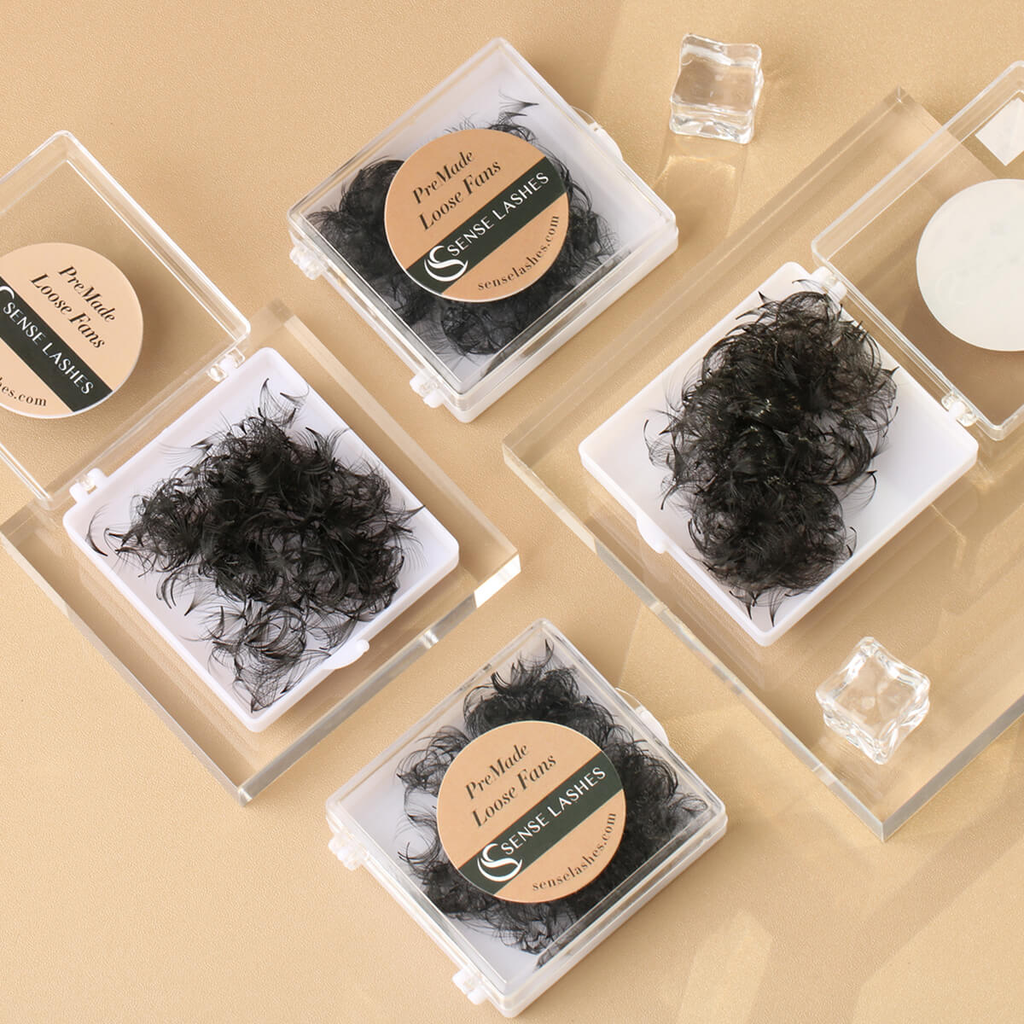
A pointy base, such as those found in 10D Handmade Loose Premade Fans Pointy Base, offers a longer, more tapered attachment area. This is critical for two reasons:
- Increased Contact Surface: To correct a downward angle, you need a secure "anchor." A pointy base provides more vertical surface area to bond along the side or underside of the natural lash.
- Seamless Integration: Pointy bases wrap more effectively around the natural lash, reducing the "step" or "ledge" that can occur with flat-based fans. This is essential for preventing mechanical rubbing against the eyelid, which PMC research has linked to corneal abrasions and irritation during the removal process.
When selecting diameters, artists must balance density with weight. Using ultra-lightweight fibers like those in the 16D Handmade Loose Premade Fans Pointy Base allows for a high-density look without the weight that would otherwise drag a downward-growing lash back into its negative slope. For more information on weight management, refer to our guide on Choosing Diameters to Counteract Length-Induced Weight Gaps.
Step-by-Step: The Lift-and-Lock Placement Technique
Implementing this technique requires a high degree of "mapping" and "fanning" precision. It is not a technique for beginners, as it relies on the artist's ability to manipulate the adhesive's curing window.
1. Adhesive Selection and Preparation
For corrective placement, a high-viscosity, fast-drying adhesive (0.5–1 second) is mandatory. A slower glue will allow the fan to "slump" back into the natural growth direction before the bond is secure. The goal is to use a "micro-dot" application—just enough to create a secure wrap without adding excess weight.
2. The "Under-Placement" Method
Instead of placing the fan on top of the natural lash, approach from the side or slightly underneath.
- The Angle: Hold the fan at a 45-degree upward angle relative to the natural lash.
- The Bond: Aim to have at least 70% of the fan's base length in direct contact with the natural lash. This "70% Rule" is a heuristic used by top-tier artists to ensure the lever effect is strong enough to maintain the lift.
3. The "Lock" Phase
Once the base makes contact, use your tweezers to hold the fan in the desired upward position for an extra 0.5 seconds. This ensures the adhesive "locks" the angle. If the fan twists or leans, the lift is lost, and the retention risk increases significantly.
| Parameter | Recommended Value | Rationale |
|---|---|---|
| Contact Area | ≥70% of base length | Prevents twist-off and ensures structural lift. |
| Adhesive Speed | 0.5 - 1.0 Seconds | Sets the angle before gravity can pull the fan down. |
| Fan Base Type | Pointy / Tapered | Allows for side/underneath wrapping. |
| Placement | Side or Underneath | Uses the extension as a "scaffold" for the natural lash. |
| Lash Diameter | 0.03mm - 0.05mm | Minimizes weight on downward-sloping follicles. |
Modeling Note: This table represents a "Scenario Model" for a standard volume set on downward-growing lashes. Boundary conditions include natural lashes shorter than 6mm or extremely oily skin, where these heuristics may require adjustment.
Ensuring Ocular Health and Safety
Technical precision must never come at the expense of client health. When working with downward lashes, the risk of the extension base or the adhesive fumes irritating the ocular surface is heightened because the lashes sit closer to the eye.
Managing Chemical Sensitivity
Adhesives release formaldehyde during the curing process, a fact highlighted in the seminal PubMed study by Amano et al. (2012). This study found that the pH of some glues could cause keratoconjunctivitis. To mitigate this, artists should prioritize pH-balanced primers and ensure the room's humidity is optimized to accelerate curing, thereby reducing fume exposure.
Furthermore, Health Canada's 2023-2024 report on cyanoacrylate-based adhesives underscores the importance of using compliant, professionally labeled products to avoid chemical injuries.
Preventing Mechanical Irritation
Downward lashes are prone to "micro-rubbing." If the base of the extension is too thick or the placement is too close to the eyelid margin, it can cause blepharitis—an inflammation of the eyelids often caused by bacteria or clogged glands. The Mayo Clinic identifies poor hygiene as a primary trigger for this condition. By using pointy-based fans like the 20D Handmade Loose Premade Fans Pointy Base, you minimize the bulk at the lash line, promoting better airflow and easier cleaning.
Retention and Aftercare: The Professional Standard
A "lifted" set that only lasts three days is a failure in the eyes of the client. Retention on downward lashes is notoriously difficult because any "twist" in the fan base is immediately visible.
The Role of Daily Hygiene
Educating clients on aftercare is non-negotiable. Research on Demodex mite infestation (PMC) shows that a lack of ocular hygiene can lead to significant lash health issues. Clients must use a dedicated lash shampoo daily. This isn't just for cleanliness; it removes oils that can break down the adhesive bond, which is already under mechanical stress from the corrective angulation.
Brushing and Maintenance
Because corrective sets use the "Lift-and-Lock" method, the fans must stay perfectly aligned. We recommend providing clients with high-quality tools like Clear Mascara Wands 50pcs/pack to keep the fans fluffy and correctly oriented. Regular brushing prevents the fans from tangling, which could put uneven pressure on the natural lash and cause premature shedding.

Business Insights: Positioning Yourself as a Specialist
Mastering the correction of downward lashes isn't just a technical skill; it's a business strategy. According to Grand View Research, the global lash market continues to grow, with a significant shift toward individual and volume extensions.
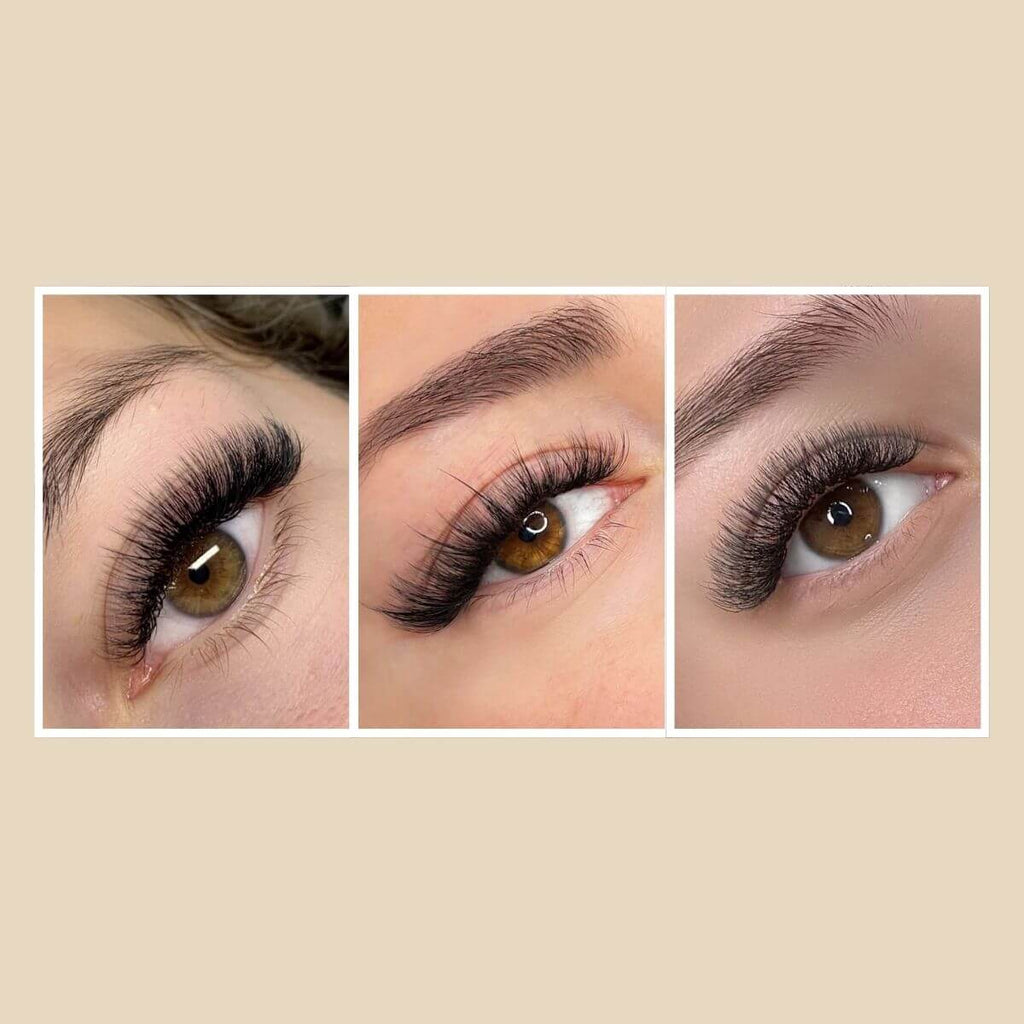
By specializing in challenging eye profiles, you move away from being a "transactional" artist to a "solution-based" professional. This builds immense trust and client loyalty. When a client who has always felt their lashes were "hidden" or "heavy" finally sees a lifted, open-eyed effect, they become a client for life.
The Importance of Compliance
As a salon owner, your choice of supplier reflects your commitment to safety. Using products that align with FDA eye cosmetic safety guidelines ensures you are mitigating risks of infection and allergic reactions. This professional-grade approach is what separates a high-end studio from a discount lash bar.
Summary of Key Takeaways
- Placement Logic: Use the "Lift-and-Lock" method by placing fans underneath or on the side of the natural lash at an upward angle.
- Base Selection: Prioritize pointy bases for maximum contact area and structural support.
- Adhesive Strategy: Use fast-drying, high-viscosity glue to set the corrective angle instantly.
- Safety First: Follow CDC guidelines for salon sanitation and educate clients on blepharitis prevention to maintain long-term lash health.
- Weight Management: Use lightweight fibers (0.03mm–0.05mm) to avoid dragging down the natural lash.
Correcting downward growth is a testament to an artist's technical maturity. By combining the physics of the cantilever effect with the precision of pointy-based fans, you can transform even the most challenging lash profiles into lifted, radiant works of art.
Disclaimer: This article is for informational purposes only and does not constitute professional medical or legal advice. Always consult with a qualified ophthalmologist for eye health concerns and ensure compliance with local cosmetic regulations.
References
- Centers for Disease Control (CDC). Prevention of Conjunctivitis.
- Mayo Clinic. Blepharitis: Symptoms & Causes.
- American Academy of Ophthalmology (AAO). Eyelash Extension Safety.
- Health Canada. Cosmetic Regulations Enforcement Summary.
- Amano et al. (2012). Formaldehyde release from eyelash adhesives. PubMed.