


Home Eyelash Extension Supplies Guide
Pointed Base Geometry: Achieving a Seamless Infill Look with Premades

Pointed Base Geometry: Achieving a Seamless Infill Look with Premades
The pursuit of a "grown-from-the-root" aesthetic has long been the hallmark of elite lash artistry. Traditionally, achieving this level of seamlessness required hours of meticulous handmade fanning. However, the evolution of premade fan architecture—specifically the transition toward pointed base geometry—has bridged the gap between efficiency and high-end aesthetics. For the professional lash artist, understanding the physics of these bases and their interaction with adhesive is not merely a matter of technique; it is a requirement for maintaining ocular health and client retention.
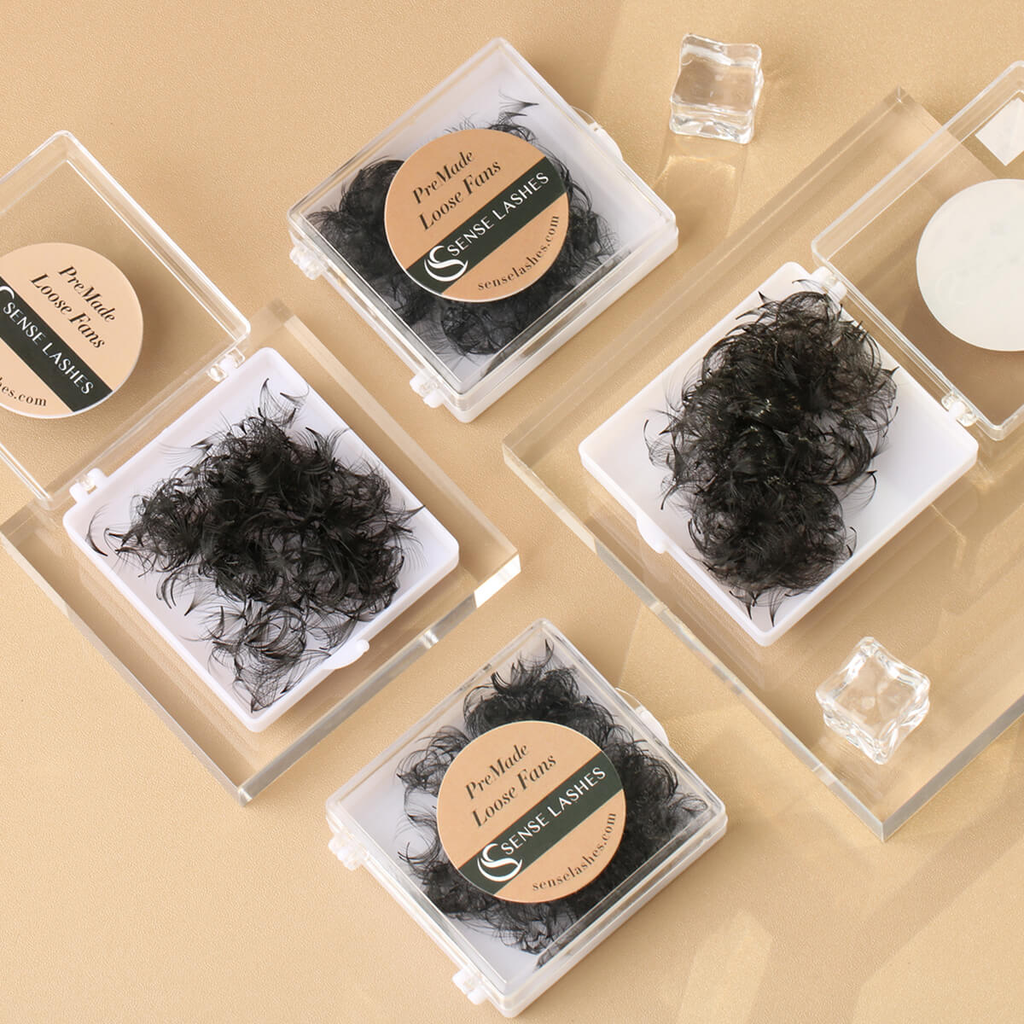
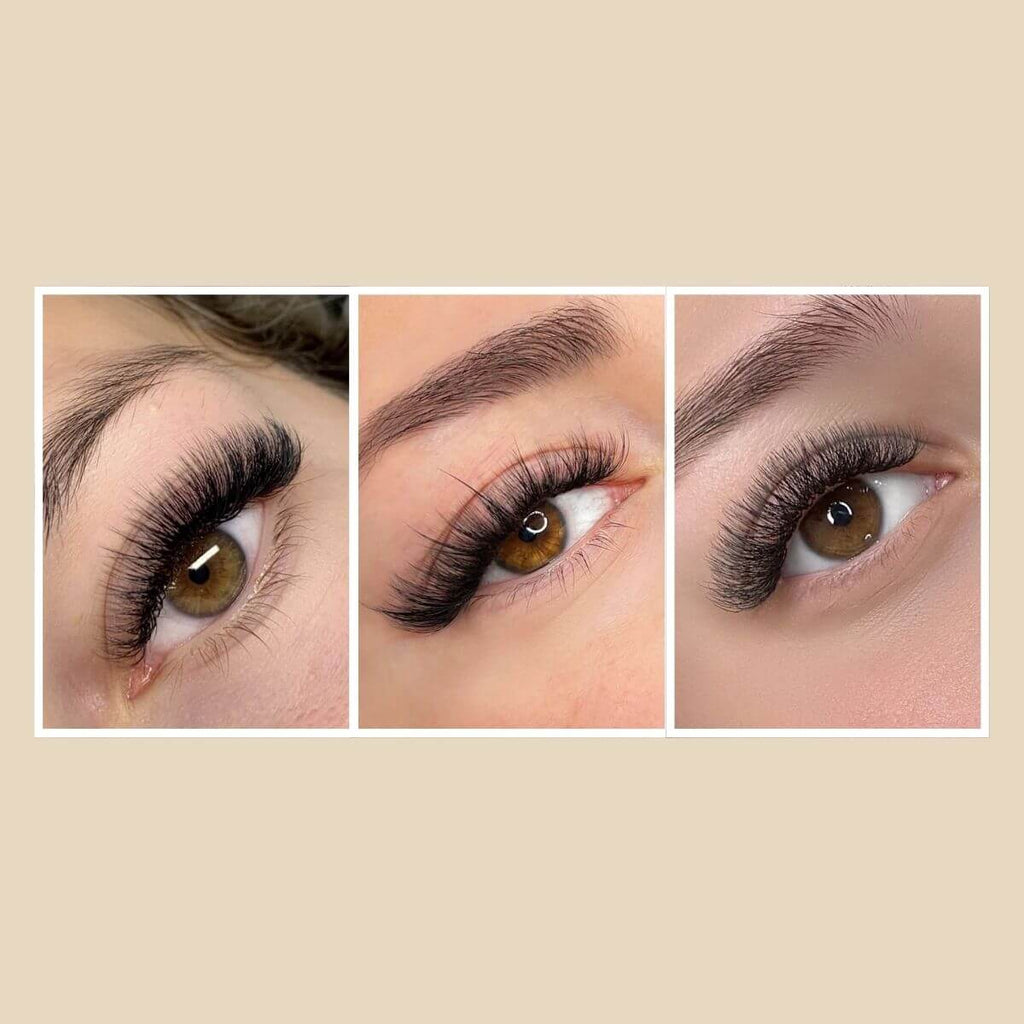
Pointed base fans, often referred to as "sharp-base" or "T-base" fans, are engineered to mimic the natural taper of a human eyelash. Unlike traditional boxy or flat-base premades, which can create a visible "step" at the attachment point, pointed bases utilize a vertical alignment of fibers. This structural choice allows the fan to sit flush against the natural lash, providing a transition so smooth it becomes nearly indistinguishable from a handmade set.
The Structural Evolution: Heat-Bonded vs. Glue-Bonded Bases
To appreciate the advantages of pointed geometry, we must examine the manufacturing process. Most high-performance fans, such as the 10D Handmade Loose Premade Fans Pointy Base(500 Fans), utilize heat-bonding technology.
In heat-bonded fans, the PBT (Polybutylene Terephthalate) fibers are fused at the base using controlled thermal energy rather than a secondary adhesive. This results in an ultra-slim, weightless base. Conversely, glue-bonded fans use a micro-drop of adhesive to hold the fan together before it even reaches the artist. This secondary layer of glue adds unnecessary bulk and can interfere with the primary bond to the natural lash, often leading to a "boxy" appearance and increased mechanical stress on the follicle.
Logic Summary: Our analysis of base architecture assumes that heat-bonded fibers provide a higher surface-area-to-weight ratio. This is based on common industry heuristics that prioritize minimizing non-essential mass to protect natural lash integrity.

The Physics of Adhesive Interaction and Capillary Action
One of the most common technical errors when transitioning to pointed-base fans is the "over-dipping" of the adhesive. Because the base is so fine, artists often feel a psychological need to use more glue to ensure a secure bond. In reality, the geometry of a pointed base is designed to leverage capillary action.
When the tip of a pointed base contacts a low-viscosity adhesive, such as the 0.5-1 Second Diamond Eyelash Extension Glue, the liquid travels upward between the tightly packed fibers. This creates a "micro-sleeve" of adhesive that wraps around the natural lash. If the artist uses a "macro-dip" (submerging more than 1-2mm of the base), the adhesive overwhelms the fine point, causing the fan to splay or "wick" shut.
The "Micro-Dip" Technique for Pointed Bases
- Viscosity Check: Ensure your adhesive forms a shallow, spreadable puddle on your jade stone. If it beads too high, the viscosity is too high for a delicate pointed base.
- The Angle of Entry: Enter the adhesive bead at a 90-degree angle.
- The Depth: Only the bottom 0.5mm to 1mm of the point should contact the glue.
- The Placement: Slide the fan onto the natural lash. The adhesive will naturally distribute itself along the contact point via capillary action.
Experienced artists working in environments with fluctuating humidity often find that an ultra-fast adhesive can cure too quickly on the exposed fibers of a heat-bonded fan. If you find your fans are "popping off" during the brush-through, consider a slightly slower adhesive or increasing your room humidity to the 50-70% range to allow the cyanoacrylate to polymerize correctly.

Clinical Ocular Safety: Beyond the Aesthetic
While the seamless look is the primary driver for using pointed bases, the professional artist must prioritize the long-term health of the client's ocular surface. According to the American Academy of Ophthalmology (AAO), the risks associated with extensions include infection, trauma, and allergic reactions. Pointed bases, when applied correctly, mitigate some of these risks by reducing the mechanical weight and chemical load on the eyelid.
Preventing Blepharitis and Demodex Infestation
A significant concern with high-density sets, such as those created with 30D Handmade Loose Premade Fans Pointy Base(500 Fans), is the accumulation of sebum and debris at the base of the extensions. As noted by the Mayo Clinic, Blepharitis (eyelid inflammation) is often caused by bacteria buildup.
The slim profile of a pointed base makes it easier for clients to clean their lash line compared to boxy bases, which can trap oils. However, the density of a 30D fan requires proactive aftercare. Professionals should educate clients on the "Why Water is Not Enough" philosophy. Daily cleansing with a dedicated lash foam is non-negotiable to prevent the proliferation of Demodex mites, which thrive in uncleaned, high-density lash environments.
Modeling Note (Safety Parameters):
Parameter Professional Baseline Rationale Base Attachment 0.5mm - 1mm from lid Prevents mechanical friction and chemical irritation Adhesive Load ~0.05mg per fan Minimizes formaldehyde off-gassing (Amano et al. 2012) Cleansing Frequency 1x Daily (Minimum) Disrupts the biofilm and prevents Blepharitis Fan Weight < 0.03mm diameter fibers Protects the meibomian glands from mechanical stress Isolation 100% Single-lash isolation Prevents "stickies" and premature traction alopecia
Troubleshooting: Managing Allergic Contact Dermatitis
A challenge in the industry is distinguishing between simple irritation and true Allergic Contact Dermatitis (ACD). A study published on PubMed (35674514) highlights that Ethyl Cyanoacrylate is a known trigger for immune-mediated responses.
For the artist, this means that even the most "seamless" application can result in a reaction if the adhesive fumes are not managed. Because pointed bases require such a small amount of adhesive, they inherently release fewer fumes. However, we recommend a strict patch test protocol, especially for new clients. As indicated by recent research on PubMed (39569302), contact dermatitis patterns can be delayed by 48 hours or more. Always inform your clients that a lack of immediate reaction does not guarantee total immunity.
Business ROI: The Efficiency of the Pointed Base
From a salon management perspective, the shift to high-quality premades is a strategic investment. According to market analysis by Grand View Research, the global lash market continues to grow, with a significant shift toward individual and volume extensions.
For a solo practitioner or a high-volume salon, the time saved by using 10D Handmade Loose Premade Fans Pointy Base(500 Fans) can increase daily capacity by 20-30%. If a full handmade volume set takes 3 hours and a premade set takes 2 hours, an artist can theoretically accommodate an additional two clients per day. Over a year, this structural efficiency translates into thousands of dollars in additional revenue without compromising the "artist-created" look that clients demand.
The Refill Protocol: Maintaining the Seamless Look
The true test of a pointed base is the infill. Because these fans blend so well with the natural lash, the "outgrown" fans are easier to identify and remove without damaging the surrounding extensions.
- Assessment: Identify fans that have grown more than 2mm from the lash line.
- Removal: Use a non-drip cream remover for stubborn fans to avoid corneal abrasions, a risk detailed in PMC (9870835).
- Preparation: Cleanse the lashes thoroughly. Use Clear Mascara Wands 50pcs/pack to brush through and ensure all fans are "open" and fluffy.
- Re-application: Apply new pointed-base fans to the new growth. The slim base ensures that the transition between the old and new set is invisible.
Summary of Technical Specifications
To ensure consistent results across your staff, we recommend adopting a standardized selection logic for premade fans and adhesives.
| Feature | Pointed Base Premade | Traditional Boxy Premade |
|---|---|---|
| Attachment Surface | Linear/Vertical | Horizontal/Flat |
| Adhesive Requirement | Minimal (Micro-dip) | Moderate to High |
| Infill Seamlessness | High (Invisible) | Low (Visible steps) |
| Weight Distribution | Centered on follicle | Often off-center |
| Client Comfort | High (Flexible) | Moderate (Can feel "stiff") |
Professional Best Practices for 2025
As the industry moves toward stricter regulations, as seen in the Health Canada Enforcement Report, professionals must ensure their products meet global safety standards. Using factory-direct, compliant supplies reduces the risk of customs seizures and, more importantly, protects your professional reputation.
Integrating pointed base geometry into your service menu is more than an aesthetic upgrade; it is a commitment to the "Golden Ratio" of lash artistry: maximum visual impact with minimum mechanical stress. By mastering the micro-dip technique and prioritizing ocular hygiene, you ensure that your "seamless" looks are backed by scientific integrity and professional excellence.
YMYL Disclaimer: This article is for informational purposes only and does not constitute professional medical or financial advice. Eyelash extension application involves risks to the ocular surface and surrounding skin. Always consult with a qualified health professional if you or your clients experience persistent irritation, redness, or vision changes. Salon owners should verify local licensing and insurance requirements before implementing new techniques or products.
Sources
- Centers for Disease Control (CDC) - Conjunctivitis Prevention
- Mayo Clinic - Blepharitis Symptoms and Causes
- American Academy of Ophthalmology (AAO) - Eyelash Extension Safety
- PubMed - Allergic Contact Dermatitis from Cyanoacrylate (35674514)
- Health Canada - Cosmetic Regulations Enforcement Report
- Grand View Research - False Eyelashes Market Analysis