


Home Eyelash Extension Supplies Guide
Strategic Spike Placement for Correcting Downward-Facing Lashes

Strategic Spike Placement for Correcting Downward-Facing Lashes
In the professional lash industry, the ability to correct challenging natural lash growth patterns is what distinguishes a technician from a true lash artist. Downward-facing natural lashes—often referred to as "drooping" or "hooded-growth" lashes—present a unique set of structural and aesthetic hurdles. If mismanaged, standard application can emphasize the heaviness of the eyelid, making the client appear tired or aged.
The solution lies in "Wispy Mapping" and the strategic placement of structural spikes. By manipulating the visual center of gravity through specific curl selection and density distribution, we can create a functional lift that counteracts the natural downward trajectory. This guide explores the technical architecture required to master this corrective technique, grounded in both practical shop-floor heuristics and ophthalmological safety standards.
The Anatomy of Downward-Facing Lashes
Before selecting a tray, an artist must understand the underlying cause of downward growth. For many clients, this is a genetic trait common in certain ethnicities or eye shapes (such as monolid or deep-set eyes). For others, it is a result of age-related skin laxity or ptosis.
According to the American Academy of Ophthalmology (AAO), the weight of extensions can exacerbate existing ocular conditions if not calculated correctly. When lashes grow downward, the lever arm of the extension puts more mechanical stress on the follicle. This is why choosing lightweight materials like 0.10MM Ellipse Flat Classic Eyelash Extensions is critical; their flat base provides a larger bonding surface with approximately half the weight of traditional round fibers, reducing the risk of premature shedding or "droop" over time.
Logic Summary: Our corrective modeling assumes that reducing the weight-to-surface-area ratio is the primary defense against mechanical lash damage in downward-growing sets. This heuristic is based on common patterns from customer support and professional troubleshooting (not a controlled lab study).
The "Tent Pole" Heuristic: Strategic Spike Placement
A common mistake among intermediate artists is placing the longest spike directly at the peak of the pupil. While intuitive, this often creates a "heavy" visual center that draws the eye downward. Experienced practitioners instead utilize a "tent pole" strategy.
The Visual Lift Zone
To create a genuine lift, the visual anchor must be moved. We often observe that starting the visual lift lower, in the mid-inner zone, provides a more youthful, "opened" effect.
- Spike Length: Use spikes that are exactly 1-2mm longer than the surrounding base layer.
- Curl Selection: A D-curl spike is typically the most effective for "lifting" the line. When a D-curl is applied to a downward-facing lash, the steep curvature acts as a counter-lever to the downward growth.
- Base Layer Integration: The base layer should remain shorter and more conservative (e.g., B or C curl) to provide a dense "dark line" that hides the natural downward growth. For more on this, see our guide on Selecting Curls Based on Natural Lash Growth Angles.

Mapping for Architecture: The 3:1:2 Ratio
For downward-facing lashes, uniform spike distribution is rarely effective. Instead, we recommend a non-linear density distribution to create a sweeping, uplifted tail.
| Zone | Density Ratio | Purpose |
|---|---|---|
| Inner Zone | 3 | Provides subtle texture without crowding the sensitive inner canthus. |
| Mid Zone | 1 | A "breather" zone that prevents the "heavy pupil" effect. |
| Outer Zone | 2 | Double the spike density of the inner zone to pull the eye upward and outward. |
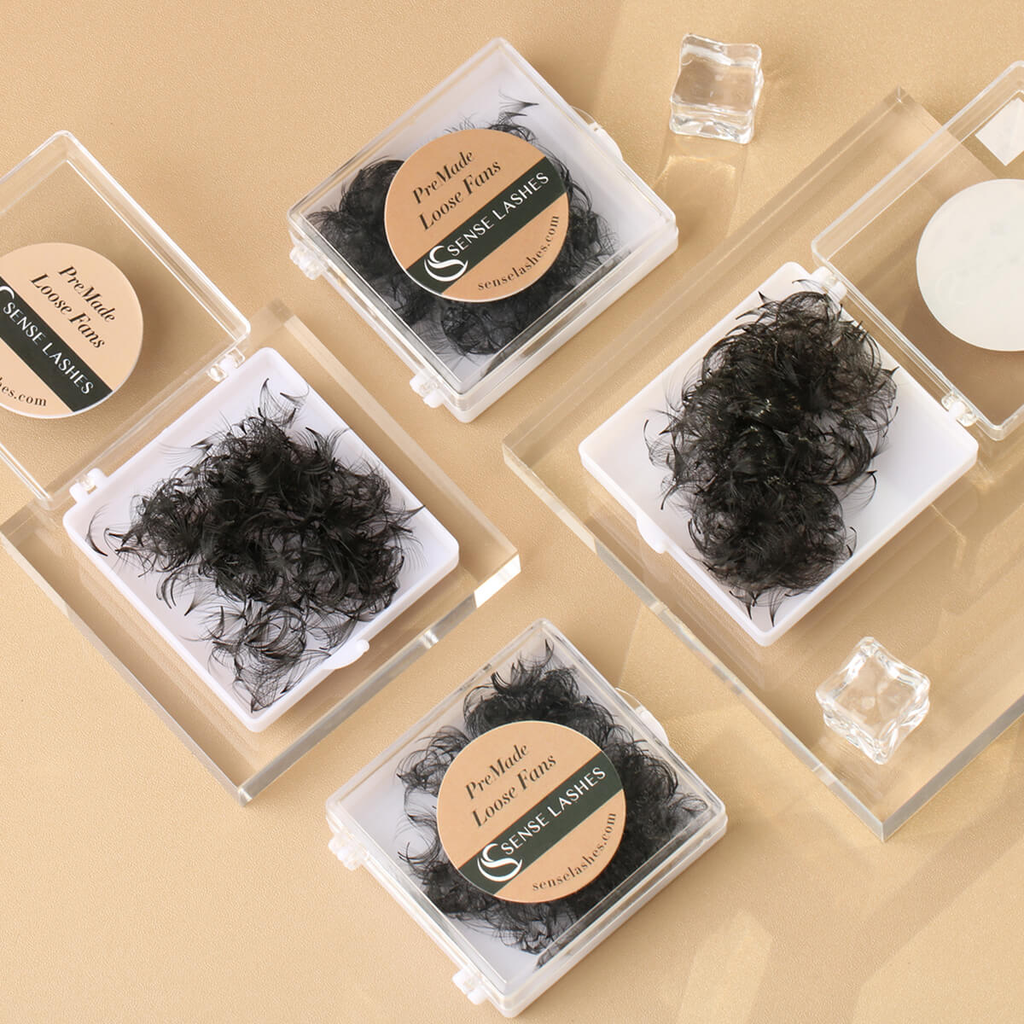
This distribution creates a "Wispy" effect that mimics natural lash variation while strategically placing the most "lift" where the eye begins to droop. Using 0.07mm Cashmere Volume Wispy Eyelash Extensions allows the artist to pick up 5-lash clusters that are already bonded at the base, ensuring the spike stays sharp and doesn't "fan out," which would add unnecessary width and weight.
Adhesive Dynamics and Retention Science
When working with downward lashes, the "setting" phase of the adhesive is your most powerful tool. If an adhesive cures too quickly, you lose the ability to micro-adjust the angle of the spike. If it cures too slowly, the spike may lean or "droop" before it sets.
We have found that a 0.5-1 Second Diamond Eyelash Extension Glue offers the ideal balance for advanced artists. The 0.5-1 second window is sufficient to "lock" the spike at an upward angle even if the natural lash is pointing down.
Chemistry and Safety
Adhesive safety is a non-negotiable aspect of professional artistry. A study by Amano et al. (2012) highlighted that early lash adhesives often released high levels of formaldehyde and had acidic pH levels, leading to keratoconjunctivitis. Modern professional formulas, like the Diamond Bond, are engineered to be pH-neutral and formaldehyde-free.
However, even the safest glue requires a controlled environment. Health Canada's 2023-2024 Compliance Report emphasizes the importance of proper labeling and chemical stability. For the artist, this means maintaining a room humidity of 50-70% to ensure the cyanoacrylate polymerizes correctly without "blooming" (turning white), which can irritate the ocular surface.

Managing Oily Lids and Retention Challenges
Downward-facing lashes are frequently accompanied by oily skin or hooded lids, where the skin of the eyelid rests directly on the lash line. This creates a high-friction environment that can degrade adhesive bonds.
The Oily Lid Heuristic: Based on common patterns in high-humidity environments, we suggest a 10% reduction in spike length and a "step up" in curl (e.g., from D to DD).
- Rationale: Shorter lengths reduce the "leverage" that oil and eyelid movement exert on the bond.
- Curl Compensation: The tighter curl (DD) ensures the tip of the lash remains visible even if the base is slightly suppressed by a hooded lid.
To further protect the bond, a thorough priming process is essential. Research published in PMC regarding Ocular Surface Disease suggests that long-term extension wear can alter the microbiome of the eyelid. Using a professional primer not only removes oils but balances the pH of the natural lash, creating a more receptive surface for the 0.5-1 Second Diamond Eyelash Extension Glue.
Salon Sanitation: Preventing Blepharitis and Infection
Corrective work often involves more complex mapping and higher lash counts, making hygiene even more critical. The Mayo Clinic identifies poor eyelid hygiene as a primary cause of Blepharitis (eyelid inflammation).
When lashes are applied to downward-growing hairs, debris and sebum can become trapped more easily at the base. You must educate your clients that "water is not enough." Daily cleaning with a specialized lash foam cleanser is mandatory to prevent Demodex mite infestation, a condition well-documented in PMC research.
The Professional Sanitation SOP
Following CDC guidelines for conjunctivitis prevention, every salon should implement a strict Standard Operating Procedure:
- Disposable Consumables: Use fresh eye patches and wands for every client.
- Mechanical Safety: Use cream-based removers instead of liquids. A PMC Case Report noted that liquid removers are more likely to run into the eye, causing corneal abrasions.
- Isolation Precision: High-quality gel patches are not just for comfort; they prevent the lower lashes from interfering with the upper set, reducing the risk of chemical burns from adhesive fumes.
Troubleshooting: Irritation vs. Allergy
As an artist, you will inevitably encounter clients who experience a reaction. Distinguishing between simple irritation and a true allergy is vital for client safety and your professional reputation.
- Irritation (Chemical Sensitivity): Typically caused by fumes from the adhesive. According to WebMD, this can be exacerbated by "Dry Eye Syndrome," where the lack of a stable tear film allows fumes to reach the cornea more easily.
- Allergic Contact Dermatitis: A specific immune response to Ethyl Cyanoacrylate. A study in PubMed details how these reactions can be delayed, appearing 48-72 hours after application.
Always perform a patch test for new clients, but inform them that a negative patch test does not 100% guarantee no future reaction, as sensitivities can develop over time. For more on managing complex eye shapes, refer to our article on Curl Mapping for Mature Eyes.
The Business of Precision: 2025 Market Outlook
The demand for specialized, corrective lash artistry is growing. Grand View Research indicates a significant CAGR in the individual lash segment, driven by a consumer preference for "customized" rather than "one-size-fits-all" looks.
For salon owners, mastering techniques like strategic spike placement for downward lashes is a "land-and-expand" business strategy. When you solve a functional problem for a client (e.g., making their eyes look less "tired"), you build a level of trust that ensures long-term retention. This expertise allows you to position your services at a premium, moving away from price-competition and toward value-based artistry.
Summary of Corrective Parameters
To ensure reproducible results in your studio, use the following modeling parameters as a baseline for downward-facing lash sets:
| Parameter | Value/Range | Unit | Rationale |
|---|---|---|---|
| Base Lash Length | 7 - 11 | mm | Keeps weight low to prevent further drooping. |
| Spike Delta | +1 to +2 | mm | Provides visible "Wispy" texture without excessive weight. |
| Spike Curl | D or DD | Type | Counteracts downward growth trajectory. |
| Adhesive Speed | 0.5 - 1.0 | sec | Allows for "setting" the angle of lift. |
| Client Cleanse | 24 | hours | Post-application window for first wash (standard heuristic). |
Method & Assumptions: This model is deterministic based on a standard adult eye shape with a -15 degree natural lash growth angle. Boundary conditions: Model may not apply to clients with active ocular infections or those with fewer than 30 natural lashes per eye.
Final Takeaways for the Professional
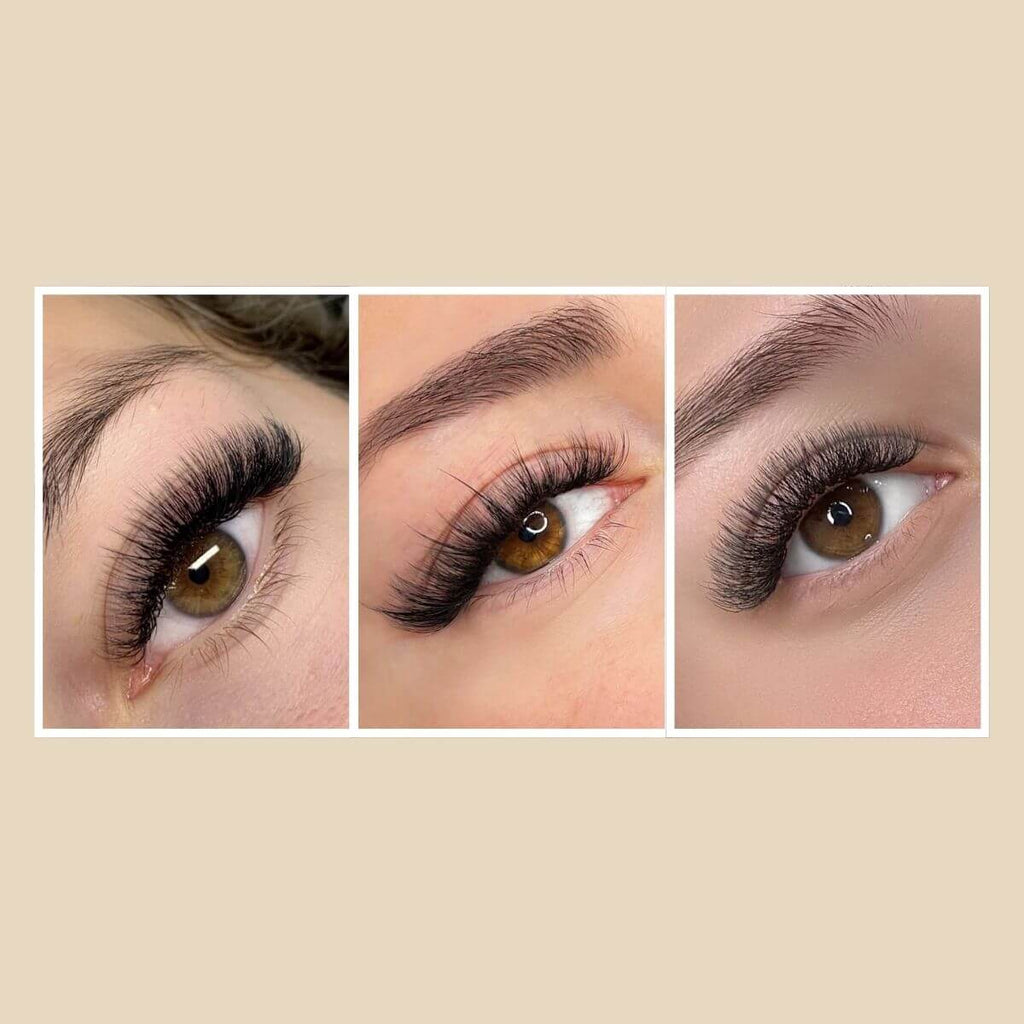
Mastering the correction of downward-facing lashes requires a blend of structural engineering and aesthetic intuition. By moving away from the "pupil peak" trap and adopting the 3:1:2 spike distribution, you create a visual lift that transforms the client's appearance.
Prioritize lightweight materials like 0.10MM Ellipse Flat Classic Eyelash Extensions for the base and high-precision clusters like 0.07mm Cashmere Volume Wispy Eyelash Extensions for your spikes. Always anchor your practice in safety, utilizing high-performance adhesives like 0.5-1 Second Diamond Eyelash Extension Glue and maintaining rigorous sanitation standards.
In an evolving market, your technical precision is your most valuable asset. By solving the "unsolvable" lash growth patterns, you secure your place as an industry leader.
Disclaimer: This article is for informational purposes only and does not constitute professional medical or legal advice. Always consult with a qualified ophthalmologist regarding eye health concerns and ensure compliance with local cosmetic regulations.
Sources: