


What Are Lash Extensions Made Of? Materials, Safety & What to Ask Your Lash Supplier

Professional lash extensions consist primarily of PBT polymer regardless of labels like mink or silk. This guide covers fiber specs and adhesive safety.
Nearly all professional lash extensions are made from a single synthetic polymer called PBT. The labels on your trays (mink, silk, cashmere) describe processing differences, not different raw materials. Knowing this distinction sharpens sourcing decisions, supports accurate client consultations, and directly affects set retention and client safety.
What Are Lash Extensions Actually Made Of?
The short answer is PBT. The longer answer explains why that matters more than any label on the packaging.
PBT
PBT, or polybutylene terephthalate, is a heat-resistant thermoplastic used across medical devices, electronics, and professional lash extensions. Its key properties for lash work: it holds a molded curl under humidity, resists mechanical stress, and can be drawn into fibers as fine as 0.03mm. Every extension type in a professional inventory (faux mink, silk, cashmere, flat) starts with this same base material.
What changes between product lines is how the PBT is processed. The curl is heat-set into the fiber, the tip is tapered to a specific depth, and the surface is finished to a matte, semi-gloss, or gloss level. None of these variables involves a different raw material.
Real Mink and Natural Silk
Real mink fur and natural silk were used in early lash extension products, but both were phased out on performance and hygiene grounds. Real mink fur cannot hold a heat-set curl. Once the fiber gets wet, the curl drops. Natural silk fibers cannot be physically molded into the C, CC, or D curl shapes that volume techniques require.
Hygiene is the second factor. Animal-derived fibers are porous, making them harder to sanitize and more likely to harbor bacteria between client uses. PBT is non-porous by structure. For studios that maintain strict client safety records, this distinction applies to every set.

Are Mink Lashes Real Mink?
The terminology on lash trays is a consistent source of confusion for clients and, sometimes, for newer artists. Addressing it directly protects your consultation accuracy.
Faux Mink, Silk, Cashmere, Synthetic
| Label | Base Material | Surface Finish | Taper Depth | Typical Diameter Range |
|---|---|---|---|---|
| Faux Mink | PBT | Matte to semi-matte | Deep | 0.03–0.07mm |
| Silk | PBT | Semi-gloss to gloss | Shorter | 0.05–0.10mm |
| Cashmere | PBT | Matte | Ultra-deep | 0.03-0.05mm |
| Synthetic | PBT | High gloss | Minimal | 0.10–0.20mm |
Taper depth determines how much of the fiber tip is thinned out during manufacturing. A deeper taper produces softer, lighter-feeling tips, characteristic of cashmere and faux mink. A shorter taper gives a more defined, firmer tip, characteristic of synthetic and some silk options. These are processing variables, not material variables.
When clients ask for "real mink," the accurate answer is that professional lash extensions are not made from animal fur. The label exists for finish and feel description, not material sourcing.
Why There Is No Universal Naming Standard in the Lash Industry
No regulatory body defines what a "mink" or "silk" extension must contain. One factory may label a matte, deep-taper PBT fiber as "mink." Another calls the same product "velvet." This inconsistency creates real problems at the sourcing level.
Evaluating extensions by spec (diameter, taper depth, finish level) rather than by product name gives you reliable reorder criteria. If a supplier cannot provide these parameters on request, that itself is useful information about their operation.
How to Compare PBT Lash Materials by Spec, Not by Label
Once naming is understood as inconsistent, spec-based comparison becomes the practical alternative. Three variables carry most of the weight in sourcing decisions.
Diameter, Taper, and Finish
Diameter determines weight and stiffness. The range runs from 0.03mm for ultra-light mega volume fans to 0.20mm for classic sets. Selecting the correct diameter relative to your client's natural lash strength is the primary factor in preventing traction alopecia (gradual hair loss caused by repeated tension on the follicle) over time.
Taper depth controls tip softness. A deep taper produces a finer, more flexible tip that moves like natural lash hair. A shallow taper creates a more blunt tip with visible definition at the ends. Volume work generally benefits from deeper tapers; classic sets can work across both.
Surface finish affects visual outcome. Matte finishes blend more naturally in daylight. Gloss finishes create a mascara-like effect. Semi-gloss sits in between and tends to photograph well under studio lighting.
Flat and Ellipse Lashes
Standard PBT extensions have a round cross-section. Flat or ellipse lashes have an oval cross-section. This structural difference increases the surface area in contact with the natural lash and adhesive.
The practical result is stronger adhesive bonding with less adhesive volume, and lighter weight per extension. For clients with fine or fragile natural lashes, flat lashes extend retention without adding mechanical load. They are also useful in volume work where weight management is a priority.
How PBT Quality Varies
Not all PBT fibers perform equally. Variation occurs at the raw material and manufacturing level, and it shows up in your sets within the first week of wear.
Key indicators of consistent quality:
- Curl uniformity stays consistent across the full tray, not just the top rows.
- Color remains stable after extended exposure to humidity and light.
- Curl retention holds through the client's natural lash growth cycle without flattening.
- Fiber separation from the strip is clean, with no adhesive drag or tangling during pickup.
Requesting MSDS documentation and ISO 22716 (Cosmetics GMP) certification from a supplier adds a verifiable quality checkpoint that goes beyond visual tray inspection.
How to Match PBT Extension Type to Client Profile
Clients often ask which material is better.
Performance Comparison Across Retention, Curl Stability, and Client Comfort
| Factor | Faux Mink (PBT) | Silk (PBT) | Cashmere (PBT) | Synthetic (PBT) |
|---|---|---|---|---|
| Curl stability in humidity | High | High | High | High |
| Weight per fiber | Low | Medium | Very low | High |
| Fan creation for volume | Good | Excellent | Excellent | Poor |
| Client comfort | High | High | Very high | Lower |
| Suitable application scope | Full cycle | Full cycle | Full cycle | Short-term only |
All four options hold curl reliably under humidity because PBT is the base for all of them. The differences are in weight distribution, fan-making behavior, and aesthetic finish. Synthetic extensions carry the highest weight and are suited for short-term wear (events or photoshoots), not regular extension cycles.
Cashmere fibers at 0.03mm produce the lightest fans for mega volume work, making them the recommended option when clients have fine or compromised natural lashes.

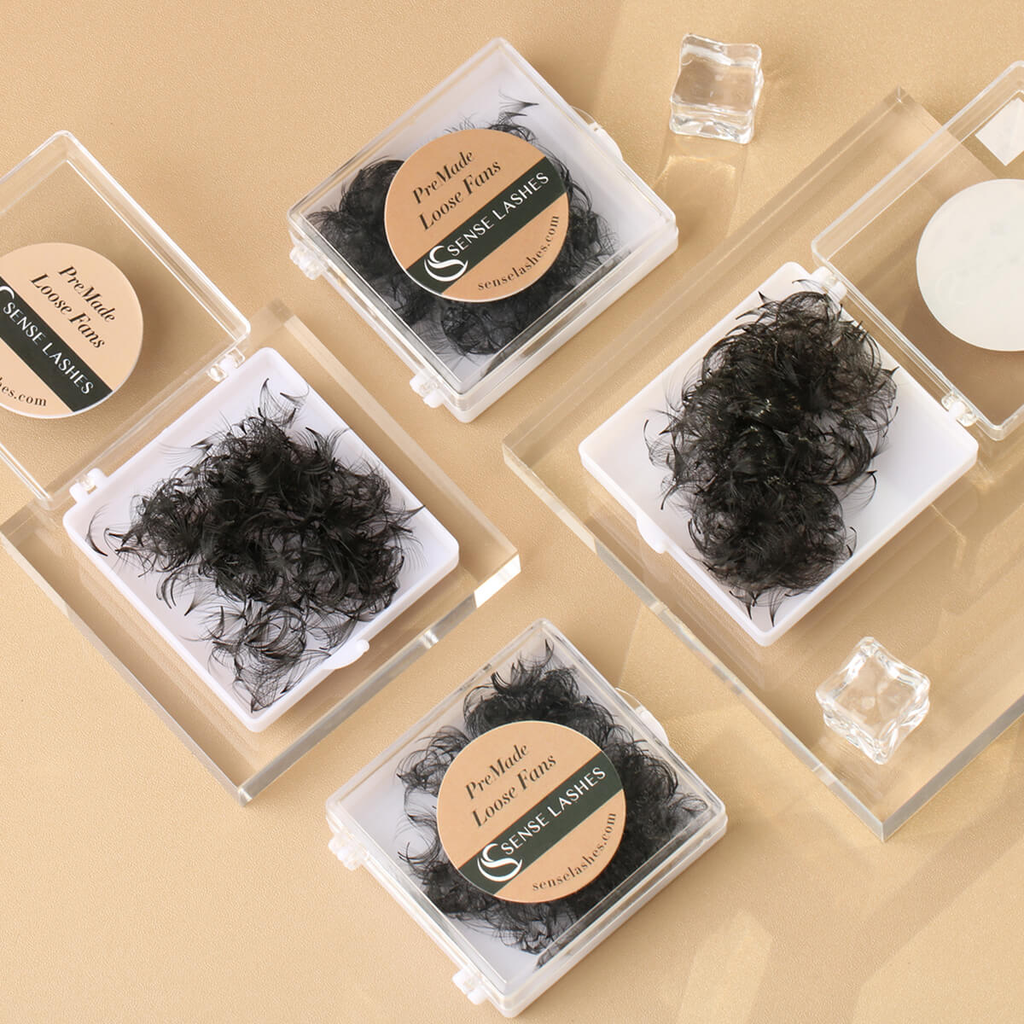
0.03MM Cashmere Premium Mega Volume Eyelash Extensions
Curl: C
Length: Mix8-15mm
Ethical and Client Communication Considerations
Clients increasingly ask whether extensions are cruelty-free. PBT-based extensions are vegan by default. No animal products are involved in production, and "cruelty-free" claims on synthetic lash products are accurate. Independent certification (such as Leaping Bunny or PETA-approved status) provides a more verifiable reference than brand labeling alone.
If a client specifically requests cruelty-free options, confirming that all PBT extensions meet this standard simplifies the consultation and positions your studio as transparent.
The Real Safety Variable: Lash Adhesive, Not Lash Fiber
Most client allergy concerns are attributed to lash fiber, but fiber-specific allergic reactions to PBT are rare. The adhesive is where the genuine safety variables sit, and this is the area that requires the most rigorous supplier questioning.
Cyanoacrylate
Cyanoacrylate is the bonding agent in all professional lash adhesives. It cures on contact with moisture, which is why humidity affects drying time and why eyes-closed protocol during application matters. Cyanoacrylate is the bonding agent in all standard professional lash adhesives.
Sensitive-formula adhesives reduce the concentration of added irritants in the formula, but cyanoacrylate remains the base ingredient.
Formaldehyde in Lash Glue
Formaldehyde is not an added ingredient in lash adhesives. It can form as a trace byproduct during the curing process and as the adhesive degrades over time. This is why no lash adhesive can be technically labeled "formaldehyde-free," as trace formation occurs regardless of formula.
At concentrations found in professional adhesives, trace formaldehyde does not pose a measurable risk to clients. For lash artists applying multiple sets daily, adequate ventilation is a professional requirement. Requesting an MSDS from your adhesive supplier gives you the formaldehyde concentration data in writing, which is the appropriate standard of due diligence.
Latex Sensitivity, Cumulative Allergy, and Sensitive-Eye Protocols
Some lash adhesives contain latex as a secondary component for flexibility. Clients with a known latex allergy need a latex-free formula confirmed before any application. Latex-free options are available from most professional suppliers.
Cyanoacrylate sensitivity can develop over time. A client who has worn extensions for years without reaction can develop sensitivity through cumulative exposure. If a long-term client reports new irritation, switch to a low-fume or sensitive formula and assess the response before the next full set. Do not dismiss new sensitivity in existing clients.
What to Ask Your Lash Supplier Before Buying Any Material
Sourcing decisions made at the supplier level directly affect what you deliver at the chair. These questions narrow the gap between what is on the label and what is in the tray.
Questions to Evaluate PBT Fiber Quality
Ask these before placing any order with a new supplier:
- What is the country of origin of the PBT raw material used in production?
- Can you provide diameter, taper depth, and finish specifications for each product line?
- Do you have batch consistency documentation or quality control records available?
- Is ISO 22716 (Cosmetics GMP) certification available for review?
- Can you provide an MSDS for the extension product?
If a supplier cannot answer the specification questions clearly, the sourcing risk is higher regardless of price point.
Questions to Evaluate Adhesive Safety and Formulation
Ask these for any adhesive you intend to use on clients:
- What type of cyanoacrylate is used, and what is the concentration?
- Is the formula latex-free?
- What is the fume classification, and does it qualify as low-fume?
- What is the shelf life after opening, and what are the storage requirements?
- Is a sensitive-formula adhesive available, and how does its formulation differ from the standard product?
A supplier who can answer these questions clearly is operating at a professional standard. Vague or unavailable answers are a sourcing concern worth acting on.
Patch Testing as Professional Protocol, Not Optional Step
Patch testing is the standard protocol for new clients and when introducing a new adhesive formula to existing clients. Apply a small amount of adhesive (or two to three extensions at the outer corner) at least 24 hours before a full set. Document the result in the client record. This is both a safety step and a record of due diligence if an adverse reaction is later reported.
Two Practical Safety Rules That Protect Clients and Natural Lashes
Beyond material selection and adhesive safety, two operational areas affect long-term client lash health in ways that rarely appear in standard aftercare communication.
Heat Sources and PBT
PBT is a thermoplastic. Direct, sustained heat exposure from steam facials, saunas, or proximity to open oven or grill heat can cause the PBT curl to relax or distort. Including heat exposure in your standard aftercare checklist prevents misattribution and protects your professional reputation.
Weight Selection and Traction Alopecia
Traction alopecia occurs when sustained mechanical load on the hair follicle causes progressive follicle damage. In lash extensions, this happens when the extension diameter or fan weight is too heavy for the client's natural lash strength.
Assess natural lash health at every appointment, not just at intake. A client's natural lash condition changes with hormonal shifts, stress levels, and medication. Documenting lash health across visits gives you a clinical record and a clear basis for adjusting extension weight over time.
Choose the Right Lash Extension Materials for Every Client
Material knowledge is both a sourcing skill and a clinical one. PBT is the universal base, but diameter, taper, finish, and adhesive formulation are the variables that determine client outcomes. Ask suppliers for specifications, not just product names. Treat adhesive safety with the same rigor as fiber selection. Document patch test results and natural lash health across every client visit. Applied consistently, these practices protect both your clients and your studio's reputation.
FAQs About Lash Extension Materials and Safety
Q1. How Often Should Lash Artists Refresh Their Adhesive During a Long Appointment Day?
Adhesive should be refreshed on the palette every 15 to 20 minutes during application, or sooner in humid conditions. Cyanoacrylate begins curing on contact with ambient moisture, so adhesive that has been sitting too long becomes too thick or uneven to apply reliably. Using a fresh drop maintains predictable drying time and retention across back-to-back appointments.
Q2. Can Lash Extensions Be Applied to Clients on Blood-Thinning Medication?
The extensions themselves do not interact with blood-thinning medication. The concern is that clients on anticoagulants (blood thinners) may be more prone to irritation or bruising if the under-eye area is disturbed during application. Confirm with the client that their prescribing physician has no contraindications, use gentle tape application, and monitor for any unusual skin response during the service.
Q3. Do Flat Lashes Require a Different Adhesive Than Standard Extensions?
No. Flat (ellipse) lashes are compatible with standard professional adhesives. Their oval cross-section increases the bonding surface contact, which can improve adhesive grip without requiring a stronger formula. Application technique remains the same as with standard extensions.
Leave a comment