


From 4D to 20D: The Complete Guide to Choosing the Right Lash Fan Density

Lash fan density depends on balancing D-count, fiber diameter, and natural lash strength to avoid overloading the lash line. This article explains how to assess lash health and how to use weight charts for safer density selection.
Lash fan density is not about picking the highest D-count your client requests. Safe density selection means matching fiber diameter to D-count so total fan weight stays within what each natural lash can support. Get this wrong, and you get drooping fans, early shedding, and cumulative follicle damage.
What Is the Difference Between Volume and Mega Volume Fans?
Volume and mega volume lashing differ by D-count range and the fiber diameter needed to keep each set safe. The higher the D-count, the thinner the fiber must be to avoid overloading natural lashes.
Volume vs. Mega Volume: Density Ranges at a Glance
| Category | D-Count Range | Recommended Fiber Diameter |
|---|---|---|
| Volume | 4D to 6D | 0.05 mm to 0.07 mm |
| Mega Volume | 10D to 20D | 0.03 mm (preferred) |
Note: Some technicians view 7D to 9D as a transition zone between Volume and Mega Volume.
Based on professional weight calculation principles used across lash training programs, a natural lash that tolerates a 0.15 mm classic extension can safely support approximately 4D to 5D in 0.07 mm, 8D to 10D in 0.05 mm, or 12D to 15D in 0.03 mm. These ranges are your baseline reference before assessing any individual client.
How Do You Assess Natural Lash Strength for High-Density Sets?
Evaluating each client’s natural lash condition before selecting a density tier is a critical first step. The consequences of skipping it show up at the first fill: drooping fans, early shedding, and clients who do not return.
Key Factors to Check Before Application
- Anagen (baby) lashes have the lowest load capacity and should receive no more than 5D to 6D fans (ideally 2D to 4D, or skip entirely on very fine ones).
- Signs of previous overloading, such as thinning or breakage along the lash line, indicate the client needs lower density or a dedicated rest period before the next set.
- Mature or fine lashes require conservative density even when the client requests a dramatic result.
Growth Phase and Recovery Scheduling
Catagen and telogen lashes tolerate more weight than anagen lashes, but repeated high-density sets still cause cumulative stress. Recommend a full removal and a 4 to 6 week rest period after every 3 to 4 fills at 10D or higher. Track each client’s lash history so you can adjust density before visible thinning appears.
What Does a Lash Weight Chart Look Like for Safe Density Selection?
Fiber diameter and D-count share an inverse relationship. A 0.05 mm fiber carries roughly 2.8 times the mass of a 0.03 mm fiber. Moving up in D-count without switching to a thinner diameter significantly increases the load on the natural lash.
Safe Fan Density by Fiber Diameter
| D-Count | 0.03 mm | 0.05 mm | 0.07 mm |
|---|---|---|---|
| 4D to 6D | Suitable | Suitable | Preferred |
| 7D to 9D | Suitable | Preferred | Not recommended |
| 10D to 12D | Preferred | Limited / Caution | Not recommended |
| 13D to 20D | Preferred on strong lashes | Avoid | Avoid |
Switch to 0.03 mm as the default at 13D or above. Use 0.05 mm with caution below 13D, keeping the D-count within the safe load threshold for that client’s natural lash strength. High humidity causes adhesive to cure too quickly, adding 5 to 10% extra weight to each bond. Reduce the D-count by 1 to 2 when workspace humidity is elevated.
How Should You Map Fan Density Across the Lash Line?
Density mapping means distributing fans strategically rather than applying one D-count across the entire lash line. Inner corners carry the finest, shortest lashes and need the lowest density in any set.
Density Zones and Recommended Ranges
Build density progressively from inner corners toward the center and outer zones, where natural lashes are generally stronger and longer.
- 4D to 6D in 0.07 mm produces soft, fluffy volume suitable for everyday wear and clients with finer or sensitized lashes.
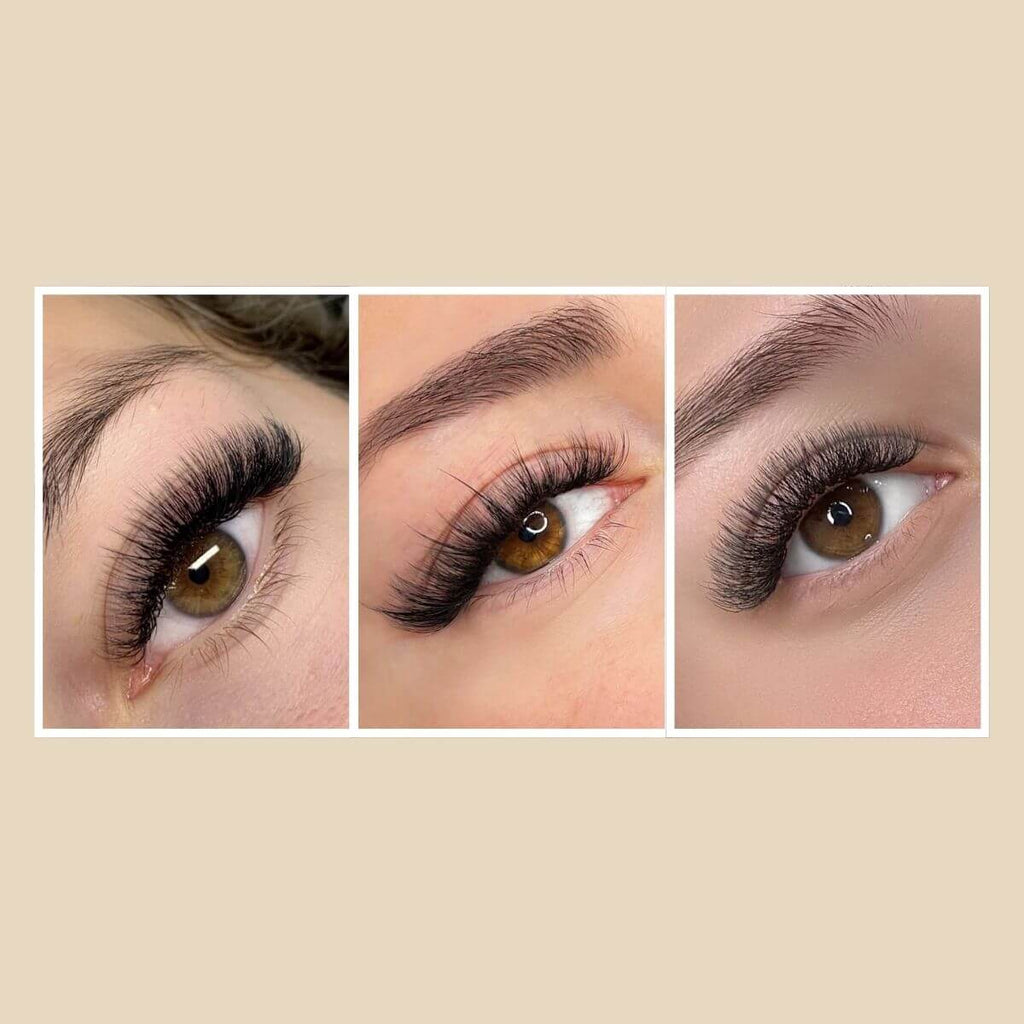
- 10D to 15D in 0.03 mm delivers dark, full volume without excessive weight and suits clients requesting a polished, high-impact look.
- 20D in 0.03 mm is reserved for clients with strong, healthy lashes who explicitly want maximum density.
Matching Density to Client Goals
Clients requesting natural volume perform best with lower density and longer intervals between appointments.
Clients requesting mega volume need a thorough health assessment at every visit, with density adjusted down at the first sign of thinning or breakage.
What Are the Most Common Lash Fan Density Mistakes and How Do You Fix Them?
Drooping fans and early shedding each have identifiable mechanical causes and direct corrections.
Drooping Fans
Drooping signals that the total fan weight exceeds the natural lash’s load capacity. It also occurs when the extension length is too long in outer-corner zones where natural lashes are thinner.
- Reduce the D-count by 2 to 4 on the next fill, or switch from 0.05 mm to 0.03 mm if you have not already done so.
- Shorten extension length at the outer corners if drooping continues after adjusting the D-count.
- Poor isolation that creates stickies adds compounding weight stress to individual lashes and accelerates drooping.

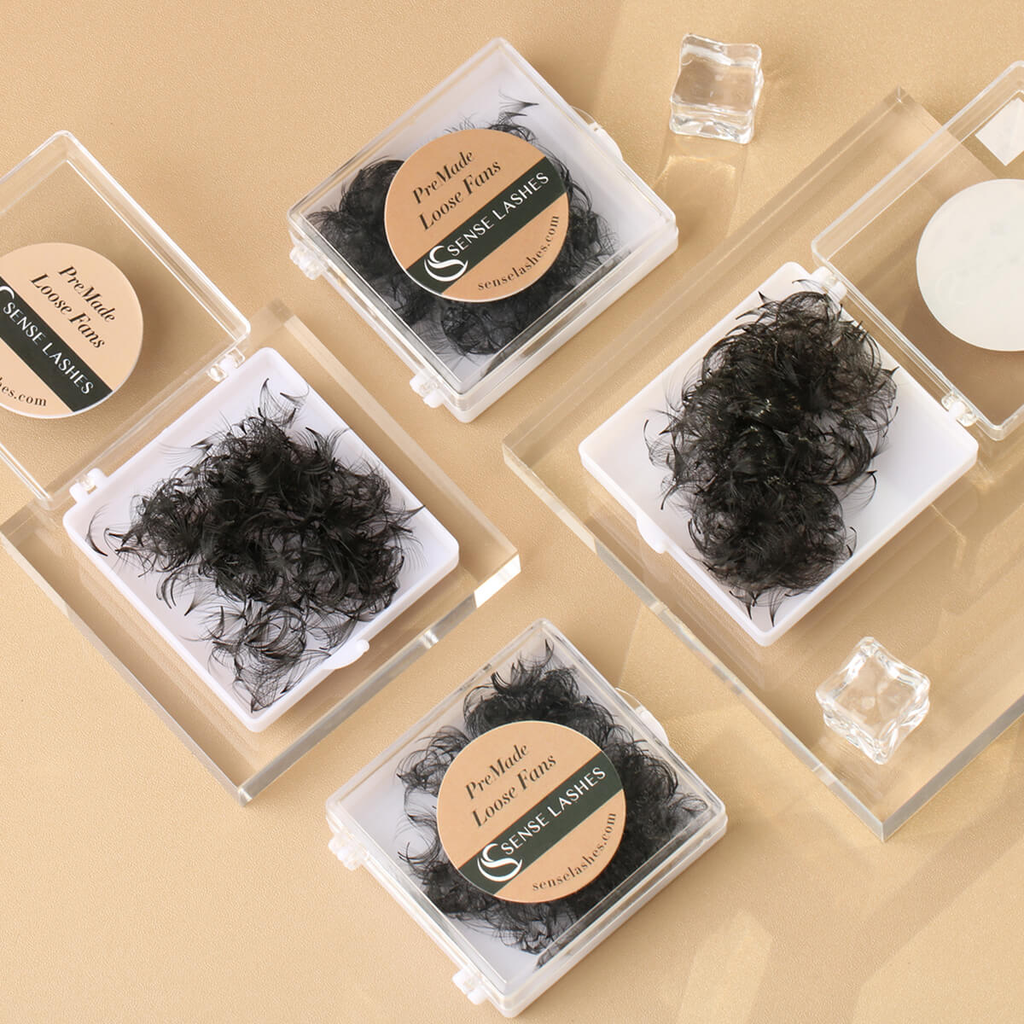
0.03MM Premium Mega Volume Eyelash Extensions
CURL: C
LENGTH: 8MM
Early Shedding and Traction Risk
Repeated overweight application increases the risk of traction alopecia and premature shedding. If a client consistently loses fans before their fill date, reassess fiber diameter and D-count. Do not default to adhesive or aftercare as the primary cause without ruling out overloading first.
Choose the Right Lash Fan Density for Every Client
Match fiber diameter to D-count before selecting any fan for a client. Start with a lash health assessment, use the weight chart as your baseline, and apply density mapping to protect inner-corner lashes. When in doubt, reduce the D-count by 2 to 3. Scheduled rest periods after high-density sets protect follicle health long-term and improve client retention.
FAQs About Lash Fan Density
Q1. How Do I Assess Whether a Client Is Ready for Volume Lashing During Consultation?
Check three things: natural lash density, individual lash thickness, and overall lash condition. Clients with sparse, fine, or damaged lashes are better candidates for classic or light volume sets. If you can see visible gaps along the lash line or significant breakage, start conservative and build density gradually over subsequent appointments.
Q2. Can I Mix Different D-Counts in One Full Set?
Yes, mixing D-counts in one set is standard professional practice and improves both safety and aesthetics. Apply 3D to 4D at the inner corners and build to 6D to 8D toward the center and outer zones. This reduces stress on finer inner-corner lashes while delivering the density your client wants.
Q3. Why Do My Mega Volume Fans Lose Shape After Application?
Shape loss typically means the fan base is too wide or the adhesive was not picked up cleanly at the base. It also occurs when 0.05 mm fibers are used at 10D or higher, where the added weight causes the fan to collapse. Switch to 0.03 mm and review your pickup and dipping technique.
Q4. How Can I Identify Anagen Lashes During Application?
Anagen lashes are shorter and finer than surrounding lashes, often with a translucent or lighter base. They appear noticeably finer and shorter than mature lashes, with a softer, more flexible feel. When in doubt, treat any lash noticeably shorter than its neighbors as anagen and apply a lighter fan or skip it entirely.
Q5. Is 20D Mega Volume Safe for Fills Every Two Weeks?
Not for most clients. Biweekly 20D fills accumulate significant mechanical stress on the natural lash over time. A safer schedule is a fill every three weeks, with a full removal and a 4 to 6 week rest period after every three to four fills. Monitor lash density at each appointment and reduce the D-count at the first sign of thinning.
Leave a comment