


Inicio Eyelash Extension Supplies Guide
Preventing Boxy Bases: Perfecting Taper in High-Density Fans

The Technical Challenge of High-Density Fan Geometry
In the specialized world of mega volume artistry, the transition from 6D to 15D or 20D fans introduces a complex set of structural challenges. For the advanced technician, the primary adversary is the "boxy base." A boxy base occurs when the attachment point of a high-density fan is too wide, blunt, or over-saturated with adhesive. This is not merely an aesthetic failure; it is a clinical and mechanical risk.
A wide, heavy base creates a significant lever effect on the natural lash, increasing the likelihood of premature shedding or traction alopecia. Furthermore, blunt bases create "pockets" where debris, bacteria, and sebum accumulate, leading to inflammatory conditions such as Blepharitis. According to the Mayo Clinic, poor eyelid hygiene is a leading cause of this inflammation, and technical errors in lash application can exacerbate the risk by making cleaning nearly impossible for the client.
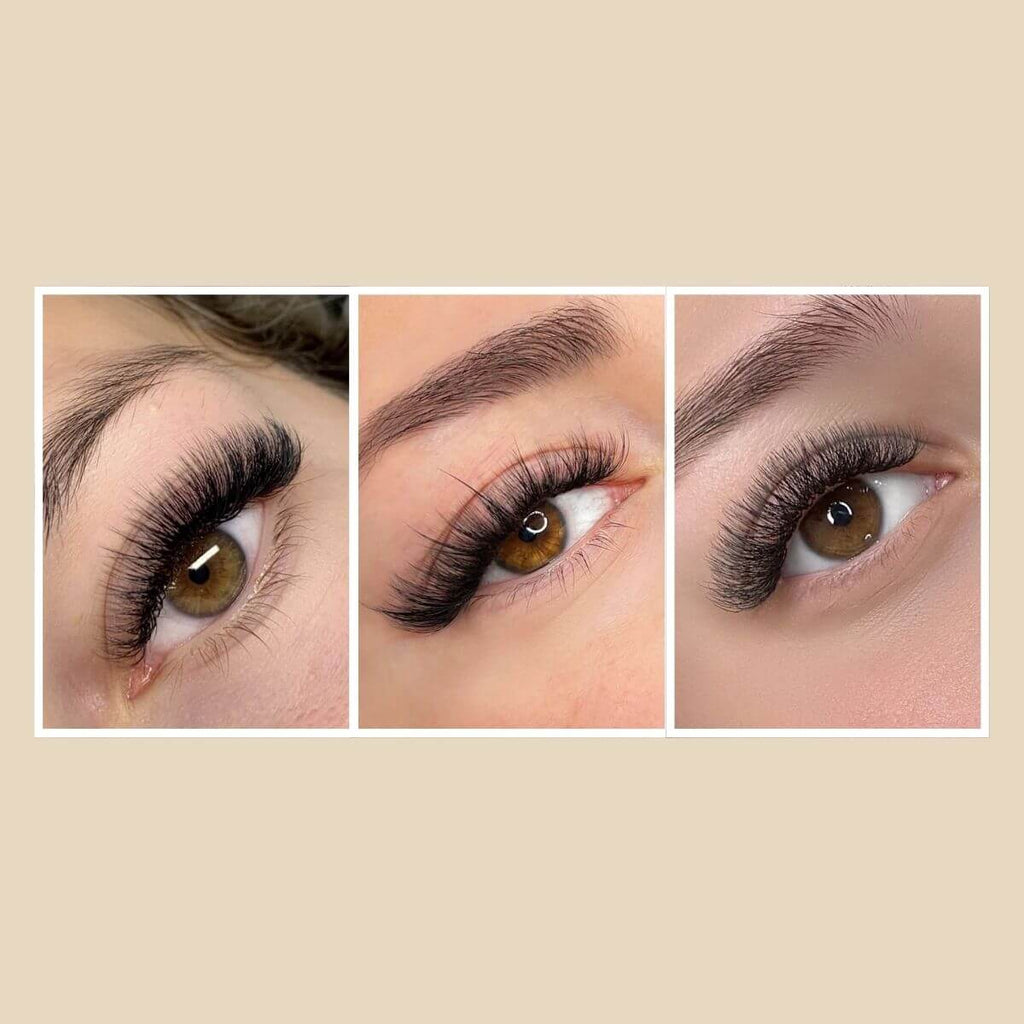
To achieve a needle-like taper in a 20D fan, we must master the physics of graduated compression and material selection. This article provides a comprehensive framework for engineering high-performance fans that prioritize both the "blackout" aesthetic and long-term ocular health.
The Physics of the Perfect Taper: The 90/10 Rule
In our professional observations across thousands of applications, we have identified a core heuristic for mega volume: the 90/10 Rule.
Heuristic Label: The 90/10 Rule is a professional baseline used for visual and weight distribution. It suggests that 90% of the fan's visual volume should be concentrated in the fluffy midsection and ends, while only 10% of the total bulk should exist at the attachment point.
When this ratio is ignored, the base becomes "boxy," leading to poor wrap and irritation. Achieving this requires a technique we call "feathering." Unlike standard volume pinching, where pressure is uniform, feathering involves applying maximum pressure at the very tips of the tweezers and tapering that pressure off as you move toward the base. This creates a graduated compression of the fibers, allowing them to sit flush against the natural lash rather than stacking on top of one another.
Modeling the "Feathering" Mechanism
To understand why feathering works, we modeled the structural behavior of 0.03mm PBT (Polybutylene Terephthalate) fibers under varying pinch pressures.
| Parameter | Value/Range | Unit | Rationale |
|---|---|---|---|
| Fiber Diameter | 0.03 | mm | Industry standard for mega volume |
| Fiber Count | 15 - 20 | D | Targeted density for high-impact sets |
| Pinch Pressure (Tip) | High (~90%) | Estimated | To secure the fan spread |
| Pinch Pressure (Base) | Low (~10%) | Estimated | To allow fibers to align linearly |
| Adhesive Dip Depth | 1.0 - 1.5 | mm | Minimalist approach for taper retention |
Logic Summary: Our scenario modeling assumes the use of high-quality PBT fibers with specific elasticity. We found that reducing base-level pressure by approximately 80% compared to the tip pressure allows the fibers to naturally gravitate toward a singular, needle-thin point.

Material Selection: The Role of 0.03mm Cashmere Fibers
The foundation of a tapered base is the fiber itself. Standard 0.07mm or even 0.05mm fibers simply occupy too much physical space to create a slim base in high-density fans. For 10D to 20D sets, the use of 0.03MM Cashmere Premium Mega Volume Eyelash Extensions is practically a requirement.
These fibers are engineered for "fan like butter" performance. The matte black finish provides the necessary density without the added weight of industrial dyes. More importantly, the flexibility of the PBT allows for the micro-adjustments needed to prevent the base from "popping" open or becoming boxy. As discussed in our guide on Fiber Texture and Volume Fan Creation, the surface friction of the fiber dictates how well the base will stay compressed during the adhesive dip.
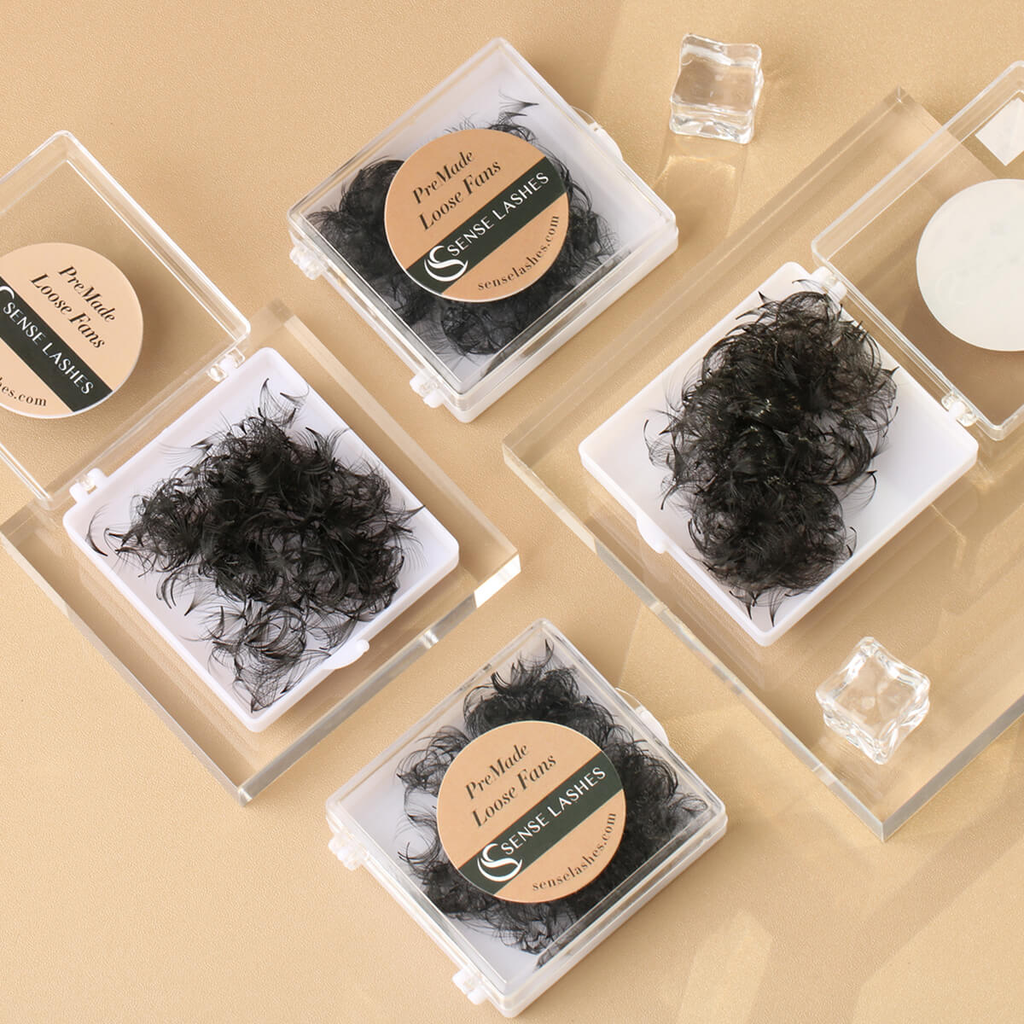
For technicians who struggle with the time-intensive nature of handmade fans, or those working in environments where humidity makes hand-fanning difficult, 20D Handmade Loose Premade Fans Pointy Base(500 Fans) offer a factory-calibrated solution. These are heat-bonded, which eliminates the bulk of a second adhesive layer at the base, ensuring a "pointy" attachment point every time.
Adhesive Rheology and Humidity Control
The "boxy base" is often a symptom of adhesive mismanagement. If your adhesive is too thin (low viscosity), it may travel up the fan, causing it to close. If it is too thick (high viscosity) and dries too fast, you lose the ability to wrap the base around the natural lash.
Advanced technicians often prefer a "syrup-like" viscosity for mega volume. This provides a crucial 1–2 second window to manipulate the base before the cure begins. However, this requires precise humidity control. In low-humidity environments, adhesives cure slower, which can lead to the base widening as the technician moves to the next lash.
The Troubleshooting Matrix: Glue vs. Environment
Based on common patterns from technical support and salon audits, we recommend the following adjustments:
- Low Humidity (<35%): Switch to a faster-drying adhesive or use a primer to accelerate the bond. Avoid boxy bases by holding the fan in place for an extra second.
- High Humidity (>60%): Use a slower-drying adhesive to prevent "shock curing," which creates brittle, bulky bases.
- Persistent Burning: If a client complains of burning, it is vital to distinguish between adhesive fumes and pre-existing conditions. According to WebMD, dry eye syndrome can be exacerbated by lash fumes, often mistaken for an allergic reaction.

Clinical Safety: Beyond the Aesthetic
As the industry matures, the focus has shifted from "how many lashes can we fit" to "how can we maintain ocular health." High-density fans, if poorly applied, pose significant risks.
1. Preventing Mechanical Trauma
A boxy base is inherently rigid. When the client blinks, a rigid base can rub against the eyelid margin or even the cornea if the fan is placed too close to the skin. A case report in PMC highlights corneal abrasions caused by mechanical rubbing of extensions. A perfectly tapered base remains flexible, moving with the natural lash and reducing the risk of trauma.
2. The Chemistry of Allergic Reactions
The primary ingredient in professional adhesives is Ethyl Cyanoacrylate. While effective, it can cause allergic contact dermatitis in sensitive individuals. A study published in PubMed notes that reactions are often immune-responsive and can be delayed by 48 hours or more.
To mitigate this, we recommend a strict "Patch Test Protocol." Explain to clients that a lack of immediate reaction does not guarantee safety. Furthermore, using high-quality products like 10D Handmade Loose Premade Fans Pointy Base(500 Fans) reduces the total volume of adhesive required, thereby lowering the chemical exposure per application.
3. pH Balance and Formaldehyde
Early research, such as the widely cited Amano et al. (2012) study, identified that some lash adhesives released formaldehyde and had acidic pH levels that caused keratoconjunctivitis. Modern formulations have evolved significantly. We prioritize adhesives that maintain a neutral pH to protect the ocular surface microbiome.
Salon Sanitation SOP (Standard Operating Procedure)
To validate the professionalism of your services and protect your clients from infections like conjunctivitis (pink eye), a rigorous sanitation protocol is mandatory. The CDC (Centers for Disease Control) provides clear guidelines on preventing the spread of eye infections, which should be the backbone of your salon's SOP.
Daily Sanitation Checklist:
- Disposable Consumables: Use fresh mascara wands and lint-free applicators for every client.
- Sterilization: All tweezers must undergo medical-grade disinfection between every service.
- Client Hygiene: Market lash shampoo not just as a cleanser, but as "Blepharitis Prevention." Educate clients on why water alone is insufficient for removing the biofilm that accumulates at the base of dense fans.
Operational Efficiency: When to Use Premades
While handmade fans are the hallmark of a master technician, operational efficiency is key to a profitable salon. The "land-and-expand" business model suggests that as your demand increases, you must find ways to reduce service time without sacrificing quality.
According to market analysis from Grand View Research, the synthetic lash segment continues to dominate due to its consistency and safety. Utilizing 14D Handmade Loose Premade Fans Pointy Base(500 Fans) allows a technician to provide a mega volume look in the time of a standard volume set. Because these fans are heat-bonded, they solve the boxy base problem by design, providing a consistent, needle-like taper that mimics the best handmade work.

Global Compliance and Professional Trust
As a professional, your inventory is your investment. The 2023-2024 Health Canada Enforcement Report highlighted significant non-compliance in the labeling and chemical safety of cyanoacrylate-based adhesives.
Choosing a manufacturer-direct supplier ensures that you are not only getting the latest technology—like the ultra-soft PBT used in our 0.03MM Cashmere Lashes—but also products that meet global safety standards. This protects you from customs seizures and, more importantly, protects your clients' vision.
Summary of Best Practices for Tapered Bases
To eliminate boxy bases and elevate your mega volume sets, adhere to the following technical standards:
- Prioritize Fiber Diameter: Never exceed 0.03mm for fans larger than 10D. The cumulative weight and base width of thicker fibers are unsustainable for natural lash health.
- Master the Pinch: Use the feathering technique to ensure the base is the narrowest part of the fan.
- Adhesive Control: Dip only the bottom 1-1.5mm of the fan. Excess adhesive is the primary cause of boxy, heavy attachments.
- Educate the Client: Use authoritative resources from the American Academy of Ophthalmology to create safety consent forms that explain the importance of hygiene and the risks of improper application.
- Leverage Technology: Don't shy away from high-quality premades. They are a tool for consistency and efficiency in a high-volume salon environment.
By focusing on the engineering of the fan base, you ensure that your mega volume sets are as healthy as they are beautiful. Consistency in these technical details is what separates a premier lash artist from the rest of the market.
Disclaimer: This article is for informational purposes only and does not constitute professional medical or legal advice. Always consult with a qualified health professional regarding eye conditions and ensure your practice complies with local regulations.
References
- Mayo Clinic - Blepharitis Symptoms and Causes
- CDC - Conjunctivitis Prevention
- American Academy of Ophthalmology - Eyelash Extension Safety
- Health Canada - Cosmetic Regulations Enforcement Report
- PubMed - Amano et al. 2012: Formaldehyde and pH in Eyelash Glues
- PMC - Corneal Abrasion from Eyelash Extensions