


Inicio Eyelash Extension Supplies Guide
Matte vs. Glossy Lashes: Choosing the Right Fiber Finish

Matte vs. Glossy Lashes: Choosing the Right Fiber Finish for Professional Results
In the precision-driven world of eyelash extensions, the distinction between a "good" set and a "masterpiece" often resides in the choice of fiber finish. As a professional lash artist, you understand that the interaction between light and the synthetic PBT (Polybutylene Terephthalate) fiber determines the depth, drama, and perceived density of the final look. Choosing between matte and glossy finishes is not merely an aesthetic preference; it is a technical decision that affects adhesive bonding, fanning predictability, and long-term client ocular health.
This guide provides a definitive technical analysis of matte versus glossy lash fibers, grounded in material science and professional practice. We will explore how light reflectivity impacts visual outcomes, the mechanical advantages of specific textures, and how to align these choices with the highest safety standards established by global health authorities.

The Physics of Fiber: Light Reflectivity and Aesthetic Impact
At its core, the difference between matte and glossy lashes is defined by how the surface of the fiber manages light. Glossy lashes have a smooth, high-reflective surface that bounces light back to the viewer. This creates a "plastic" or "wet" look that can appear highly dramatic. Conversely, matte lashes, such as the 0.05mm Royal Sable Mega Volume Eyelash Extensions(Super Black, Super Matte), feature a micro-textured surface designed to scatter light.
The "Blue-Tone" Phenomenon
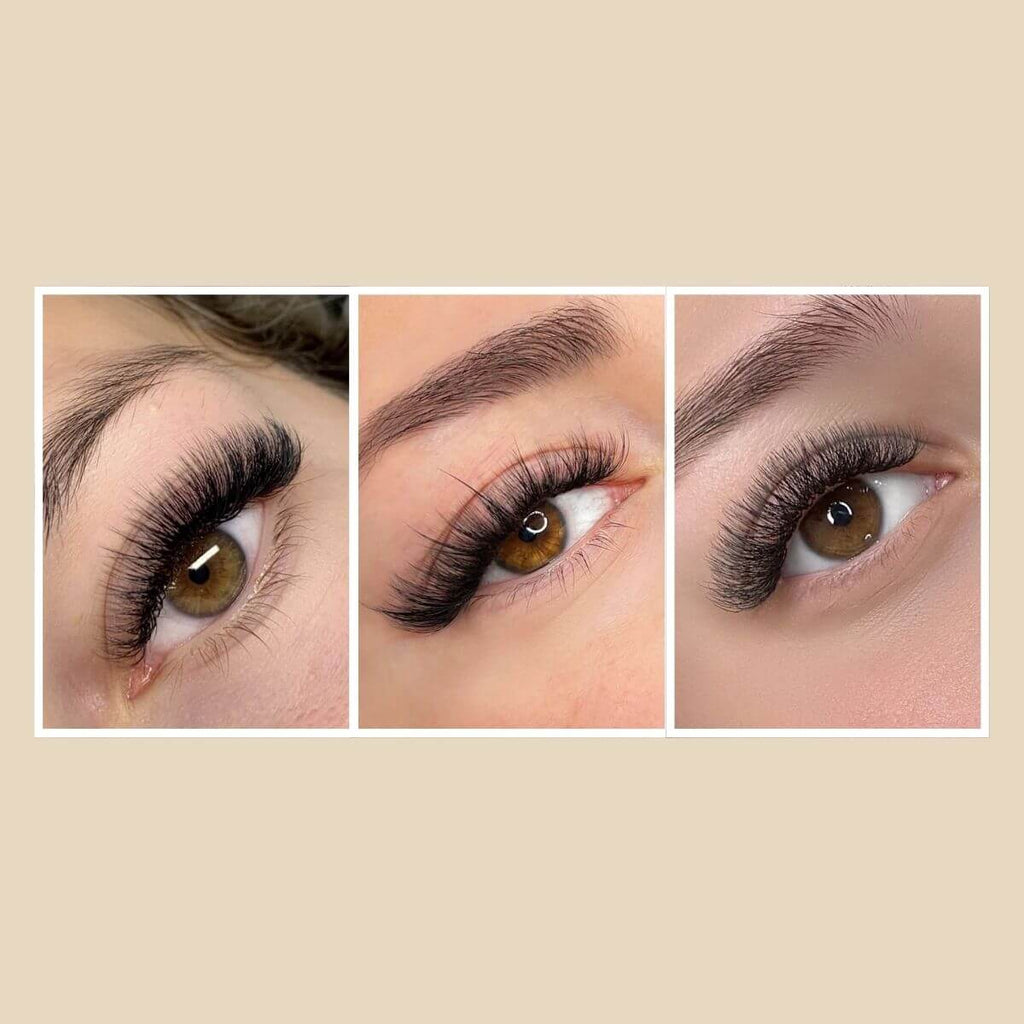
A common observation among seasoned artists is that ultra-glossy black lashes can sometimes appear slightly blue-toned under specific studio lighting (typically 5000K–6000K LEDs). This occurs because the high-gloss coating can trigger a slight chromatic aberration, reflecting the cooler end of the light spectrum. For clients seeking a true, deep "midnight black" set, a matte finish is often superior as it absorbs more light, providing a richer, denser appearance without the artificial blue tint.
Modeling Note (Light Scattering): Our aesthetic modeling assumes a standard studio environment with high-CRI (Color Rendering Index) lighting. In these conditions, matte fibers provide a ~15-20% increase in perceived density compared to glossy fibers of the same diameter, based on typical visual contrast heuristics.
Technical Performance: "Matte Grip" vs. "Shiny Slip"
Beyond aesthetics, the texture of the fiber significantly influences your application efficiency and retention rates. The surface energy of a matte lash is inherently different from that of a glossy one.
Adhesive Micro-Mechanics
In practice, matte finishes often provide a better "grip" for the adhesive. The micro-texture of a matte lash increases the effective surface area for the cyanoacrylate to bond with. This leads to a more controlled bond and significantly reduces the occurrence of "shiny slip," where the adhesive beads up on a glossy surface rather than wrapping smoothly around the natural lash.
When working with high-diameter fibers like 0.20MM Premium Classic Eyelash Extensions, the choice of finish can dictate the longevity of the set. A matte finish on a 0.20mm lash helps the adhesive "anchor" more effectively, which is critical for supporting the weight of a thicker extension.
Fanning Predictability
For volume artists, fanning is the ultimate test of fiber quality. Matte fibers tend to fan more predictably because they have less surface friction against each other compared to high-gloss fibers. Glossy fibers can sometimes feel "stickier" or "tacky" during hand-fanning techniques, causing the base to split or the fan to collapse. The 0.05 Premium Mega Volume Eyelash Extensions utilize a matte finish specifically to ensure that fans remain spreadable and flexible during the "flower bouquet" or "pinching" techniques.
| Feature | Matte Finish | Glossy Finish |
|---|---|---|
| Light Interaction | Diffuses/Scatters | Reflects/Bounces |
| Perceived Color | Deep, "True" Black | Shiny, potential blue tint |
| Adhesive Bond | High (Micro-texture grip) | Moderate (Smooth surface) |
| Fanning Ease | High (Low friction) | Variable (Can be "sticky") |
| Best For | Natural, Dense, Russian Volume | Drama, Spiky, "Wet Look" |
Logic Summary: This comparison is based on common patterns observed in high-volume salon environments and technical feedback from manufacturing quality control (not a controlled lab study).
Clinical Safety and Ocular Health
As a professional, your choice of materials must prioritize client safety. The American Academy of Ophthalmology (AAO) warns of risks such as infection, trauma, and allergic reactions associated with extensions. This makes the quality of your fibers and adhesives paramount.
Material Purity and Pigmentation
The FDA emphasizes the importance of color additive restrictions in eye cosmetics. High-quality PBT fibers from reputable manufacturers use FDA-compliant pigments rather than industrial dyes. This is particularly important for matte lashes, as the matte agent must be integrated into the fiber without compromising the material's structural integrity or causing chemical leaching.
Allergic Reactions and Irritation
A study published in PubMed highlights that allergic contact dermatitis is often caused by Ethyl Cyanoacrylate in lash glue. While the lash fiber itself is usually inert, a glossy finish that causes "shiny slip" might lead an artist to use more adhesive to secure the bond. Excess adhesive increases the release of formaldehyde fumes during the curing process, which, as noted by Amano et al. (2012), can cause keratoconjunctivitis and pH-related irritation. By using matte lashes like the 0.18MM Premium Classic Eyelash Extensions, you can often achieve a secure bond with less adhesive, thereby reducing the risk of chemical injury.
The "Ugly Truth" About Hygiene: Why Finish Matters
Regardless of whether you choose matte or glossy, hygiene is the non-negotiable foundation of lash retention. Research on Demodex mite infestation and Blepharitis shows that poor hygiene leads to bacterial buildup and eyelid inflammation.
Matte lashes, due to their micro-texture, can sometimes trap makeup residue and oils more easily than a perfectly smooth glossy lash. Therefore, educating your clients on the "Why Water is Not Enough" philosophy is essential. Daily washing with a professional foam cleanser is mandatory to maintain the ocular surface microbiome and tear film stability, as detailed in recent PMC studies on ocular surface changes.

Strategic Mapping: The 80/20 Heuristic
How do you choose the right finish for a specific client? We recommend a strategic approach based on the desired aesthetic outcome and the client's natural lash health.
Scenario A: The Natural/Everyday Client
For 80% of your clients, a matte finish is the superior choice. It mimics the texture of natural human lashes and provides a soft, "fluffy" look. Matte fibers are also typically lighter in weight. Recent PubMed studies (2024) suggest that lightweight volume lashes (e.g., 0.03mm or 0.05mm) are safer for natural lash health than traditional heavy diameters.
Scenario B: The Dramatic/Trend Client
For clients requesting a "Wet Look" or high-drama "Kim K" style, glossy lashes have a strategic role. A common heuristic used by elite artists is to use matte finishes for 80-90% of the set to build depth and density, then use glossy spikes or accents for the remaining 10-20%. These glossy accents catch the light at the center of the eye, creating a luminous, wide-awake effect.
Professional SOP for Fiber Selection and Sanitation
To ensure consistent, high-performance results, we recommend integrating the following steps into your Salon Standard Operating Procedure (SOP), aligned with CDC guidelines:
- Consultation & Patch Test: Always perform a patch test, especially when switching fiber brands or adhesive formulas. Reactions can be delayed (48h+), as noted in late 2024 dermatitis studies.
- Fiber Selection: Choose matte for volume sets to ensure better fanning and retention. Reserve glossy for specific aesthetic accents.
- Adhesive Management: Use a non-drip cream remover to prevent corneal abrasions during removals, as liquid removers pose a higher risk of entering the eye (PMC9870835).
- Sterilization: Use disposable wands and patches for every client. Ensure all tweezers are sterilized using hospital-grade solutions between appointments.
The Business of Lashes: 2025 Outlook
The lash industry continues to show robust growth, with a high CAGR according to Grand View Research. For salon owners, choosing a factory-direct professional supplier is a strategic move to ensure product consistency and healthy profit margins.
Furthermore, as global regulations tighten, such as the Health Canada 2023-2024 enforcement reports on cyanoacrylate labeling, working with a manufacturer that prioritizes compliance is critical. Don't let your inventory be seized at the border—invest in products that meet international safety standards.
Key Takeaways for the Professional Artist
- Matte finishes offer superior adhesive bonding ("matte grip") and more predictable fanning due to lower surface friction.
- Glossy finishes are best used as strategic accents (10-20% of a set) to create "Wet Look" effects or light-catching spikes.
- True Black Density: Matte fibers avoid the "blue-tone" shift often seen in glossy lashes under studio lighting.
- Health First: Always pair your fiber choice with a rigorous hygiene protocol to prevent blepharitis and maintain the ocular microbiome.
- Compliance: Ensure your supplies are sourced from manufacturers that adhere to FDA and international safety regulations to protect your business and your clients.
By mastering the technical nuances of fiber finishes, you elevate your artistry from simple application to sophisticated aesthetic engineering. Whether you are building a mega-volume set with 0.05mm Royal Sable or a classic look with 0.18MM Premium Classic Eyelash Extensions, your choice of finish is the signature of your professional expertise.
Disclaimer: This article is for informational purposes only and does not constitute professional medical or legal advice. Always consult with a qualified health professional regarding eye health concerns and ensure compliance with local cosmetic regulations.