


Inicio Eyelash Extension Supplies Guide
Finding the Sweet Spot: Mastering Tweezer Grip Precision

Finding the Sweet Spot: Mastering Tweezer Grip Precision for High-Performance Volume Artistry
In the high-precision world of eyelash extensions, the difference between a symmetrical, wide-blooming volume fan and a collapsed, frustrated mess often comes down to a few millimeters. For the professional lash artist, the tweezer is not merely a tool; it is an extension of the hand. Mastering the "sweet spot"—that specific zone on the tweezer tip where tension and alignment are perfectly synchronized—is the foundational skill that separates technical mastery from repetitive struggle.
This guide explores the mechanical, ergonomic, and biological factors that influence tweezer precision. By understanding the physics of your tools and the physiological needs of your clients, you can optimize your workflow for speed, retention, and long-term professional health.
The Anatomy of the Tweezer Sweet Spot
Every pair of volume tweezers, regardless of its price point or manufacturing process, possesses a unique "sweet spot." This is the area of the tip where the grip is most secure and the pressure is distributed evenly across the lash bases. Identifying this zone is critical for manual fan creation techniques like pinching or the "lonely fan" method.
Identifying the Zone of Parallel Closure
A common misconception among newer technicians is that the very tip of the tweezer provides the strongest grip. In reality, seasoned practitioners consistently report that gripping lashes approximately 2-3mm from the very tip provides the optimal balance of control and visibility. This prevents the lash from being obscured by the metal and utilizes the part of the tool where the metal is structurally more rigid.
If you grip too close to the tip, you risk "beaking," where the tips spread apart under pressure. If you grip too far back, you lose the fine motor control needed for micro-adjustments.
Logic Summary: Tweezer Tension Modeling Our analysis of grip precision assumes a standard stainless steel or titanium alloy tweezer. The "sweet spot" is modeled as the point of intersection between maximum closing force and minimum metal deflection.
- Assumption 1: Tweezer length of 12cm.
- Assumption 2: Tip alignment within a 0.5mm tolerance.
- Boundary Condition: This model may not apply to "soft-tension" tweezers designed specifically for classic 1:1 application.
The 0.5mm Margin of Error
Tweezer tip alignment is arguably the most critical factor in fan success. A misalignment of even 0.5mm can cause lashes to twist during the pickup phase. This technical fault is often mistaken for poor lash quality or "slippery" fibers. To ensure your tools are performing at their peak, professional technicians recommend a simple weekly check: close the tweezers against a white background and hold them up to a light source. If light passes through any part of the closure along more than the final 1mm of the tips, the tool requires realignment or replacement.
Ergonomics: The Physics of the "Pinch"
Hand fatigue and Carpal Tunnel Syndrome are significant risks in the lash industry. The way you hold your tweezers directly impacts your career longevity.
Avoiding the "Full-Hand Squeeze"
A frequent mistake, particularly during long mega-volume sessions, is applying excessive thumb pressure. This leads to hand fatigue within approximately 45 minutes of continuous work. The correct technique involves a light "pinch" from the fingertips, not a full-hand squeeze. By focusing the pressure between the thumb and the index/middle fingers, you maintain the "butter" feel required for delicate fanning.
When working with ultra-fine fibers, such as 0.05MM Cashmere Premium Mega Volume Eyelash Extensions, the tactile feedback is much more subtle than with thicker diameters. These lashes are designed to "fan like butter," but this benefit is lost if the artist uses a heavy-handed grip.
The Diameter-Pressure Heuristic
As you transition between different lash diameters, your grip must adapt. A successful heuristic used by high-volume artists is the 40% Pressure Reduction Rule: when switching from a 0.07mm diameter to a 0.03mm diameter, reduce your grip pressure by roughly 40%. This prevents crushing the finer bases and ensures the fan remains open.
| Parameter | 0.07mm Diameter | 0.05mm Diameter | 0.03mm Diameter |
|---|---|---|---|
| Estimated Grip Pressure | Baseline (100%) | ~80% | ~60% |
| Sweet Spot Focus | 2mm from tip | 2-3mm from tip | 2.5mm from tip |
| Tactile Feedback | Moderate | Soft | Ultra-light |
| Risk of Crushing | Low | Moderate | High |
Note: These ranges are estimated based on common professional practice and may vary based on tweezer tension and coating.
Technical Mastery Across Lash Types
The "sweet spot" isn't just about the tool; it’s about how the tool interacts with the specific lash fiber. Different products require different mechanical approaches.
Easy Fanning vs. Manual Volume
For technicians who are developing their manual skills, 0.07MM Easy Fanning Eyelash Extensions offer a structural advantage. The unique sticky strip prevents the base from separating prematurely, which widens the effective "sweet spot" of your tweezers. This allows for faster fan creation with less "heartbreak" when the fan collapses.
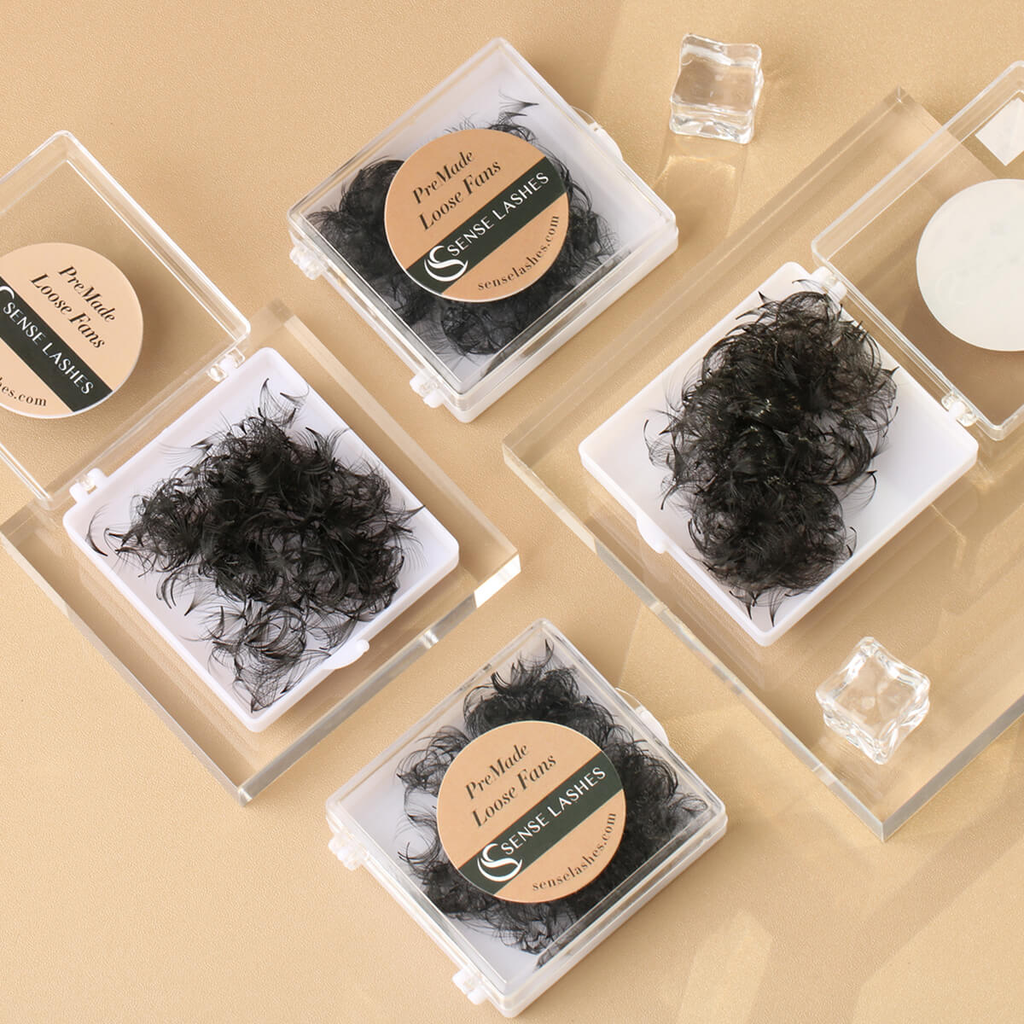
However, as you move into advanced artistry using 14D Handmade Loose Premade Fans Pointy Base(500 Fans), the precision of your pick-up becomes paramount. Because these fans are heat-bonded for an ultra-slim base, your tweezer must grip the "pointy base" exactly at the sweet spot to avoid distorting the symmetry.
The Fingertip Moisture Hack
For ultra-fine lashes (0.03mm), some practitioners find that slightly moistening their fingertips (not the tweezer tips) can increase tactile grip on the lash strip. This provides better resistance when pulling the lashes off the tape without introducing moisture to the adhesive area prematurely. This subtle tweak can significantly improve the success rate of picking up large fans without losing individual extensions.
For more on how material science affects your work, see our deep dive on How Fiber Texture Influences Handmade Volume Fan Creation.
Clinical Foundations: Why Precision Matters for Eye Health
Mastering tweezer precision is not just about aesthetics; it is a fundamental component of client safety. Improper grip leads to poor isolation and "stickies," which can cause significant ocular distress.
Preventing Ocular Surface Disorders
According to a 2024 study published in PubMed (Ocular Disorders), eyelash extensions can cause a spectrum of disorders, including mechanical damage to the eyelid and chemical toxicity. When an artist lacks precision, they are more likely to apply extensions too close to the eyelid margin or use excessive adhesive to compensate for a loose grip.
This can exacerbate conditions like Blepharitis. As noted by the Mayo Clinic, blepharitis is an inflammation of the eyelids often caused by bacteria or clogged oil glands. Poorly applied lashes trap debris and bacteria, making "Lash Shampoo" a non-negotiable part of aftercare to prevent inflammation.
The Chemistry of the Bond
Precision in placement is also linked to chemical safety. Health Canada’s 2023-2024 Compliance Report highlights the importance of proper labeling and usage of cyanoacrylate-based adhesives. If your tweezer grip is insecure, the extension may "slide" during application, spreading adhesive onto the natural lash cuticle or, worse, making contact with the skin. This increases the risk of Allergic Contact Dermatitis, a condition studied extensively in PubMed (Dermatitis Study) regarding Ethyl Cyanoacrylate.
Professional Sanitation and Maintenance SOP
To maintain the integrity of your "sweet spot" and ensure client safety, a rigorous Standard Operating Procedure (SOP) for tool maintenance is required.
Sterilization vs. Damage
While the CDC (Centers for Disease Control) provides clear guidelines on preventing the spread of conjunctivitis through hygiene, lash artists must balance hygiene with tool care. Harsh chemicals can sometimes corrode the fine coatings on high-end tweezers, affecting the grip.
- Cleaning: Use a dedicated lash tool cleanser to remove adhesive residue immediately.
- Disinfection: Submerge in hospital-grade disinfectant according to local state board regulations.
- Drying: Ensure tweezers are completely dry before storage to prevent microscopic pitting of the metal.
Preventing Mechanical Injury
A case report in PMC (Corneal Abrasion) details how mechanical rubbing or improper removal processes can lead to corneal abrasions. This underscores the need for precision not just in application, but in removal. Using a non-drip cream remover is a safer professional choice than liquid alternatives, as it stays exactly where placed, protecting the ocular surface while you use your precision tweezers to slide the extensions off.
Advanced Troubleshooting: Scenario Modeling
Scenario A: The "Slipping" Fan
- The Problem: Fans are falling apart as they are removed from the strip.
- The Diagnosis: The artist is likely gripping at the very tip of the tweezer, causing the "beaking" effect.
- The Solution: Move the grip 1mm further back into the sweet spot and ensure the tweezers are closed with a "pinch" rather than a "squeeze."
Scenario B: The "Twisted" Base
- The Problem: The base of the fan looks crossed or "X-shaped" instead of pointy.
- The Diagnosis: Tweezer misalignment or uneven pressure distribution.
- The Solution: Perform the "Light Test." If the tips are aligned, reduce pressure by 20% and focus on a slower, more deliberate pickup.
Methodology Note: Troubleshooting Logic These scenarios are modeled based on common patterns observed in professional training environments and customer support feedback. They represent the most frequent mechanical failures in volume application (not a controlled lab study).
The Business Case for Technical Mastery
Investing time in mastering your grip and tool maintenance has a direct impact on your salon's bottom line. According to market research from Grand View Research, the global lash market continues to grow, with a significant shift toward individual and volume extensions.
Artists who can work faster without sacrificing quality—achieved through mastering the sweet spot—can increase their "hourly lash rate." For example, using 10D Handmade Loose Premade Fans Pointy Base(500 Fans) allows an artist to provide a "Mega Volume" look in the time of a "Standard Volume" set, provided their tweezer technique is precise enough to handle the loose fans efficiently.
Summary of Key Takeaways
- Find the Sweet Spot: Focus your grip 2-3mm from the tip for maximum stability and visibility.
- Check Alignment Weekly: Use the "Light Test" against a white background to detect misalignments of 0.5mm or more.
- Adjust Pressure by Diameter: Use the 40% pressure reduction rule when moving from 0.07mm to 0.03mm lashes.
- Prioritize Ergonomics: Use a light "pinch" to avoid hand fatigue within the first hour of your session.
- Safety First: Precision prevents "stickies" and reduces the risk of blepharitis and chemical irritation, as supported by AAO (American Academy of Ophthalmology) guidelines.
Mastering your tools is a journey of micro-adjustments. By treating your tweezers with the respect they deserve and understanding the biological landscape of the eye, you position yourself as a premier authority in the lash industry.
Disclaimer: This article is for informational purposes only and does not constitute professional medical or legal advice. Always consult with a qualified healthcare provider regarding eye health concerns and adhere to your local regulatory board's safety and sanitation requirements.
References
- Centers for Disease Control and Prevention (CDC). Conjunctivitis Prevention.
- Mayo Clinic. Blepharitis Symptoms & Causes.
- Health Canada. 2023-2024 Cosmetic Regulations Report.
- American Academy of Ophthalmology (AAO). Eyelash Extension Safety.
- PubMed. Ocular Disorders and Eyelash Extensions (2024).
- PMC. Corneal Abrasion Case Report.
- Grand View Research. False Eyelashes Market Analysis.