


Mapping L and M Curls for Hooded Eyelid Correction
The Technical Challenge of the Hooded Eyelid
For the professional lash artist, the hooded eyelid (or blepharochalasis) represents one of the most complex anatomical challenges in ocular artistry. This eye shape is characterized by excess skin that folds down from the brow bone, often partially or fully obscuring the mobile eyelid and the base of the natural lashes. When using traditional C or D curls, a recurring technical failure occurs: the mid-lid lashes press directly into the skin fold. This mechanical friction not only causes immediate client discomfort but also leads to premature shedding and potential ocular surface irritation.
According to a study published in PubMed (Ocular Disorders), eyelash extensions can contribute to a spectrum of ocular disorders if the mechanical load and chemical exposure are not precisely managed. For hooded lids, the risk is twofold. First, the physical weight of the extensions can exacerbate lid heaviness. Second, the constant rubbing of the fiber against the skin fold can lead to contact dermatitis or even corneal abrasions if the extensions are displaced.
To navigate these risks, we must move beyond standard mapping. The objective is to provide clearance for the lid fold while maintaining a sophisticated aesthetic. This is achieved through the strategic application of L and M curls—specialty fibers designed with flat bases and specific trajectories to bypass anatomical obstructions.
The Mechanics of L and M Curls: Clearance and Trajectory
The primary reason traditional curls fail on hooded lids is their immediate upward trajectory. A D-curl, for instance, begins its curve almost instantly at the base. On a hooded eye, this curve hits the descending skin fold, pushing the extension downward and often causing the tip to poke the lid.
The L-Curl: The "Crease Bypass" Tool
The L-curl is engineered with a straight, flat base before transitioning into a sharp upward angle. This flat base is the "secret weapon" for hooded eyes. By providing a 0.5mm to 1mm straight trajectory, the L-curl allows the extension to extend past the deepest part of the lid fold before it begins its vertical lift.
Logic Summary (Clearance Heuristic):
- Assumption: Average lid fold depth ranges from 0.3mm to 0.8mm in hooded eye types.
- Heuristic: A minimum of 0.5mm flat base is required to ensure the fiber clears the skin fold without contact.
- Boundary: This rule may not apply to "sunken" eyes where the fold is significantly recessed.
The M-Curl: Solving the "Sad Wing" Effect
While L-curls are excellent for the inner and middle sections of a hooded lid, using them exclusively on the outer corners often results in a "drooping" effect. Because the L-curl's angle is so sharp, it can appear harsh or disconnected from the natural lash line at the outer edge.
The M-curl offers a smoother, more rounded transition compared to the L-curl, while still maintaining a flatter base than a D-curl. It provides the necessary lift to the outer third of the eye without the "boxy" appearance of an L-curl, ensuring the lash set remains lifted and open rather than heavy and downward-sloping.

Advanced Mapping Strategy for Hooded Eyelid Correction
Successful correction requires a hybrid approach. We do not simply "apply lashes"; we reconstruct the visual frame of the eye.
Step 1: The Base Layer and Isolation
Isolation is critical. On hooded lids, the natural lashes often grow at a downward angle. If the lid is not properly taped up (using the "Lid Lift" technique), the artist risks gluing the extension to the skin of the fold. According to a case report in PMC (Corneal Abrasion), mechanical rubbing is a primary cause of injury. Using high-quality 0.05MM Cashmere Premium Mega Volume Eyelash Extensions ensures the weight remains minimal, reducing the downward pressure on the lid.
Step 2: Inner to Mid-Lid (The L-Curl Zone)
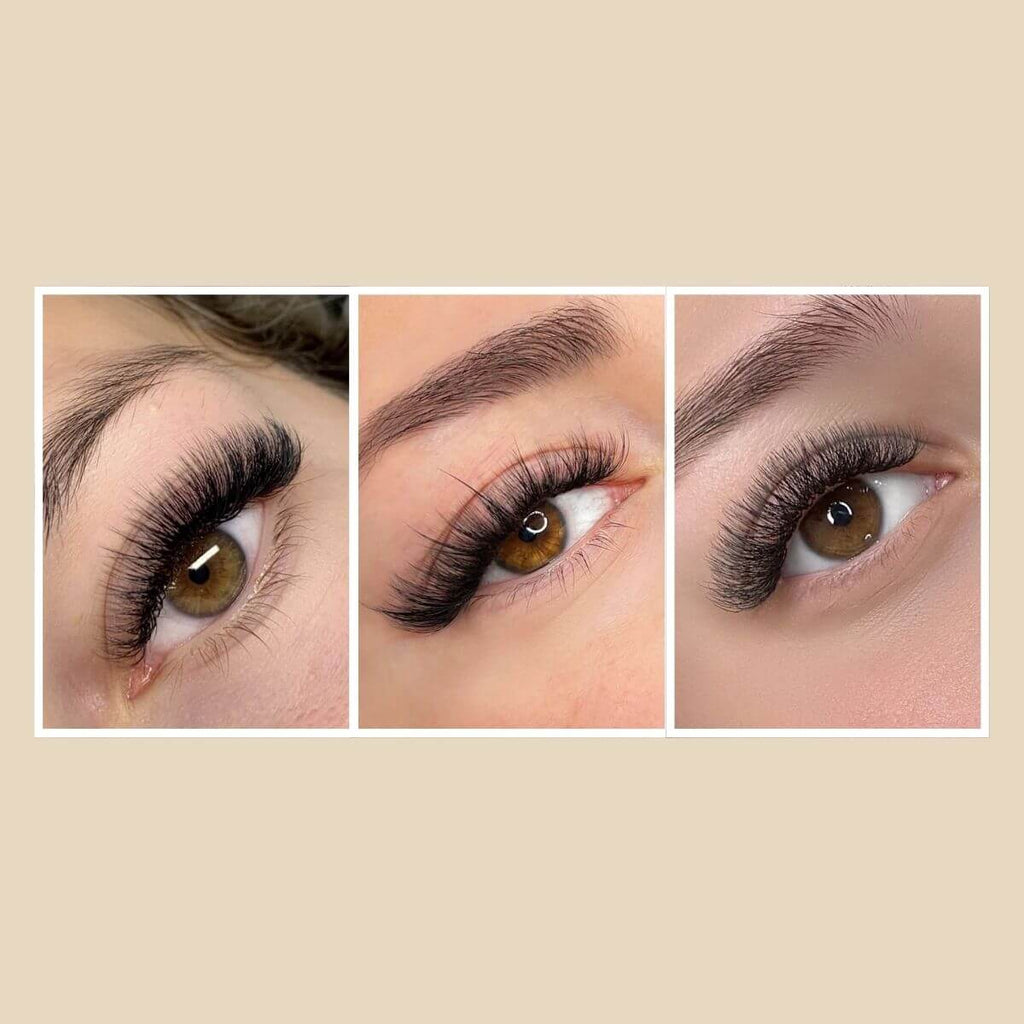
From the inner corner to the peak of the hooded fold, prioritize L-curls. This creates a "shelf" that the lid can rest behind without interfering with the lash tips. Use lengths that are 2-3mm longer than the natural lash to ensure visibility once the eye is open.
Step 3: The Transition (The M-Curl Zone)
As you move toward the outer third (the "wing" area), transition from L-curl to M-curl. This transition should be staggered (e.g., L-M-L-M) over a 2mm section to prevent a visible "break" in the lash line. The M-curl will provide a softer, more feline lift that counteracts the natural droop often associated with hooded eyes.
| Zone | Recommended Curl | Length Recommendation | Technical Purpose |
|---|---|---|---|
| Inner Corner | B or C (Short) | 7mm - 9mm | Natural blend; avoid irritation |
| Mid-Lid (Fold) | L-Curl | 10mm - 12mm | Clearance of the skin fold |
| Outer Third | M-Curl | 11mm - 13mm | Upward lift; prevents drooping |
| Outer Corner | C or M (Short) | 9mm - 10mm | Stability; prevents "heavy" eye |
Adhesive Selection: The 1-2 Second Rule
Adhesive choice is non-negotiable when working with hooded lids. Because the skin fold is constantly in close proximity to the lash base, a slow-drying glue is a liability. If the adhesive takes 3-5 seconds to polymerize, the client’s lid may close or shift before the bond is set, leading to the extension becoming "tacked" to the upper lid skin. This is a primary cause of the "stinging" sensation and chemical burns.
A fast-drying (1-2 second) adhesive is essential to "lock" the extension in the correct, elevated position before the eyelid can move. Furthermore, professional-grade adhesives must be compliant with international safety standards. The Health Canada (2023-2024 Report) emphasizes the importance of chemical safety and correct labeling for cyanoacrylate-based products. Using an adhesive with a neutral pH is also vital; as noted by Amano et al. (2012), acidic glues can release higher levels of formaldehyde, increasing the risk of keratoconjunctivitis.
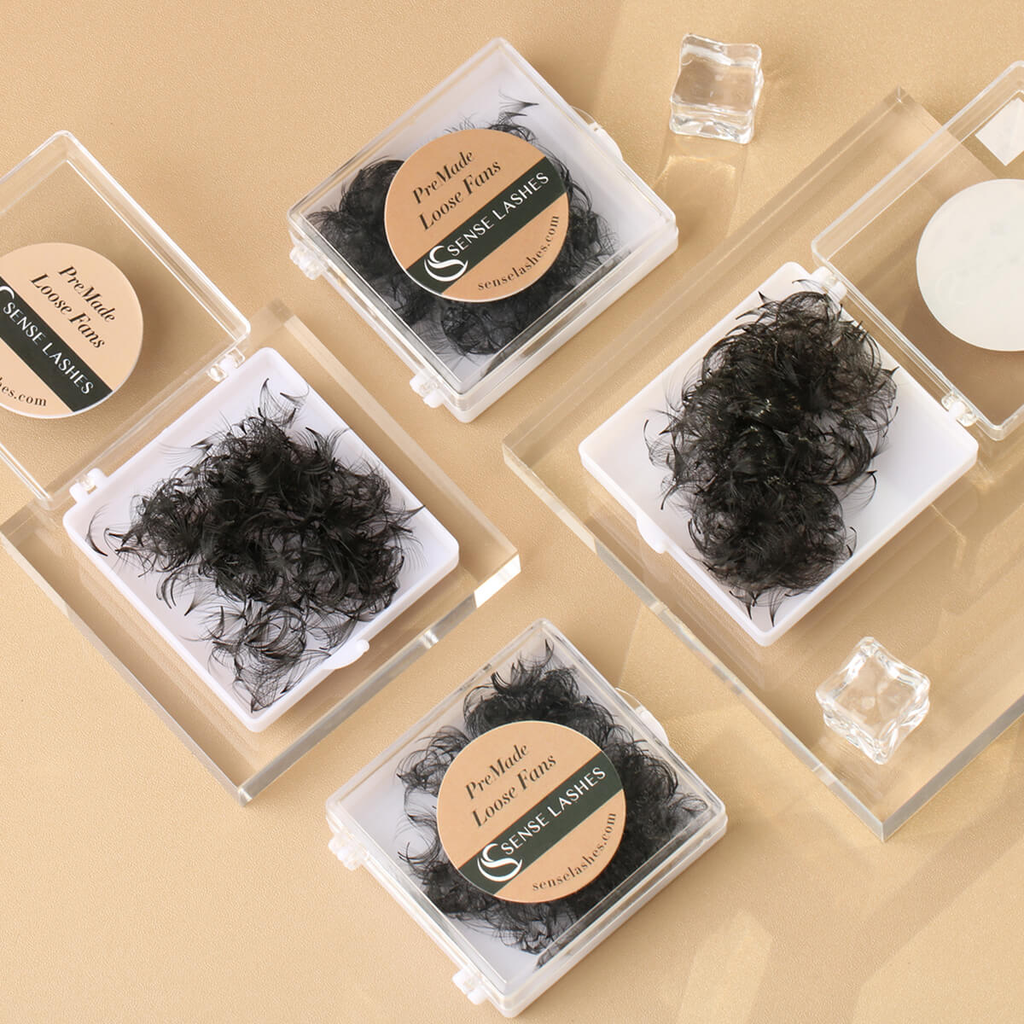
For high-volume sets on hooded lids, we recommend using 12D Handmade Loose Premade Fans Pointy Base(500 Fans). The pointy base allows for a smaller attachment area, which is crucial when space at the lash root is limited by the lid fold.

Sanitation and Ocular Health: The Professional SOP
Working with hooded lids requires a heightened focus on hygiene. The skin fold can trap oils, debris, and bacteria more effectively than other eye shapes.
Preventing Blepharitis and Infection
Poor hygiene in the "crease" area is a leading cause of Blepharitis (eyelid inflammation). The Mayo Clinic identifies bacteria buildup as a primary cause. As a professional, you must educate your clients that "water is not enough." Daily cleaning with a specialized lash shampoo is required to prevent the accumulation of biofilm and Demodex mites. Research in PMC (Demodex Studies) shows that ocular hygiene is non-negotiable for long-term lash health and retention.
Salon Sanitation Standards
To protect both the artist and the client, follow the CDC guidelines on preventing conjunctivitis. This includes:
- Using disposable wands and patches for every client.
- Sterilizing all tweezers in hospital-grade disinfectant.
- Ensuring the lash room has adequate ventilation to disperse cyanoacrylate fumes.
For clients with sensitive eyes or those prone to dryness, refer to WebMD's guide on Dry Eyes. Often, what a client perceives as an "allergic reaction" is actually exacerbated dry eye syndrome caused by the curing process of the glue. Using a nano-mister can help stabilize the tear film and speed up polymerization, reducing these symptoms.
Managing Allergic Contact Dermatitis (ACD)
A significant concern for lash professionals is distinguishing between simple irritation and a true allergy. A study in PubMed (Dermatitis Study) highlights that Ethyl Cyanoacrylate is a known allergen.
Because hooded lids have more skin-to-extension contact, the risk of a delayed immune response is higher. It is best practice to implement a "Patch Test Protocol." According to recent findings in PubMed (Eyelid Dermatitis, 2024), acrylate-containing cosmetics can cause reactions that appear 48 to 72 hours after exposure.
Professional Observation: In our experience handling technician feedback, "lid swelling" on hooded eyes is often misdiagnosed. If the swelling is localized to the crease where the lashes touch the skin, it is likely mechanical irritation. If the entire lid is red and itchy, it is likely an immune response to the acrylate.
To minimize these risks, always maintain a 0.5mm gap from the eyelid. Using 14D Handmade Loose Premade Fans Pointy Base(500 Fans) can help achieve a full look with fewer attachment points, potentially reducing the total chemical load on the ocular surface.

Business Impact: The 2025 Market Landscape
The lash industry is no longer a niche market. Grand View Research indicates a significant CAGR (Compound Annual Growth Rate) through 2025, with a shift toward individual extensions and professional-grade synthetic fibers.
Clients are becoming more educated; they are looking for "correction" rather than just "decoration." By mastering L and M curl mapping for hooded eyelids, you position your salon as a technical leader. This expertise justifies premium pricing. A "Hooded Eye Correction Set" is a specialized service that requires more skill than a standard classic set, and your pricing should reflect that expertise.
For salons looking to scale, using efficient tools like 10D Handmade Loose Premade Fans Pointy Base(500 Fans) allows for faster application times without sacrificing the "handmade" look that high-end clients demand.
Summary of Technical Execution
To achieve the best results for hooded eyelids, follow this checklist:
- Analyze the Hood: Determine if the hood is mild, moderate, or severe.
- Select the "Bypass" Curl: Use L-curls for the areas of maximum skin overlap.
- Ensure Outer Lift: Transition to M-curls in the outer third to prevent the "sad" eye effect.
- Prioritize Bond Speed: Use a 1-2 second adhesive to prevent lid-sticking.
- Educate on Aftercare: Stress the importance of lash shampoo to prevent Blepharitis and maintain the ocular microbiome, as suggested by PMC (Ocular Surface Disease, 2024).
By combining anatomical knowledge with advanced fiber technology, you can transform the most challenging eye shapes into stunning, open, and healthy lash sets.
Disclaimer: This article is for informational purposes only and does not constitute professional medical or legal advice. Eyelash extension application involves chemicals and proximity to the eye; always follow local regulations and consult with a medical professional regarding eye health concerns.
References
- CDC - Preventing Conjunctivitis
- Mayo Clinic - Blepharitis Symptoms & Causes
- Health Canada - Cyanoacrylate Compliance Report
- PubMed - Ocular Disorders from Eyelash Extensions (2024)
- AAO - Eyelash Extension Safety Facts
- PMC - Corneal Abrasion Case Study
- PMC - Ocular Surface Microbiome and Extensions (2024)