


Inicio Eyelash Extension Supplies Guide
Refining Spiky Sets: Identifying Why Your Texture Looks Gappy

Refining Spiky Sets: Identifying Why Your Texture Looks Gappy
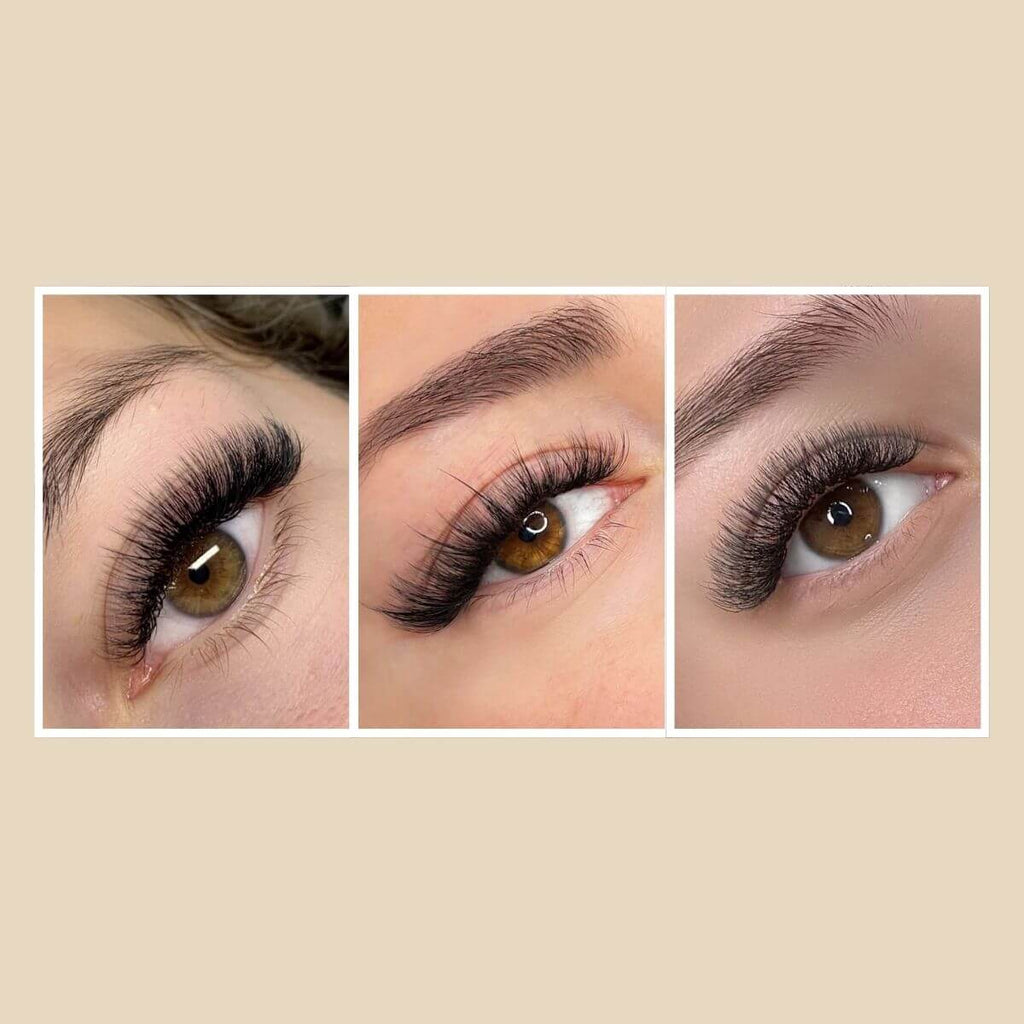
Creating a high-contrast, textured lash set is often considered the pinnacle of modern lash artistry. When executed correctly, these "spiky" or "wispy" designs—often categorized under the Kim K or Wet Look umbrellas—provide a sophisticated, editorial finish. However, many professional artists encounter a frustrating plateau: the set looks intentional from a distance but appears "gappy," "messy," or "cheap" upon closer inspection.
This technical breakdown explores the mechanics of texture, identifying the common pitfalls in length and diameter selection that lead to visual inconsistency. By moving away from "random" placement and adopting a structured, geometric approach to "spike families," we can transform a disjointed set into a professional-grade masterpiece.
The "Lonely Spike" Fallacy: Why Your Texture Lacks Cohesion
The most frequent error we observe in advanced texturing is the "lonely spike." Practitioners often attempt to create contrast by placing a single, significantly longer extension (e.g., a 14mm spike) amidst a shorter base (e.g., 9mm). While this creates height, it fails to create density at the focal point. The human eye perceives the sudden jump in length as a visual gap rather than a textured peak.
To solve this, we advocate for the "Spike Family" heuristic. Instead of a solitary extension, a primary spike should be supported by "flanking" lashes.
The Spike Family Structure
A primary long spike (the "Apex") should be flanked by two slightly shorter lashes in immediate proximity. This creates a clustered focal point that mimics natural lash growth patterns while maintaining high contrast.
- Apex Lash: 14mm (the target texture length).
- Support Lashes: 12mm (placed on the immediate left and right natural lashes of the Apex).
- Transition: This 2mm drop provides a visual bridge to the shorter base layer, preventing the "lonely" look.
Logic Summary: Our analysis of texture cohesion assumes that visual "gaps" are often a result of insufficient transition density rather than a lack of length. This "Spike Family" approach is a professional baseline derived from pattern recognition in high-contrast mapping (not a controlled lab study).

The Diameter-Length Ratio: Managing Visual Weight
A common technical "gotcha" involves the mismatch between the diameter of the spike and the diameter of the base. If you use a 0.07mm lash for a 15mm spike directly adjacent to a 0.03mm lash used in a 10mm base fan, you risk a "top-heavy" aesthetic.
The visual weight of an extension is determined by its surface area. As length increases, the perceived thickness of the lash also increases. To maintain a refined look, practitioners find that the diameter should often decrease as the length increases within the same visual zone. This ensures that the long spikes do not look like "clumps" against a soft, fluffy background.
For mega-volume bases, utilizing 0.03MM Cashmere Premium Mega Volume Eyelash Extensions allows for a dense, dark lash line that provides the perfect "canvas" for spikes. Because these lashes are extremely light and matte black, they don't compete with the texture layers for visual attention.
Recommended Diameter-Length Pairings
| Layer Type | Recommended Length | Recommended Diameter | Rationale |
|---|---|---|---|
| Base Layer | 8mm - 11mm | 0.03mm - 0.05mm | Creates a dense, soft "shadow" effect. |
| Texture Spikes | 12mm - 15mm | 0.07mm (Closed Fan) | Provides the necessary rigidity for the "wet" look. |
| Hybrid Accents | 10mm - 12mm | 0.05mm | Smooths transitions between base and peaks. |
The Ocular Health Foundation: Why Hygiene Dictates Artistry
A textured set is only as beautiful as the health of the underlying natural lashes. Advanced texturing requires precise isolation and healthy "anchor" lashes. If the eyelid is inflamed or the lash follicles are clogged, the spikes will twist or lean, creating the very "messiness" artists try to avoid.
According to the Mayo Clinic, Blepharitis (eyelid inflammation) is often caused by bacteria buildup or clogged oil glands. For lash clients, this risk is amplified if they avoid cleaning their extensions for fear of losing the "spikes." This is a critical misconception. Poor hygiene leads to Demodex mite infestation, which can permanently damage the lash follicle and ruin retention.
We recommend educating clients that "Water is Not Enough." A professional foam cleanser is mandatory to maintain the integrity of the 0.07mm Cashmere Volume Wispy Eyelash Extensions used for the set. Clean lashes provide a stable base, ensuring spikes remain upright and "crisp" throughout the growth cycle.
Chemical Precision: Adhesive Safety and Retention
The "gappy" look often appears 1–2 weeks post-application when premature shedding occurs. This is frequently a result of "standard laundering"—using an adhesive that is not chemically optimized for the environment or the lash weight.
Research published in PubMed regarding Ethyl Cyanoacrylate highlights that allergic contact dermatitis is a real risk when adhesives are misused or when vapor levels are high. Furthermore, Health Canada's 2023-2024 compliance report emphasizes that many adhesives on the market fail to meet strict labeling and chemical safety standards regarding cyanoacrylate concentrations.
To prevent the "gaps" caused by premature lash loss:
- Monitor pH Balance: The University of Waterloo notes that the link between cosmetics and eye health is heavily dependent on contamination and product age. Using fresh, pH-balanced primers is essential to prepare the natural lash cuticle for the adhesive bond.
- Avoid Mechanical Trauma: PMC reports on corneal abrasions often cite improper removal or mechanical rubbing as causes. When creating heavy textured sets, ensure the weight is distributed correctly to avoid "traction alopecia" or mechanical stress on the follicle.
Methodology Note: These safety recommendations are based on a review of ophthalmological literature and regulatory reports. We prioritize "Safety-First Artistry" to ensure long-term client retention (a heuristic for business stability).
Streamlining Workflow: Pre-made Fans vs. Hand-Fanning
For many artists, the variable of hand-fanning consistency mid-set is the primary cause of "messy" texture. Creating a perfect 5D fan with a closed tip for a spike while maintaining a wide, fluffy fan for the base requires immense focus.
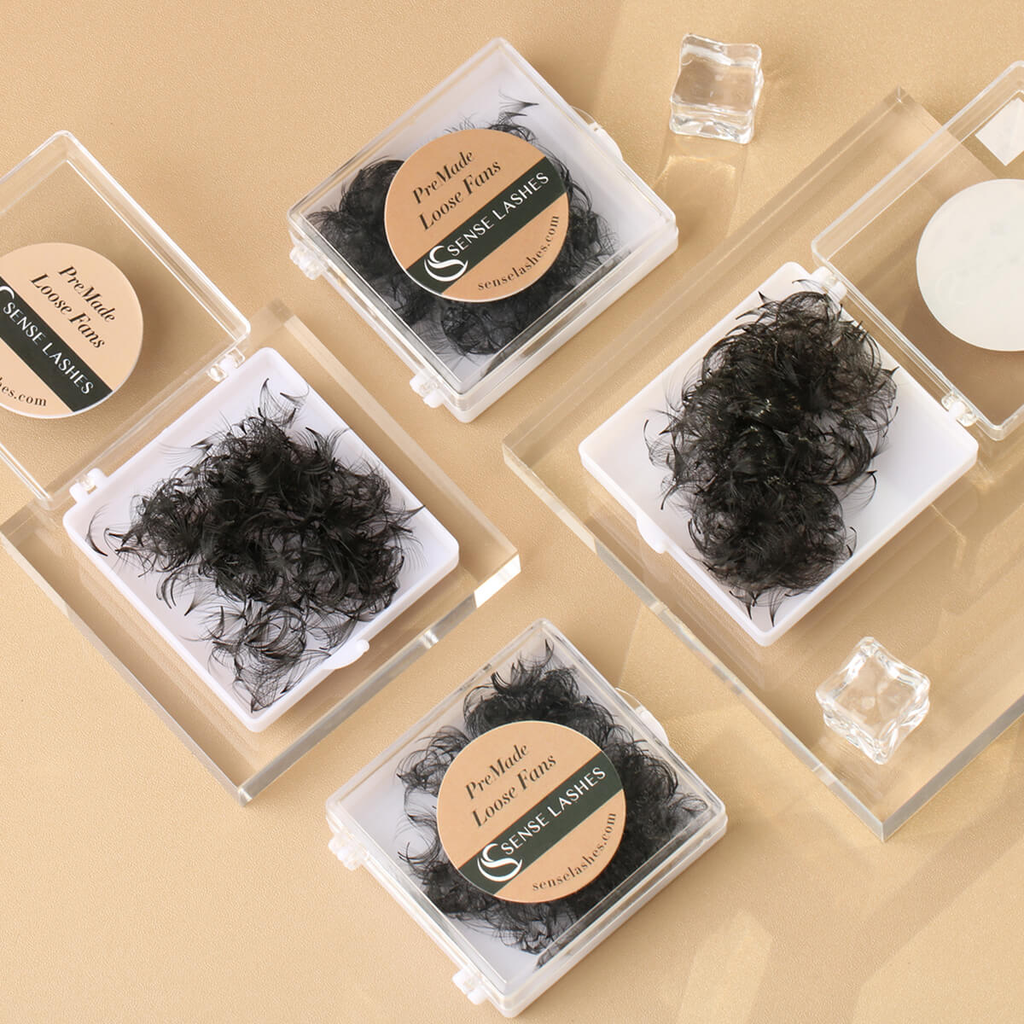
Practitioners find that using pre-made fans in lower D-counts (like 5D or 6D) is invaluable for texturing. Products like 0.05MM Cashmere Premium Mega Volume Eyelash Extensions offer "fan like butter" flexibility, allowing the artist to focus solely on strategic placement for contrast.
By removing the "fanning" variable, you can concentrate on the 1mm Rule for Smooth Transitions. This rule suggests that when moving across the eye or between layers, a 1mm increment change is the maximum allowed to maintain a seamless look. Spikes are the exception to this rule, but they still require a "bridge" of intermediate lengths to avoid looking like accidental outliers.

Troubleshooting the "Gappy" Set: A Practical Checklist
If your textured sets still look inconsistent, use this diagnostic checklist to identify the mechanical failure:
- Check the "Gap Rule": Are the extensions placed too far from the eyelid? According to our guide on Placement Proximity, inconsistent spacing can mimic the look of a reaction or poor growth.
- Verify Spike Integrity: Did the spike "fan out" after the client left? Use a tiny amount of primer on the tips of your 0.07MM Cashmere Premium Mega Volume Eyelash Extensions to keep the tips bonded together for a "wet" spike effect.
- Assess the Layering: Are you placing spikes only on the top layer? For deep, multi-dimensional texture, spikes should be placed on the middle layer, with the base on the bottom layer and "wisps" on the top layer.
- Sanitation SOP: Are you following CDC guidelines for salon sanitation? Using disposable wands and patches ensures that you aren't transferring bacteria that could cause "clumping" due to eye discharge (conjunctivitis).
Scenario Analysis: Choosing the Right Texture Approach
Scenario A: The "Sophisticated Wispy" (Standard Case)
For the client who wants an "expensive" look that is visible but subtle.
- Base: 0.03mm fans, 8-11mm.
- Spikes: 0.07mm closed fans, 12-13mm (Spike Families of 3).
- Outcome: A soft, hazy lash line with clear, intentional peaks.
Scenario B: The "Editorial Wet Look" (Power User Case)
For the client seeking high drama and high contrast.
- Base: 0.05mm fans, 9-10mm.
- Spikes: 0.07mm clusters, 14-15mm (Spike Families of 5).
- Outcome: Bold, "stiletto" spikes that dominate the visual field. This requires the "diameter-length ratio" to be strictly followed to prevent drooping.
Final Technical Takeaways
Refining a spiky set is less about adding more lashes and more about the geometric relationship between them. By implementing "Spike Families" and respecting the "Diameter-Length Ratio," you eliminate the visual gaps that characterize amateur work.
Furthermore, leveraging the American Academy of Ophthalmology (AAO) safety standards—such as using a Client Safety Consent Form and emphasizing hygiene—positions you as a technical expert rather than just a service provider.
Consistent, professional outcomes are built on high-performance materials like SenseLashes' Cashmere collection. When your tools provide "fan like butter" consistency and "matte black" depth, your only remaining variable is your mapping precision.
YMYL Disclaimer: This article is for informational purposes only and does not constitute professional medical or health advice. Eyelash extension application involves risks, including infection and allergic reactions. Always consult with a licensed professional and follow local health regulations. If a client experiences persistent redness, pain, or vision changes, refer them to an ophthalmologist immediately.
References: