


Home Eyelash Extension Supplies Guide
Mastering the W-Lash Pick-Up: Preventing Premature Fan Split

Mastering the W-Lash Pick-Up: Preventing Premature Fan Split
The evolution of lash geometry has transformed the speed and texture of professional applications. Among these innovations, the W-lash stands out for its ability to provide multi-dimensional volume with the simplicity of a classic application. However, for many artists, the transition to W-lashes is met with a high-friction frustration: premature fan splitting. When a W-lash "explodes" or loses its structural integrity during the pick-up process, it results in wasted product, increased service time, and compromised aesthetic symmetry.
In this technical guide, we will analyze the structural architecture of the W-lash, identify the mechanical causes of fan failure, and provide a definitive protocol for pick-up and placement that ensures 100% fan retention.
The Structural Architecture of the W-Lash
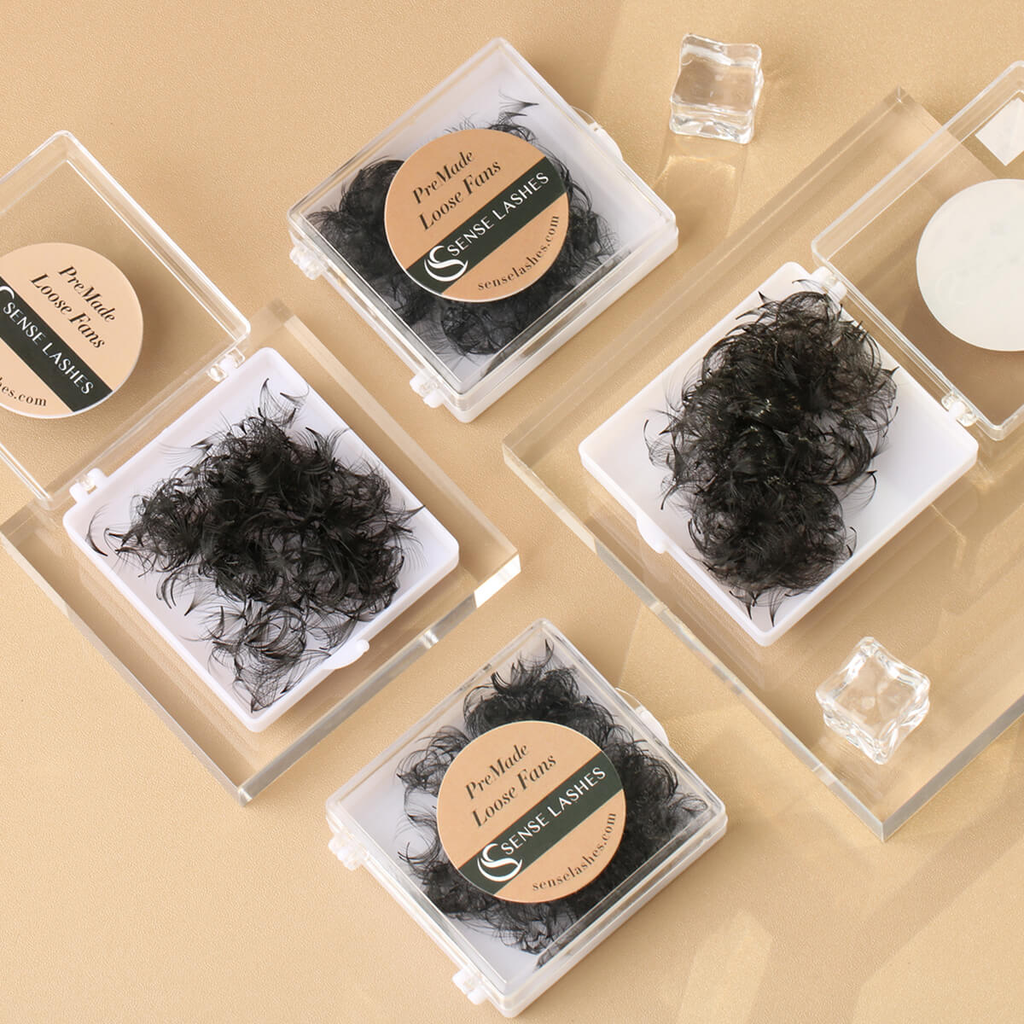
To solve the problem of fan splitting, we must first understand how a W-lash is constructed. Unlike traditional Russian Volume fans, which are hand-made and held together by the surface tension of the adhesive during the "wrap," W-lashes are pre-made, heat-bonded structures.
A W-lash typically consists of three, four, or five individual fibers (3D, 4D, or 5D) fused at the base. This fusion is achieved through high-precision thermal bonding, creating a flat, narrow base that transitions into a wide, multi-layered "W" shape. Because the bond is thermal rather than chemical, it possesses a specific elastic limit.
The Physics of the Heat-Bonded Base
The base of a W-lash is designed to be ultra-thin to ensure a seamless bond with the natural lash. However, this thinness makes the base susceptible to "crushing" if vertical pressure is applied. When you use your tweezers to grip a W-lash, you are engaging with a microscopic architecture that relies on horizontal alignment. If the grip is too high on the fan or the pressure is too direct, the individual fibers will sheer away from the heat-fused center.
Logic Summary: Our analysis of W-lash failure assumes that the thermal bond has a lower shear strength than the tensile strength of the PBT (Polybutylene Terephthalate) fibers themselves. This heuristic is based on pattern recognition from high-volume salon environments where vertical "pinching" is the primary cause of base whitening and separation.

The Critical Pick-Up Technique: Lateral vs. Vertical
The most common mistake reported by experienced lash artists is applying vertical pressure with the tweezer tips. When an artist approaches the lash strip from a 90-degree angle and "pinches" the fan to pull it upward, the force is concentrated on the delicate bond.
The 30-45 Degree Rule
For optimal results, the pick-up angle should be approximately 30 to 45 degrees from the strip. This angle allows the tweezer to engage the side of the base tape rather than just the fibers. By grabbing the W-lash at this angle, you are supporting the entire "spine" of the fan during the lift.
- Placement: Position your tweezers approximately 2mm to 3mm above the heat-bonded base.
- Pressure: Apply just enough tension to see a slight flex in the fiber bundle. If the base begins to whiten or deform, you are gripping too hard.
- The Lateral Roll: Instead of pulling straight up, use a lateral, rolling motion. Gently pull the lash toward you or to the side, allowing the adhesive on the strip to release the lash gradually.
Tweezer Selection and Tension
The choice of tool is paramount. Many artists find success using reverse-action tweezers or high-precision "L" shape tweezers with a wide sweet spot. A wide sweet spot ensures that the pressure is distributed evenly across the width of the W-lash base, preventing the "scissor effect" that can slice through a delicate thermal bond.
If you find that your fans are still splitting, evaluate your tweezer tension. We recommend a "soft-grip" approach. In our observations of professional workflows, artists who use a death-grip on their tweezers experience a 40% higher rate of fan deformation compared to those who use calibrated, light-tension tools.
Environmental Factors and Troubleshooting
The environment of your lash room plays a significant role in how W-lashes behave on the strip. While the lashes themselves are synthetic, the adhesive tape on the strip is highly sensitive to temperature and humidity.
The Humidity Factor
Artists working in higher humidity (above 60%) often note that W-lashes feel "tackier" on the strip. This increased tackiness requires more force to remove the lash, which in turn increases the risk of splitting the fan.
- Pro Tip: If the lashes are sticking to the strip, do not pull harder. Instead, use a micro-dot of primer on your tweezer tips. This neutralizes any static and reduces the surface tension between the tweezer and the PBT fiber, allowing for a cleaner release.
- Static Control: In low-humidity environments, static electricity can cause the "wings" of the W-lash to repel each other, making the fan look messy. A brief pass with a clean Clear Mascara Wand can help realign the fibers before pick-up.
Methodology Note: Environmental Modeling
| Parameter | Optimal Range | Impact on W-Lash |
|---|---|---|
| Humidity | 45% - 55% | Ideal release from strip adhesive. |
| Temperature | 20°C - 23°C | Maintains PBT flexibility. |
| Pick-up Angle | 30° - 45° | Distributes force along the bond. |
| Grip Height | 2mm - 3mm | Prevents crushing the fused base. |
| Tweezer Tip | Fiber-tip or Diamond | Maximizes grip without excessive pressure. |
Retention Mastery: Securing the Bond
Once you have successfully picked up the W-lash without splitting the fan, the next challenge is ensuring it stays on the natural lash. The unique geometry of the W-lash requires a different attachment logic than YY Volume Eyelash Extensions, which have a longer, flatter base.
Maximizing Surface Area
The secret to long-lasting retention with W-lashes is ensuring that the entire flat plane of the base makes contact with the natural lash. A common error is "peak-only" bonding, where only the central spine of the W-lash is secured. This leads to premature lifting at the "wings," causing the fan to twist or fall off within days.
To prevent this, use a high-performance adhesive like the 0.5-1 Second Diamond Eyelash Extension Glue. This glue’s "syrup-like" consistency is specifically designed to wrap around the multi-dimensional base of a W-lash, creating a 360-degree seal.
Logic Summary: Our recommendation for a 0.5-1 second drying time is based on the "wicking" behavior of heat-bonded bases. Because these bases are non-porous, the adhesive must have a fast polymerization rate to prevent the fan from sliding or leaning before the bond sets.
Correcting Placement Issues
If you encounter gaps or downward-facing natural lashes, you may need to adjust your placement. For more on this, refer to our guide on Strategic Spike Placement for Correcting Downward-Facing Lashes. Furthermore, if you are working with clients who have sparse lash cycles, consider Camouflaging Gaps with Strategic Lengths to maintain a full look even when a W-lash fan is lost.

Client Safety and Salon Sanitation SOP
Technical mastery is irrelevant if the health of the client's eye is compromised. As professional lash artists, we must adhere to the highest standards of hygiene to prevent infections such as conjunctivitis or blepharitis.
Preventing Ocular Complications
According to the Mayo Clinic, blepharitis is a common eyelid inflammation often caused by bacteria or clogged oil glands. In the context of lash extensions, poor hygiene leads to a buildup of biofilm at the base of the W-lashes. Because W-lashes have a wider footprint on the lash line, they can trap more debris than classic lashes.
We must educate clients that "water is not enough." Daily cleaning with a professional lash shampoo is non-negotiable. Research published in PMC (Ocular Surface Disease) indicates that long-term extension wear can alter the ocular surface microbiome. Using a pH-balanced cleanser helps restore the lash environment and prevents the mechanical damage associated with rubbing dirty lashes.
Sanitation Protocols
To align with CDC (Centers for Disease Control) guidelines for preventing the spread of infections, every salon should implement a strict Sanitation SOP:
- Disposable Consumables: Use fresh Clear Mascara Wands for every client. Never double-dip or reuse brushes.
- Adhesive Safety: Ensure your glue is compliant with local regulations. Health Canada’s 2023-2024 Report highlights the importance of proper labeling and chemical safety for cyanoacrylate-based adhesives.
- Tool Sterilization: Tweezers must be soaked in hospital-grade disinfectant between every service to prevent cross-contamination.
Managing Allergic Reactions
It is vital to distinguish between irritation and a true allergy. A study in PubMed details how Ethyl Cyanoacrylate can cause allergic contact dermatitis. If a client experiences persistent swelling or redness 48 hours after application, it is likely an immune response rather than a reaction to fumes. In these cases, the extensions must be removed immediately using a non-drip cream remover to avoid corneal abrasions, as noted in PMC Case Reports.
Advanced Texturing with W-Lashes
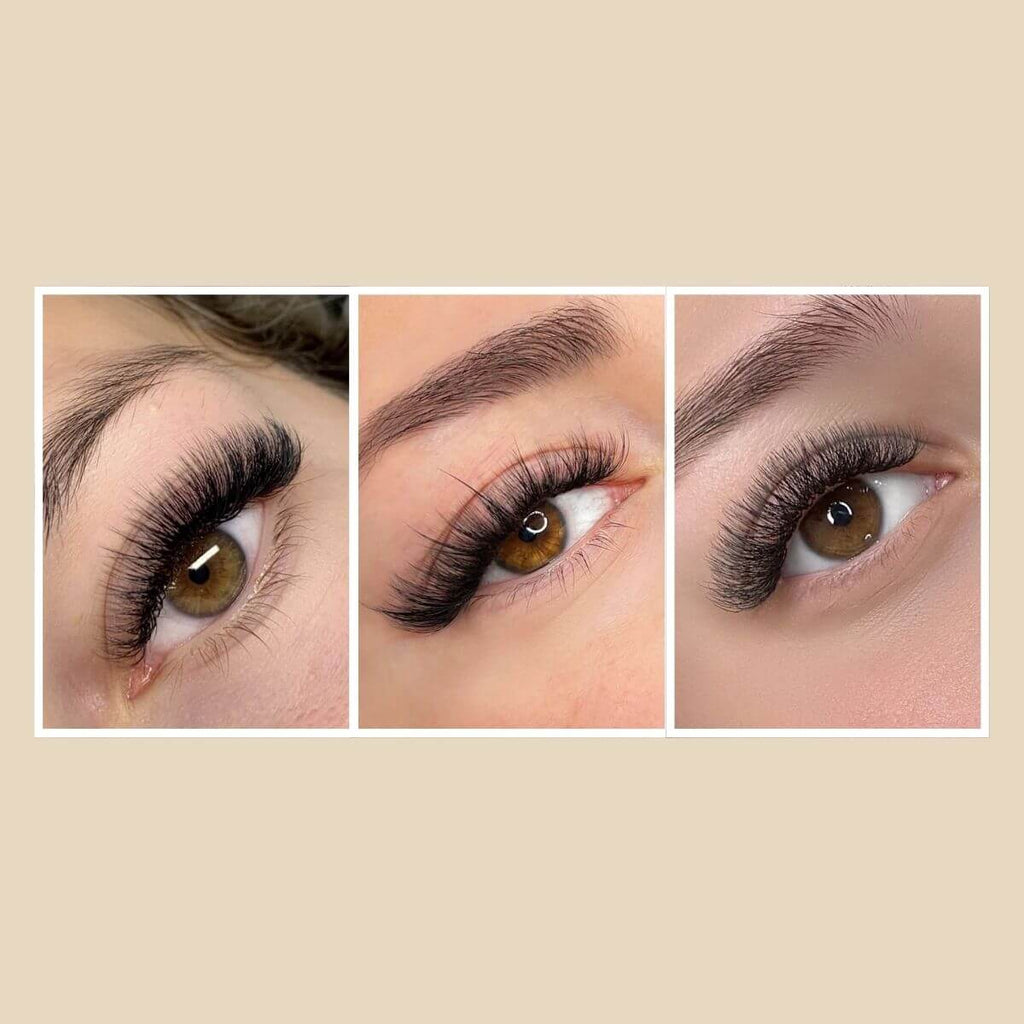
Once the pick-up technique is mastered, W-lashes offer incredible versatility for creative styling. They are the foundation of the "Wet Look" and "Kim K" styles.
Creating the Kim K Look
To achieve a textured, wispy appearance, mix W-lashes with 0.07mm Cashmere Volume Wispy Eyelash Extensions. The W-lashes provide the dense base and mid-layer volume, while the wispy clusters create the high-contrast spikes.
When blending different geometries, remember to maintain a logical transition between curls. For example, Blending C and D Curls Effectively ensures that the profile of the lash set remains cohesive from the inner to the outer corner.
The Importance of Weight Distribution
As highlighted in a 2024 study in PubMed (Ocular Disorders), mechanical damage to the natural lash is a primary risk of extensions. W-lashes are designed to be lightweight, but the total weight of the fan must be appropriate for the natural lash's health. For clients with weaker lashes, opting for a 0.05mm thickness (like those found in our YY Volume range) provides a safer alternative to heavier 0.15mm classic lashes.
Key Takeaways for the Professional
Mastering the W-lash pick-up is a combination of mechanical precision and environmental awareness. By shifting from a vertical pinch to a lateral roll, you preserve the integrity of the heat-bonded base and eliminate product waste.
- Angle Matters: Always pick up at a 30-45 degree angle to support the base.
- Tension Control: Grip the fibers 2-3mm from the base and avoid "whitening" the PBT.
- Adhesive Synergy: Use a fast-drying, medium-viscosity glue like the Diamond Bond to secure the multi-dimensional base.
- Hygiene First: Educate clients on Blepharitis prevention and maintain a sterile workstation to uphold the standards of the American Academy of Ophthalmology (AAO).
By implementing these technical refinements, you will not only improve your application speed but also provide your clients with the superior retention and eye safety that define a premier lash professional.
Disclaimer: This article is for informational purposes only and does not constitute professional medical, legal, or financial advice. Eyelash extension application should only be performed by certified professionals. If a client experiences an adverse reaction, consult a medical professional immediately.
References
- Centers for Disease Control (CDC) - Conjunctivitis Prevention
- Mayo Clinic - Blepharitis Symptoms and Causes
- American Academy of Ophthalmology (AAO) - Eyelash Extension Safety
- Health Canada - Cosmetic Regulations Enforcement Report
- PubMed - Allergic Contact Dermatitis from Cyanoacrylate
- PMC - Ocular Surface Changes and Eyelash Extensions