


Home Eyelash Extension Supplies Guide
Pointy vs. Flat Bases: Compatibility for Thin Natural Lashes

The Technical Evolution of Lash Base Geometry
For the modern lash professional, the difference between a high-retention set and a premature failure often lies in the microscopic details of the fan base. When we are working with clients who possess thin or sparse natural lashes, the margin for error narrows significantly. Every microgram of weight and every millimeter of bonding surface area becomes a critical variable in the longevity of the set and the health of the natural lash.
The industry has moved beyond the "one-size-fits-all" approach to volume. We now recognize that the interaction between the extension base and the natural lash cuticle is a mechanical relationship. Selecting the correct base shape—Pointy vs. Flat—is not merely an aesthetic choice; it is a structural decision based on the client's unique lash profile.
In this technical guide, we will analyze the physics of base compatibility, the chemical safety standards governing our adhesives, and how to implement a professional sanitation protocol that protects both your business and your clients' ocular health.
Mechanical Dynamics: Pointy vs. Flat Bases
The primary objective of any volume application is to maximize the bonding surface area without exceeding the weight-bearing capacity of the natural lash.
The Pointy Base: The "Key and Lock" Mechanism
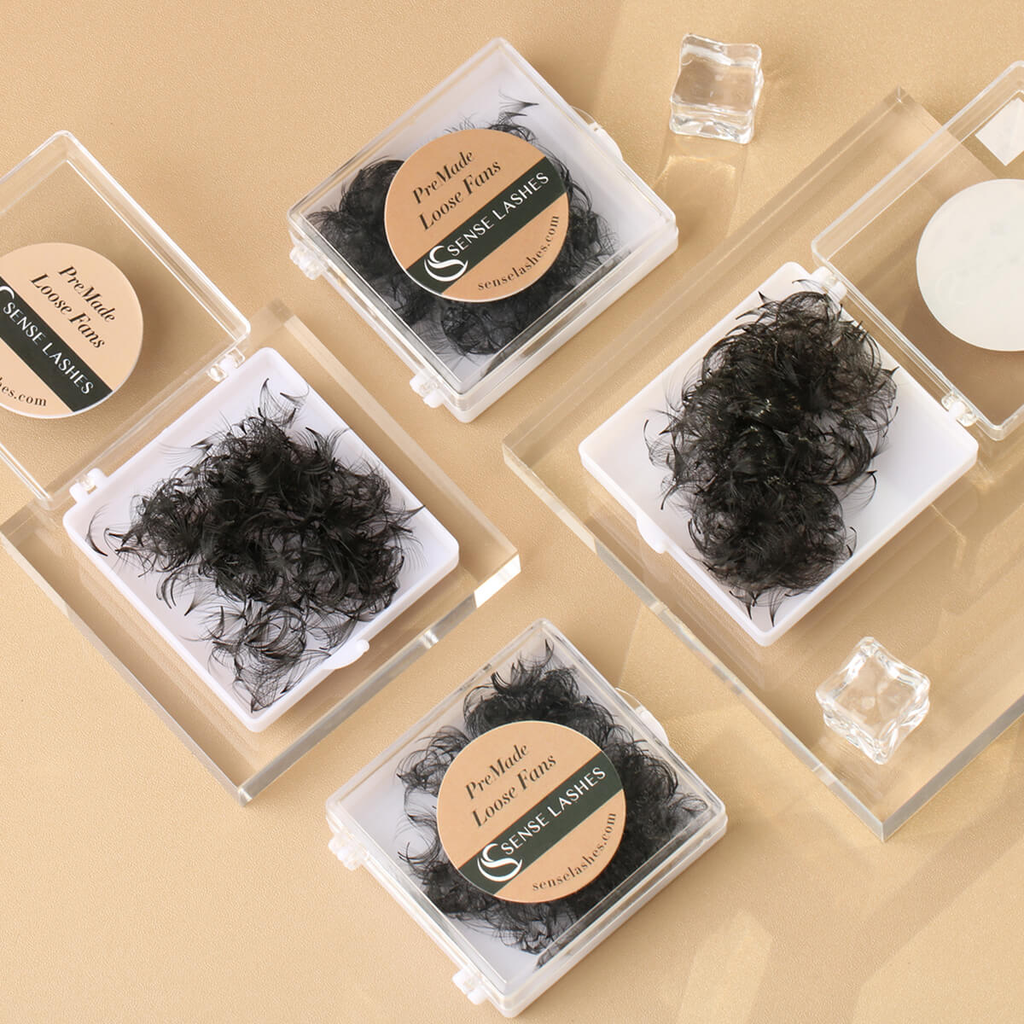
Pointy bases, such as those found in our 14D Handmade Loose Premade Fans Pointy Base(500 Fans), are engineered for precision. These fans are typically heat-bonded, resulting in an ultra-slim, tapered base.
When applied to sparse natural lashes—where visible skin exists between individual hairs—the pointy base offers a distinct mechanical advantage. Because it is slender, the tip of the base can nestle into the lateral curvature of the natural lash. This creates what we call a "key and lock" effect. The adhesive distributes stress evenly around the circumference of the natural lash rather than concentrating it on a single flat plane.
The Flat Base: The Footprint Strategy
Conversely, flat bases are designed to sit flush against the natural lash. For clients with thin lashes that grow in a dense row (where lashes are touching but fine in diameter), a micro-flat base—ideally under 0.5mm wide—can be highly effective. The flat surface provides a larger initial footprint, which can be faster to apply in high-density scenarios.
However, a common mistake we observe in professional practice is using a wide flat base on a sparse lash. If the natural lash is significantly narrower than the extension base, the fan creates a "see-saw" effect. The base only adheres at the edges, creating a weak point that leads to premature lifting and potential mechanical trauma to the hair follicle.
Logic Summary: Base Selection Heuristic Our analysis of base-to-natural lash compatibility is based on common industry patterns and mechanical modeling of adhesive stress distribution.
- If skin is visible between lashes: Prioritize Pointy Bases to avoid the see-saw effect.
- If lashes are dense but thin: A Micro-Flat Base offers a secure, high-speed bonding footprint.
- Consistency Rule: The volume of adhesive must be calibrated to the base width; a sloppy application on a pointy base will fail faster than a clean application on a flat base.

Anatomy of the "Thin & Sparse" Profile
To choose the right product, we must first understand the physiological constraints of the client. Thin natural lashes (typically 0.05mm to 0.07mm in diameter) have a lower tensile strength and a smaller cuticle surface area for bonding.
According to the American Academy of Ophthalmology (AAO), excessive weight or improper application can lead to traction alopecia or permanent damage to the lash follicle. This risk is compounded in sparse lash profiles where there are fewer healthy "anchor" lashes to support a full set.
Protecting the Ocular Surface
Recent 2024 research published in PMC (Ocular Surface Changes) indicates that eyelash extensions can alter tear film stability and affect the meibomian glands if not applied with strict adherence to safety margins. For thin-lashed clients, we recommend using ultra-lightweight fans, such as the 10D Handmade Loose Premade Fans Pointy Base(500 Fans). By using 0.03mm diameter fibers in a 10D fan, you achieve a lush volume effect with a weight profile that is often safer than a traditional 0.15mm classic lash.
For artists managing complex growth patterns, Selecting Curls Based on Natural Lash Growth Angles is a vital skill. When you combine the correct curl with a pointy base, you can redirect the visual weight of the extension to prevent it from drooping or causing mechanical strain on the eyelid.
Chemical Integrity and Import Compliance
As a professional, your choice of adhesive is as critical as your choice of lash. The primary component in most professional lash glues is Cyanoacrylate. While highly effective, it is a chemical that requires careful handling and high-quality manufacturing.
The Formaldehyde Factor
A landmark study by Amano et al. (2012) identified that many adhesives of that era released significant levels of formaldehyde and had acidic pH levels that caused keratoconjunctivitis. Modern, professional-grade formulas have evolved to neutralize pH and minimize off-gassing. At SenseLashes, we prioritize factory-direct quality control to ensure our formulas meet contemporary safety expectations.
Global Safety Standards
For distributors and salon owners, compliance is a significant business risk. The Health Canada 2023-2024 Enforcement Report recently highlighted high non-compliance rates regarding labeling and chemical safety in imported adhesives.
Using products that lack transparent ingredient lists or proper MSDS (Material Safety Data Sheets) can lead to customs seizures or, worse, legal liability in the event of a client reaction. We recommend maintaining a "2025 Import Compliance Checklist" to ensure all your consumables—from fans to glues—meet the standards of your local regulatory body.

Professional Troubleshooting: Irritation vs. Allergy
One of the most frequent challenges in a lash studio is distinguishing between a temporary irritation and a true allergic reaction.
Diagnosing the Cause
According to WebMD (Dry Eyes), lash fumes can exacerbate existing dry eye syndrome, causing redness and a burning sensation that is often confused with a glue allergy. However, a true allergic response is typically an immune reaction to Ethyl Cyanoacrylate.
A study published in PubMed (Dermatitis Study) notes that allergic contact dermatitis can be delayed, appearing 48 to 72 hours after exposure.
To mitigate these risks:
- Use Nano-Misters: To instantly polymerize the glue and lock in fumes.
- Proper Isolation: Use high-quality gel patches to prevent any chemical contact with the skin.
- Patch Testing: While not 100% foolproof, a patch test can identify acute sensitivities before a full set is applied.
For clients with downward-facing lashes, improper base selection can lead to the extension rubbing against the eye, causing mechanical irritation that mimics a chemical burn. In these cases, Strategic Spike Placement for Correcting Downward-Facing Lashes can help lift the set away from the ocular surface.
Salon Sanitation SOP: A Professional Standard
The CDC (Centers for Disease Control) provides clear guidelines on preventing the spread of conjunctivitis and maintaining eye hygiene. In a high-traffic salon environment, cross-contamination is a constant threat.
The SenseLashes Sanitation Protocol
We advocate for a strict Standard Operating Procedure (SOP) that includes:
- Disposable Consumables: Use fresh mascara wands, micro-brushes, and eye patches for every client.
- Tool Sterilization: Tweezers must be cleaned with hospital-grade disinfectant or an autoclave between uses.
- Lash Hygiene: Educate clients that "water is not enough." Poor hygiene leads to Blepharitis (eyelid inflammation), as detailed by the Mayo Clinic.
Marketing a professional Lash Shampoo as "Blepharitis Prevention" rather than just a cleanser adds clinical value to your retail offerings. It shifts the conversation from aesthetics to health. Research on PMC (Demodex Studies) shows that a build-up of oils and skin cells can invite Demodex mites, which thrive in dirty lash lines and severely impact retention.
Method & Assumptions: Modeling Lash Retention This model assumes a healthy lash cycle and professional-grade adhesive application.
Parameter Value or Range Unit Rationale Natural Lash Diameter 0.05 - 0.07 mm Target "Thin" profile Extension Diameter 0.03 mm Mega-volume safety standard Adhesive Cure Time 0.5 - 1.0 sec Professional speed Cleanliness Level High (Lash Shampoo) N/A Essential for bonding Base Shape Pointy N/A Optimized for sparse lashes Boundary Conditions: This model may not apply to clients with active hormonal imbalances or those using oil-based facial products.
Strategic Selection: When to Use Mega Volume
For clients with extremely sparse lashes, the temptation is to use the largest fan possible to "fill the gaps." However, weight management is paramount.
Using the 30D Handmade Loose Premade Fans Pointy Base(500 Fans) allows you to create a "blackout" mega-volume look using ultra-fine 0.03mm fibers. Because these are heat-bonded with a pointy base, the weight is concentrated at the center of the natural lash, reducing the torque that can cause a lash to twist or snap.
If you find yourself struggling with gaps that a standard fan cannot cover, consider Strategic Gapping: Using Curls to Hide Natural Lash Gaps. By mixing curls and utilizing the "key and lock" of a pointy base, you can bridge visual voids without overloading the neighboring lashes.
Summary of Professional Best Practices
Achieving stability on thin natural lashes requires a combination of mechanical understanding, chemical safety, and clinical hygiene.
- Prioritize Pointy Bases for sparse lash lines to achieve a secure "key and lock" fit.
- Use Micro-Flat Bases for dense but thin lashes to maximize the bonding footprint.
- Adhere to Global Standards: Ensure your adhesives and lashes are compliant with FDA or Health Canada regulations to protect your business.
- Enforce Hygiene: Use the CDC and Mayo Clinic guidelines to build a sanitation SOP that prevents infections and improves retention.
For more specialized cases, such as clients with unique eye shapes, you may find that Why Deep-Set Eyes Require Straighter Curl Bases provides the final piece of the mapping puzzle.
By choosing high-quality, factory-direct components like the 4D Handmade Loose Premade Fans Pointy Base(500 Fans), you ensure that every set you produce is a benchmark of professional excellence.
Disclaimer: This article is for informational purposes only and does not constitute professional medical or legal advice. Eyelash extension application involves chemicals and proximity to the eye; always consult local regulations and professional training standards. If a client experiences a severe reaction, refer them to an eye care professional immediately.
References
- Centers for Disease Control and Prevention (CDC) - Conjunctivitis Prevention
- American Academy of Ophthalmology (AAO) - Eyelash Extension Safety
- Health Canada - Cosmetic Regulations Enforcement Report
- Mayo Clinic - Blepharitis Symptoms and Causes
- PubMed - Formaldehyde and pH in Eyelash Glue (Amano et al.)
- PMC - Ocular Surface Changes and Eyelash Extensions