


Startseite Eyelash Extension Supplies Guide
Wispy Layering Secrets: Alternating Curls for Texture

Wispy Layering Secrets: Alternating Curls for Texture
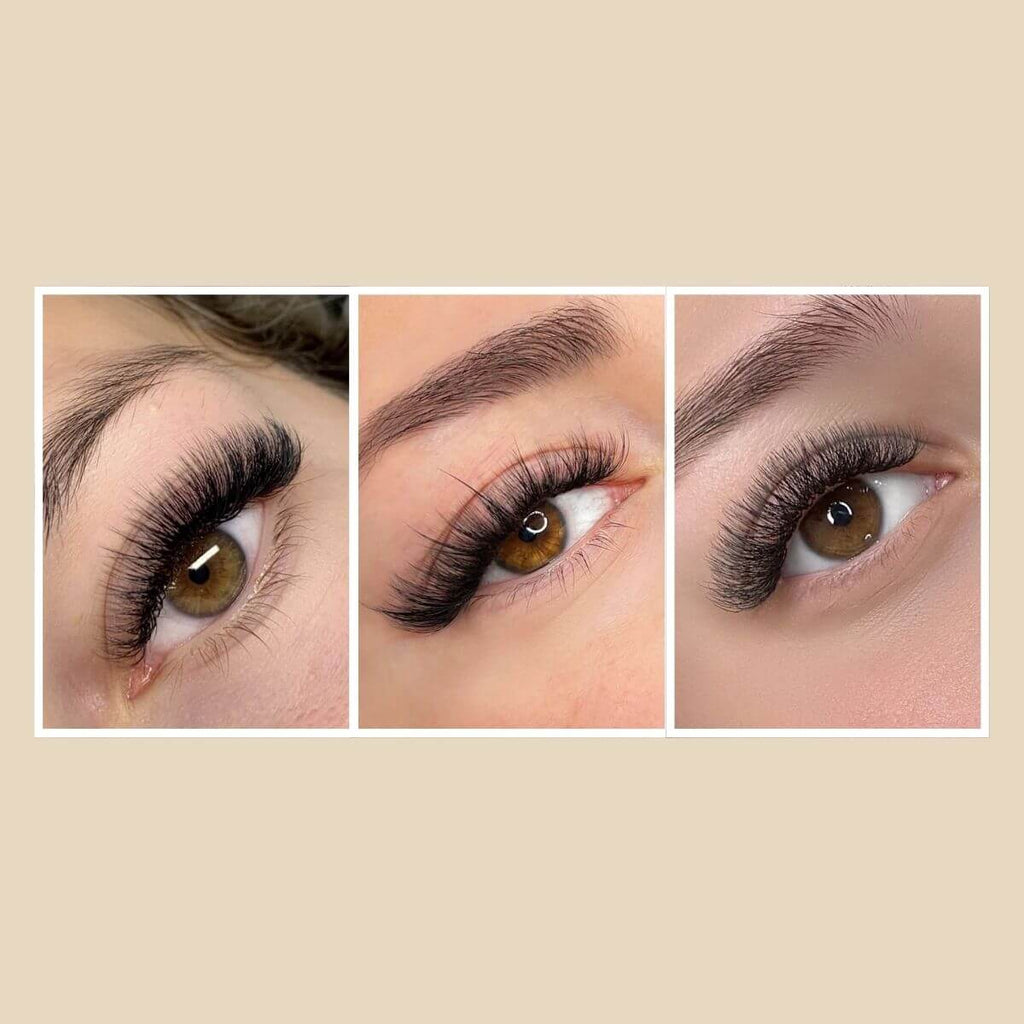
The "wispy" look, often referred to as the Fairy or Kim K style, has become a high-frequency search term and a staple in modern lash artistry. However, achieving that coveted textured, multidimensional finish requires more than just varying lengths. It demands a sophisticated understanding of row-based mapping and curl stratification. For the professional artist, moving beyond traditional single-layer mapping is the key to elevating a standard set into a high-end, bespoke creation.
By alternating curls across the natural lash rows, you can create depth that mimics the natural irregularity of healthy lashes while maintaining the structure of a professional application. This guide explores the technical mechanisms of curl layering, the chemistry of retention in complex sets, and the critical health protocols necessary to protect your clients and your reputation.
The Architecture of the Lash Line: Understanding Rows
Natural lashes do not grow in a single, neat line. They typically occupy three to five horizontal rows. Traditional mapping often ignores this verticality, applying the same curl and length across all rows in a specific section. This approach results in a "perfect line" but lacks the texture required for a wispy effect.
To achieve a textured look, you must treat the top, middle, and bottom rows as distinct canvases.
- The Bottom Row: This layer provides the foundation and "darkness" of the set.
- The Middle Row: This acts as the transition layer, blending the foundation with the texture.
- The Top Row: This is where the "wispy" spikes or highlights live, creating the silhouette of the set.
Logic Summary: Our analysis of lash row architecture assumes a standard three-layer distribution. We categorize the bottom 30% of natural lashes as the foundation, the middle 50% as the body, and the top 20% as the texture layer. This modeling helps artists visualize the vertical depth before application.

Curl Stratification: The "Full Grade" Heuristic
A common mistake in advanced layering is using curls that are too similar across adjacent rows. For instance, applying a C-curl on the bottom row and a CC-curl on the middle row often fails to create distinct texture. Because these curls are mathematically close in their degree of curvature, they tend to blend into a flat, uniform appearance once the eye is open.
Based on common patterns observed in professional artistry, we recommend a minimum curl differential of one full grade between adjacent rows to achieve clear visual separation.
The Vertical Mapping Formula
| Row Layer | Recommended Curl | Purpose |
|---|---|---|
| Bottom Row | J or B Curl | Provides a straight, dark base; increases perceived length. |
| Middle Row | C or CC Curl | Provides the "body" and lift of the set. |
| Top Row | D or DD Curl | Creates the wispy spikes; the tighter curl "pops" against the straighter base. |
By using a J-curl on the bottom and a D-curl on the top, you create a "staircase" effect. The J-curl extends outward while the D-curl lifts upward, creating a shadow gap that the human eye perceives as texture and depth. When using 0.03MM Cashmere Premium Mega Volume Eyelash Extensions, this contrast is even more pronounced due to the deep matte black finish of the fibers, which enhances the "blackout" effect at the base.
Adhesive Science and Retention in Layered Sets
Layering multiple curls introduces a technical challenge: retention. Tighter curls (D, DD, or L) have a smaller surface area for the "attachment zone" compared to straighter curls. Furthermore, the top-layer lashes are often more delicate and prone to movement during the curing process.
A frequent professional pitfall is using an ultra-fast adhesive (0.5–1 second) for these complex sets. While fast glue is excellent for standard volume, it can be detrimental when you are navigating multiple layers. The time it takes to isolate a top-row lash and precisely place a high-curl fan often exceeds 1 second. If the adhesive begins to "skin over" before it touches the natural lash, you will experience "pop-offs" within 48 hours.
The Professional Heuristic: Use a slightly slower adhesive (1–2 seconds) for the entire wispy set. This allows for:
- Precise Placement: Time to ensure the base of the fan is perfectly wrapped around the natural lash.
- Bond Integrity: Ensuring the cyanoacrylate remains in its liquid state until the moment of contact, facilitating a deep chemical bond.
- Stress Reduction: Reducing the "shock curing" that can occur in high-humidity environments when working with extremely thin fibers like 0.05MM Easy Fanning Eyelash Extensions.
According to the Health Canada 2023-2024 Compliance Report, the stability and labeling of cyanoacrylate-based adhesives are critical for safety. Using high-quality, compliant adhesives ensures that the fumes are minimized, reducing the risk of ocular surface irritation.
Blending Premades with Handmade Artistry
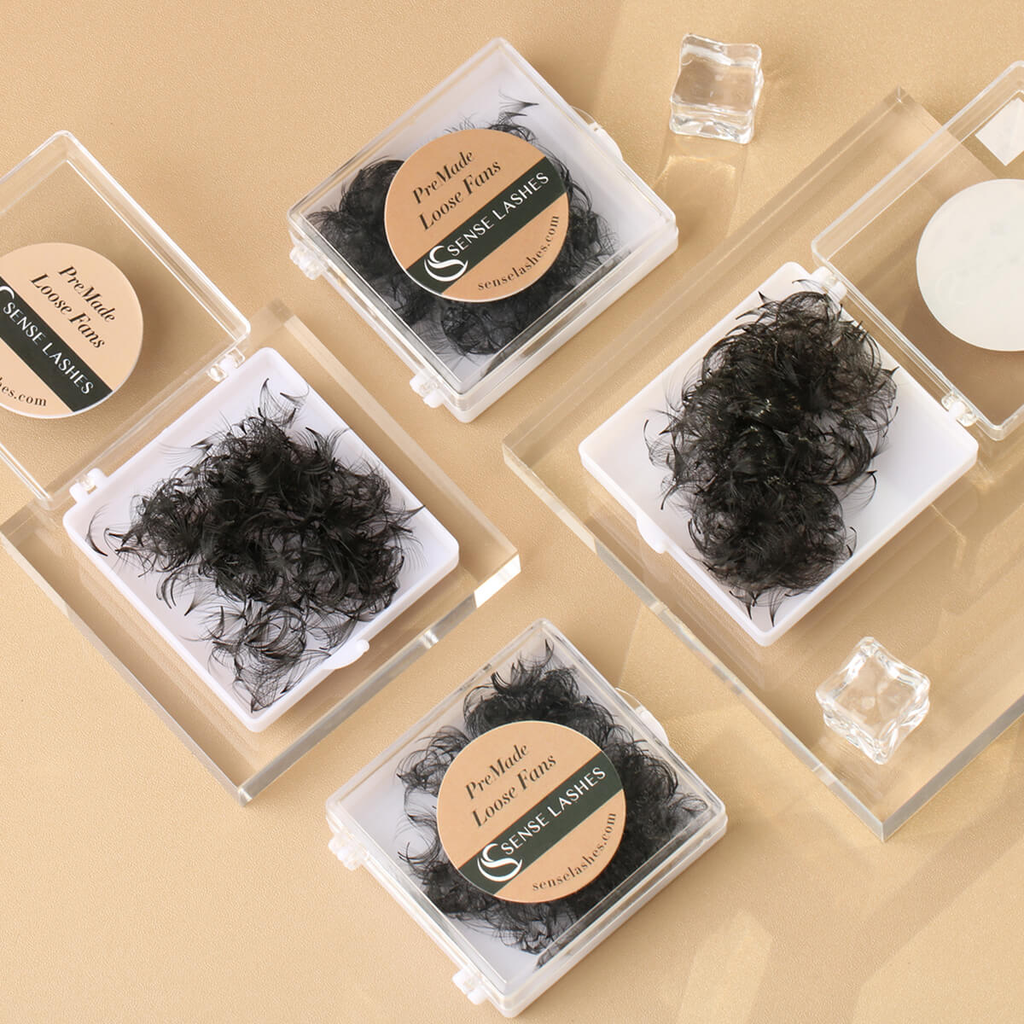
For many salon owners, time is a critical factor in profitability. Blending premade fans with handmade sets is a common approach to maintaining a high-end look while reducing service time. However, the "bulk" of the base is the primary giveaway of a low-quality premade fan.
When selecting premades for a wispy set, look for heat-bonded, pointy bases. These mimic the slim profile of a handmade fan, allowing them to sit flush against the natural lash. This is especially important when applying 0.07mm Cashmere Volume Wispy Eyelash Extensions as "spikes." The heat-bonded base ensures that the transition between the spike and the surrounding volume fans is seamless, preventing the "clumpy" look that occurs with glue-bonded premades.
Logic Summary: Our recommendation for heat-bonded bases is centered on the "Mechanical Wrap" principle. A slim base allows for a 360-degree attachment to the natural lash, whereas a bulky, glue-bonded base creates a "side-car" attachment that is more susceptible to mechanical friction and premature shedding.
Ocular Health: The Foundation of Artistry (E-E-A-T)
Advanced styling is meaningless if it compromises the health of the client's eyes. As a professional, your role is as much about safety as it is about aesthetics.
Blepharitis Prevention
Poor hygiene is the leading cause of Blepharitis, an inflammation of the eyelids often caused by bacteria or Demodex mite buildup. According to the Mayo Clinic, maintaining eyelid hygiene is the primary method for managing this condition. In the context of lash extensions, many clients mistakenly believe that they should not get their lashes wet.
You must educate your clients that "water is not enough." A dedicated lash shampoo is required to break down the oils and proteins that accumulate at the base of the extensions. Failing to clean the lashes doesn't just hurt retention; it creates a breeding ground for infection.
Managing Allergic Reactions vs. Irritation
It is vital to distinguish between a chemical irritation and a true allergic reaction.
- Irritation: Often caused by adhesive fumes or "dry eyes." According to WebMD, dry eye syndrome can be exacerbated by the chemicals in lash adhesives, leading to redness and a sandy sensation.
- Allergic Contact Dermatitis: A delayed immune response to acrylates. A study published in PubMed highlights that Ethyl Cyanoacrylate can cause significant eyelid dermatitis.
As an expert, you should implement a "Patch Test Protocol." Explain to clients that reactions can be delayed (48h+), and provide them with a Client Safety Consent Form that outlines these risks, as recommended by the American Academy of Ophthalmology.

Advanced Material Science: Why Fiber Weight Matters
The mechanical weight of an extension can significantly impact the health of the natural lash. A recent study in PubMed (2024) emphasizes that the spectrum of ocular disorders caused by extensions often stems from mechanical damage.
This is why the industry has shifted toward ultra-lightweight fibers. Using 0.03MM Cashmere Premium Mega Volume Eyelash Extensions allows you to create dense, wispy sets without exceeding the "weight limit" of the natural lash. For example, a 10D fan of 0.03mm lashes is significantly lighter than a single 0.15mm classic lash, yet it provides far more visual impact and texture.
Comparison of Fiber Weight & Impact
| Fiber Diameter | Typical Use | Mechanical Stress Level |
|---|---|---|
| 0.15mm | Classic Lashes | High (Requires strong natural lash) |
| 0.07mm | Volume/Wispy | Moderate |
| 0.05mm | Mega Volume | Low |
| 0.03mm | Mega Volume/Layering | Very Low (Ideal for fragile lashes) |
Salon Sanitation SOP (Standard Operating Procedure)
To validate your status as a premier professional, your sanitation protocols must align with authoritative guidelines. The CDC (Centers for Disease Control) provides clear instructions on preventing the spread of conjunctivitis (pink eye), which should be the baseline for your salon.
- Disposable Consumables: Always use new mascara wands and lint-free patches for every client.
- Sterilization: All non-disposable tools (tweezers) must be cleaned with hospital-grade disinfectant between every service.
- Hand Hygiene: Wash hands thoroughly before and after every client contact.
By adhering to these standards, you protect your business from liability and build a foundation of trust with your clientele.
Troubleshooting Common Layering Issues
Even experienced artists encounter hurdles when implementing row-based mapping. Here are the most common "gotchas" and how to solve them:
- The "Messy" Look: If the set looks disorganized rather than wispy, check your length transitions. The "spikes" on the top row should be 2-3mm longer than the "body" lashes in the middle row. If the gap is too small, they blend; if it's too large, it looks gappy.
- Poor Inner Corner Retention: Inner corners are notoriously difficult for layering. Stick to a single curl (usually a B or C) in the inner 10% of the lash line to avoid irritation and ensure a secure bond on these shorter, finer lashes.
- Client Discomfort: If a client complains of "poking," it is often due to a stray J-curl from the bottom row that was applied too close to the eyelid. Always maintain a 0.5mm to 1mm gap from the lash line.
Key Takeaways for the Professional Artist
- Layer with Intent: Treat the lash line as a three-dimensional architecture. Use a full grade of curl difference (e.g., J on bottom, D on top) to create visible texture.
- Prioritize Bond over Speed: Use a 1-2 second adhesive for complex layered sets to ensure the bond is secure on high-curl fibers.
- Lead with Health: Educate clients on Blepharitis prevention and provide clear aftercare instructions. Position yourself as a health-conscious expert, not just a service provider.
- Invest in Quality: Use lightweight fibers like 0.03mm or 0.05mm Cashmere lashes to protect the natural lash microbiome while achieving high-density looks.
By mastering the art of alternating curls, you move beyond the "one-size-fits-all" approach and offer your clients a level of customization that justifies premium pricing and fosters long-term loyalty.
Disclaimer: This article is for informational purposes only and does not constitute professional medical or legal advice. Always consult with a qualified health professional regarding eye health concerns and follow local regulations for cosmetic applications.