


Startseite Eyelash Extension Supplies Guide
Mapping Inner Corners: Transitioning from B to C Curls

The Technical Imperative of Inner Corner Precision
In the architecture of a high-performance eyelash extension set, the inner corner represents the most technically demanding zone. While the "belly" and "wing" of a set often receive the most attention for their dramatic impact, the inner 10% of the lash line is where professional sets are either validated or compromised. For the advanced technician, mastering the transition from B to C curls is not merely an aesthetic choice; it is a clinical necessity to ensure client comfort and maintain ocular health.
The inner corner requires a nuanced understanding of natural lash growth angles, which often deviate significantly from the rest of the eyelid. According to a comprehensive review on ResearchGate, application methods must account for both safety and aesthetic flow to avoid mechanical damage. When a technician uses a single, aggressive curl—such as a full C or D—too close to the medial canthus (the inner corner), the extension often sits at an angle that causes the tip to poke the delicate skin of the eyelid or the caruncle during blinking. This mechanical irritation is a primary driver of client dissatisfaction and premature removal.
The Anatomy of Comfort: Why B-Curls are the Standard Baseline
The natural lashes at the inner corner are typically finer, shorter, and grow at a flatter, more horizontal trajectory than those in the center of the eye. Placing a high-tension curl like a C-curl on these flatter natural lashes creates a "flick" effect. As the eye moves, this flick creates a lever-like pressure on the natural lash follicle, which can lead to traction alopecia or localized inflammation.
To mitigate this, experienced practitioners utilize a B-curl for the initial 2-3mm of the inner corner. The B-curl provides a softer lift that mimics the natural growth direction, reducing the risk of the extension base lifting—a common "friction point" that leads to debris accumulation. By starting with a flatter profile, you create a foundation that follows the eye's anatomy rather than fighting it.
Logic Summary: Our mapping heuristic for the inner corner assumes a 10% "Transition Zone" where natural lash growth angles typically deviate by 15-20 degrees from the central lash line. This model prioritizes the reduction of "tip-to-lid" contact frequency during the ~15,000 blinks a human performs daily.

The 3-Step Transition Mapping Protocol
Achieving a seamless visual flow requires a structured blending technique. We recommend dividing the inner 10% of the lash line into three distinct segments to transition from B to C curls effectively.
| Segment | Placement | Curl Type | Length Heuristic | Purpose |
|---|---|---|---|---|
| Zone 1: The Anchor | Inner 2-3mm | Pure B-Curl | 6mm - 7mm | Minimize lid poking; follow natural lash trajectory. |
| Zone 2: The Blend | Next 3-5mm | Mixed B & C | 7mm - 8mm | Create a gradient; prevent a "stair-step" visual break. |
| Zone 3: The Lift | Transition to Main | Pure C-Curl | 8mm - 9mm | Seamlessly integrate with the primary design. |
Note: Lengths are estimated based on a standard natural lash profile; practitioners should adjust based on the specific curl variations of their inventory.
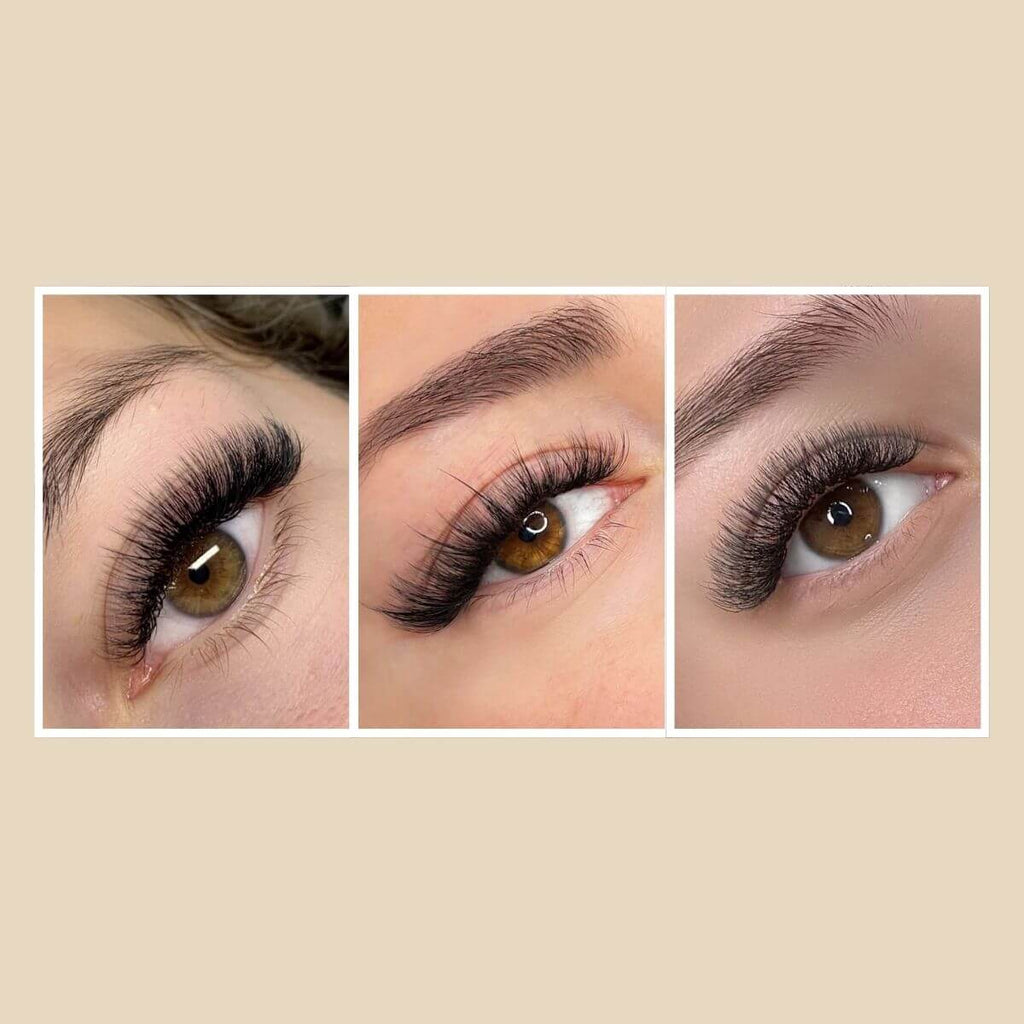
In Zone 2, the "Mixed" placement involves alternating B and C curls. For example, on a natural lash layer, place a B-curl on the bottom tier and a C-curl on the top tier. This "interlocking" technique masks the transition point, ensuring that when the client looks down, the gradient appears organic.
Material Science: The Role of 0.03mm Diameters in Flexibility
The weight of the extension is as critical as the curl. In the inner corner, natural lashes are often in the anagen (growth) phase and cannot support heavy loads. Using a 0.03MM Cashmere Premium Mega Volume Eyelash Extensions provides the necessary flexibility. These ultra-fine fibers have a lower mass, which reduces the torque applied to the natural lash follicle.
A common mistake is using a standard 0.15mm classic lash in the inner corner to "save time." However, the rigidity of a 0.15mm fiber, combined with an aggressive curl, significantly increases the risk of corneal abrasions. A case report published in PMC highlights that mechanical rubbing from extensions can lead to serious ocular surface damage. By utilizing 0.03mm or 0.05mm diameters, you ensure the base of the fan remains soft and pliable, even when the client blinks forcefully.
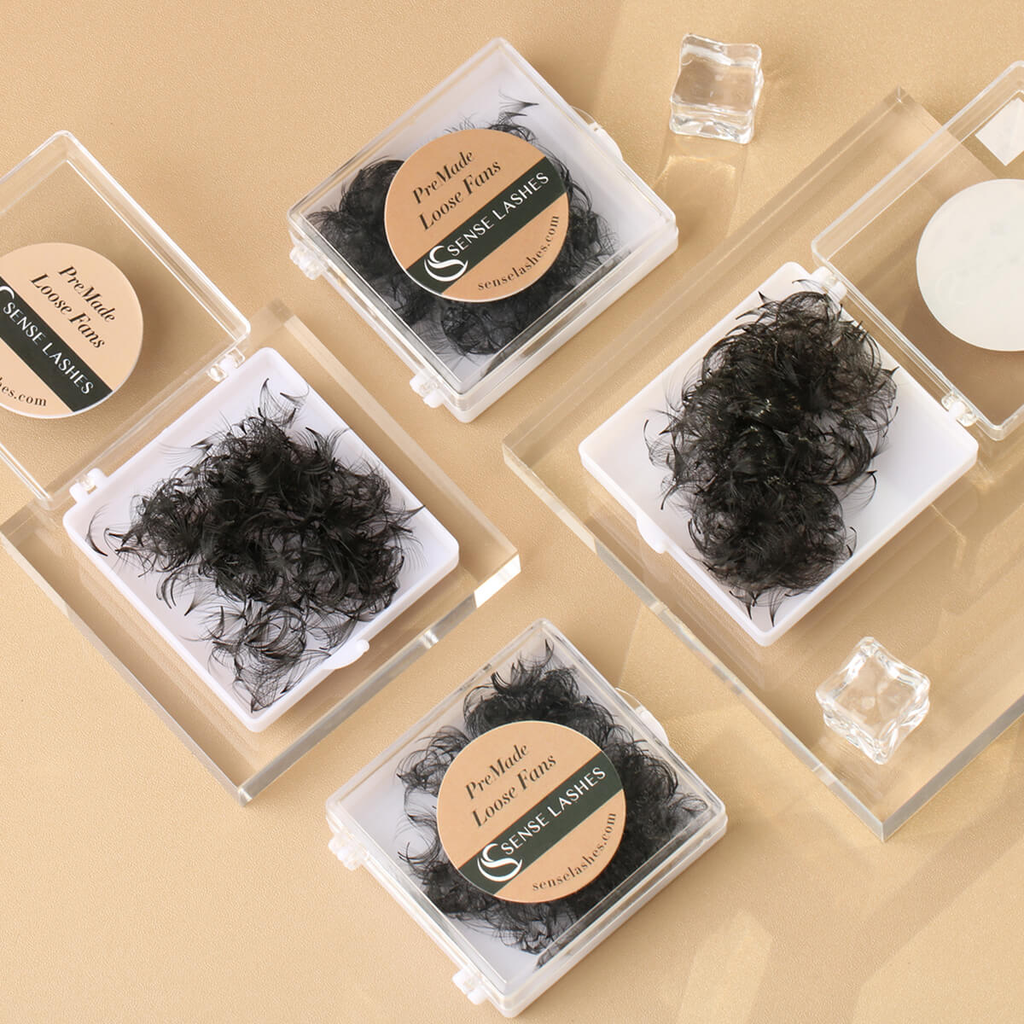
For technicians looking to maintain speed without sacrificing this precision, 10D Handmade Loose Premade Fans Pointy Base(500 Fans) offer a solution. These fans feature an ultra-slim, heat-bonded base that allows for a clean attachment in the crowded inner corner space, where isolation is notoriously difficult.
Ocular Health and Hygiene: Preventing "Dirty Lash" Syndrome
Precision mapping is only one half of the professional equation; the other half is long-term ocular health. The inner corner is a hotspot for the accumulation of lipids, makeup residue, and bacteria. Poor hygiene in this area is a leading cause of Blepharitis, an inflammation of the eyelids. According to the Mayo Clinic, blepharitis is often caused by clogged oil glands or bacteria buildup at the base of the lashes.
As a professional, you must reframe "Lash Shampoo" not as an optional cleaner, but as a preventative medical necessity. Daily washing with a dedicated foam cleanser is non-negotiable for preventing Demodex mite infestations. Research in PMC indicates that poor ocular hygiene significantly increases the risk of mite proliferation, which can lead to permanent lash loss and chronic irritation.
Salon Sanitation SOP (Standard Operating Procedure)
To align with [CDC guidelines on preventing conjunctivitis](https://www.cdc.gov/conjunctivitis/prevention/index.html), every professional lash station should adhere to a strict sanitation protocol: 1. **Disposable Consumables:** Use fresh mascara wands and micro-brushes for every client. 2. **Medical-Grade Adhesives:** Ensure your glue is compliant with local regulations. For instance, [Health Canada](https://www.canada.ca/en/health-canada/services/consumer-product-safety/reports-publications/industry-professionals/enforcement-summary-report/compliance-verification-project-2023-2024-cosmetic-regulations-cyanoacrylate-ingredients.html) monitors cyanoacrylate-based adhesives for chemical safety and labeling accuracy. 3. **pH Balancing:** Use a primer to balance the lash pH. Historical studies, such as [Amano et al. 2012](https://pubmed.ncbi.nlm.nih.gov/22134404/), found that the pH of some adhesives could cause keratoconjunctivitis. Modern, high-quality primers help neutralize this risk.
Advanced Troubleshooting: Irritation vs. Allergy
When a client complains of discomfort in the inner corner, the technician must distinguish between mechanical irritation (poking), chemical irritation (fumes), and a true allergic reaction.
A study on PubMed details how Ethyl Cyanoacrylate can cause allergic contact dermatitis. However, inner corner issues are more frequently related to dry eye syndrome or chemical burns from poor isolation. If a client has "dry eyes," the adhesive fumes can exacerbate the condition, leading to a burning sensation that mimics an allergy. The WebMD guide on Dry Eyes is a useful tool for helping clients understand their underlying conditions before blaming the product.
To prevent chemical burns, the use of high-quality gel patches is essential. These patches protect the ocular surface from the "off-gassing" of the adhesive during the curing process. For clients with extreme sensitivity, consider using 0.07MM Premium Volume Eyelash Extensions in a C-curl for the main set, but keeping the inner corner strictly to 0.03mm B-curls to minimize the amount of adhesive required in that sensitive zone.
The Business Value of Advanced Mapping
The global eyelash extension market is projected to see significant growth through 2025. Data from Grand View Research indicates a rising demand for customized, "natural-look" volume sets. Technicians who can master complex transitions—like the B to C blend—position themselves as high-value artists rather than commodity service providers.
By offering a "Comfort-First" mapping style, you reduce the rate of emergency removals and increase client retention. Clients are willing to pay a premium for sets that they "cannot feel." This technical proficiency is the foundation of a successful private label brand or high-end lash studio.
Key Takeaways for the Professional
* **Start Flat:** Use B-curls for the first 2-3mm to follow the natural lash growth angle. * **Lighten the Load:** Prioritize 0.03mm diameters in the inner corner to ensure flexibility and prevent mechanical stress. * **Transition Visually:** Use a mixed-curl zone (Segment 2) to blend B and C curls seamlessly. * **Educate on Hygiene:** Frame lash cleansing as "Blepharitis Prevention" to ensure long-term eye health. * **Verify Compliance:** Only use products that meet international safety standards (FDA, Health Canada, EU SCCS) to mitigate professional liability.For more insights into fiber technology, read our guide on The Science of Synthetic Fiber Curl Memory or explore why Professional Lashes Lose Curl over time.
Disclaimer: This article is for informational purposes only and does not constitute professional medical or legal advice. Eyelash extension application involves risks of infection and injury. Always consult with a qualified healthcare professional regarding eye health concerns and adhere to local licensing regulations.