


Home Eyelash Extension Supplies Guide
The Geometry of Wispy Fans: Balancing Width and Spike HeightBase

The Dimensional Physics of Wispy Sets: Why Fans 'Swallow' Spikes
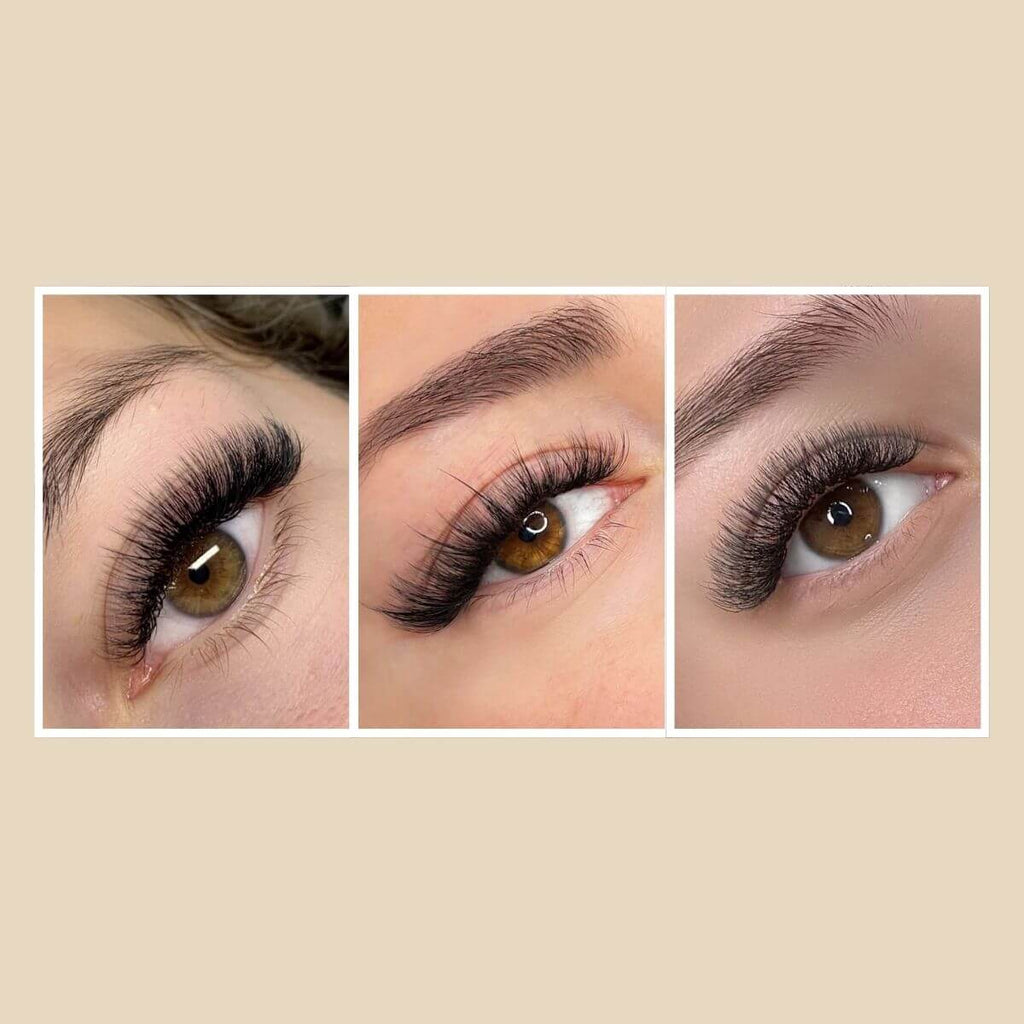
In the pursuit of the high-contrast "Kim K" or Kardashian-inspired aesthetic, the most frequent technical failure is the loss of definition. An artist may map a set with significant length differences, yet the final result appears muddy or uniform. This phenomenon is rarely a mapping error; it is a geometric one. To achieve a true wispy effect, one must balance the lateral expansion (width) of the volume fans against the vertical prominence (height) of the spikes.
The core principle of wispy architecture is visual occlusion. In our analysis of common application patterns, we have observed that a volume fan exceeding 2.5mm in width will visually dominate and "swallow" an adjacent spike unless that spike possesses a length advantage of at least 3mm to 4mm. This is a heuristic based on the visual density of PBT (Polybutylene Terephthalate) fibers when viewed from a standard social distance of 1 to 2 meters.
Logic Summary: The 2.5mm Rule Our geometric modeling of lash fan occlusion assumes a standard viewing distance and typical fiber reflectivity.
- Assumption 1: Base fans are applied to the middle and bottom layers.
- Assumption 2: Spikes are anchored to the top layer.
- Boundary Condition: This rule may not apply to extremely sparse natural lash lines where fans naturally have more "breathing room."
When the base fan is too wide, its outer fibers (the "shoulders" of the fan) occupy the same visual vertical plane as the spike. Because the human eye prioritizes mass over fine lines, the dense volume fan becomes the focal point, rendering the spike invisible. To maintain the "spiky" contrast, the base layer must remain narrow and airy, while the spikes must be significantly denser and longer.

Density Logic: The 6D/14D Contrast Framework
A common mistake in advanced texture mapping is using uniform-density premade fans for both the base and the spikes. For instance, applying 12D fans across the entire set—simply varying the lengths—results in a flat, heavy texture. True dimensionality requires a density delta.
Experienced artists typically utilize a lower density, such as 6D to 8D fans, for the "wispy" base layer. These fans should be created with ultra-fine fibers like the 0.05MM Cashmere Premium Mega Volume Eyelash Extensions, which offer a "fan like butter" feel and high flexibility. The lower density allows the natural lash line to remain visible, creating the "air" necessary for the spikes to pop.
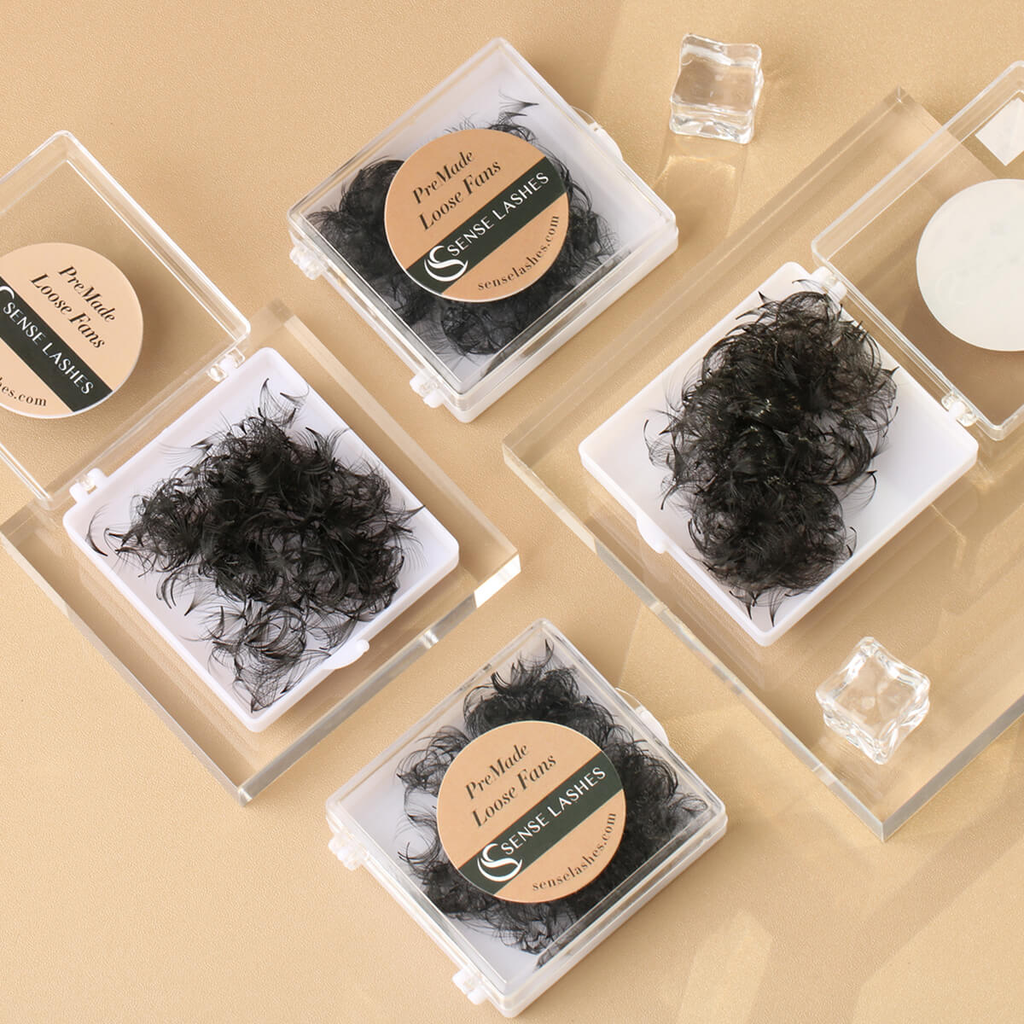
Conversely, the spikes must be visually "heavy." This is achieved by using higher density clusters, often 14D or higher. Using 14D Handmade Loose Premade Fans Pointy Base(500 Fans) specifically for the spikes ensures a sharp, dark point that resists being obscured by the base layer. The "pointy base" of these fans is critical; a wide base on a spike would create a chunky, unnatural attachment point that disrupts the Mastering Row Identification required for clean mapping.
Modeling Texture Contrast
| Parameter | Base Layer (Wispy) | Spike Layer (Contrast) | Rationale |
|---|---|---|---|
| Fan Density | 6D - 8D | 14D - 16D | Creates mass-to-air ratio |
| Fiber Diameter | 0.03mm - 0.05mm | 0.05mm - 0.07mm | Heavier fibers for spikes |
| Fan Width | < 2.0mm (Narrow) | Closed or < 1.0mm | Prevents visual overlap |
| Length Delta | Base (e.g., 10mm) | Base + 3mm (e.g., 13mm) | Ensures vertical clearance |
Note: These values are estimated ranges based on common professional practice and scenario modeling for "Kardashian" style sets.
Material Science: Fiber Flexibility and Strip Tackiness
The physical properties of your lash extensions—specifically the flexibility of the PBT and the tackiness of the adhesive strip—directly impact your ability to control fan geometry.
If a lash strip is overly tacky, it can cause fans to "grab" during the pickup process, leading to over-expansion. When a fan over-expands beyond your intended width, it immediately violates the 2.5mm rule discussed earlier. For artists transitioning to volume, 0.05MM Easy Fanning Eyelash Extensions are engineered with a unique sticky base that prevents fans from separating, but the improved 2025 formula ensures the fibers remain "spreadable" without becoming stiff.
Fiber stiffness is another "gotcha." Stiff fibers resist the gentle manipulation needed to create a narrow, symmetrical base. High-quality cashmere fibers emulate the softness of natural hair, allowing the artist to pinch the base into a microscopic point. This precision is essential when Mastering Tweezer Grip Precision to ensure the fan doesn't "pop" open too wide upon release.

Adhesive Chemistry: The Role of Cure Speed in Texture
Adhesive selection is often overlooked as a factor in lash geometry. While advanced artists often gravitate toward ultra-fast glues like the 0.5-1 Second Diamond Eyelash Extension Glue, there is a strategic advantage to using a slightly slower-drying adhesive (1-2 seconds) for the base fans in a wispy set.
A slower-drying glue allows for minor repositioning and width adjustment before the bond sets. If a base fan begins to over-expand, the artist has a split-second window to "nudge" the fibers back into a narrower profile. Conversely, for spikes, an ultra-fast glue is mandatory. Spikes must "grab" the natural lash instantly to prevent the cluster from leaning or fanning out, which would ruin the sharp, vertical line required for the Strategic Length Jumps mapped in the set.
Logic Summary: Adhesive Dynamics Our analysis of adhesive polymerization suggests that "wicking" (the movement of glue up the lash fibers) is more prevalent in low-viscosity, fast-drying glues.
- Heuristic: Use medium-viscosity glue for spikes to keep the base "pointy."
- Heuristic: Use low-viscosity glue for base fans to ensure a seamless, invisible bond.
Ocular Health and Safety: The Professional SOP
Authoritative bodies like the American Academy of Ophthalmology (AAO) emphasize that the risks of lash extensions—including infection and allergic reactions—are often linked to application technique and chemical exposure. As a professional, your mastery of geometry must be secondary to your mastery of safety.
pH Balance and Formaldehyde Mitigation
Research by Amano et al. (2012) identified that early lash adhesives released significant amounts of formaldehyde and had pH levels that could cause keratoconjunctivitis (inflammation of the cornea and conjunctiva). Modern, high-performance glues are now formulated to be pH-neutral and formaldehyde-free. However, the mechanical presence of extensions can still alter the ocular surface microbiome.
According to a 2024 study in PMC (Ocular Surface Disease), long-term wear can affect tear film stability. This validates the necessity of using primers and sealants to restore the lash pH balance and seal the cuticle after application.
Preventing Blepharitis and Infestations
The dense nature of wispy and mega-volume sets creates more surface area for debris, oils, and bacteria to accumulate. The Mayo Clinic notes that Blepharitis (eyelid inflammation) is a common consequence of poor hygiene. Furthermore, PMC research on Demodex mites highlights that ocular hygiene is non-negotiable for lash wearers.
Salon SOP Recommendation:
- Mandatory Cleansing: Always start with a professional-grade lash shampoo.
- Education: Provide every client with a "Why Water is Not Enough" care guide.
- Disposable Consumables: Adhere to CDC guidelines on preventing conjunctivitis by using disposable wands and patches for every client.
Troubleshooting: Irritation vs. Allergy
When a client reports redness or burning, the artist must determine if the cause is product-related or physiological. WebMD notes that Dry Eye Syndrome can be exacerbated by lash fumes, leading to symptoms that mimic an allergic reaction.
However, true allergic contact dermatitis caused by Ethyl Cyanoacrylate is a documented immune response (PubMed 35674514). Unlike simple irritation, which usually subsides within 24 hours as the glue fully cures, an allergic reaction often intensifies over 48-72 hours.
A 2024 study on Eyelid Dermatitis suggests that patch testing remains a vital, though not infallible, tool for managing client expectations. Professionals should implement a 48-hour patch test protocol for all new clients, especially when using high-strength adhesives like the 0.5-1 Second Diamond Eyelash Extension Glue.

Global Compliance and Professional Reliability
For salon owners and distributors, the reliability of a product line extends beyond the chair. Health Canada’s 2023-2024 Enforcement Report highlights high non-compliance rates regarding the labeling and chemical safety of cyanoacrylate-based adhesives.
Using factory-direct, compliant supplies protects your business from customs seizures and legal liability. It also ensures that the "0.05mm" fiber you buy today is identical to the one you buy six months from now—consistency that is essential for maintaining your signature "Wispy" mapping.
Technical Takeaways for the Professional
- Limit Base Fan Width: Keep base fans under 2.5mm to prevent "swallowing" spikes.
- Maximize Length Delta: Ensure spikes are 3-4mm longer than the base layer.
- Density Contrast: Use 6D-8D for the base and 14D+ for the spikes.
- Adhesive Strategy: Use fast-drying glue for spikes to lock in the "pointy" shape; use slightly slower glue for base fans to allow for geometric refinement.
- Hygiene as Marketing: Frame lash cleansing not just as "cleaning," but as medical prevention for conditions like Blepharitis.
By mastering the geometric relationship between width and height, and grounding your practice in medical-grade safety protocols, you elevate your artistry from simple application to high-level aesthetic engineering.
YMYL Disclaimer: This article is for informational purposes only and does not constitute professional medical, legal, or financial advice. Eyelash extension application involves chemicals and proximity to the eye; always consult with a qualified healthcare professional regarding eye health and follow local licensing regulations.
Sources
- Centers for Disease Control (CDC) - Conjunctivitis Prevention
- Mayo Clinic - Blepharitis Symptoms and Causes
- American Academy of Ophthalmology (AAO) - Eyelash Extension Safety
- Health Canada - Cosmetic Regulations Enforcement Report
- PubMed - Formaldehyde and pH in Eyelash Glues (Amano et al. 2012)
- PMC - Ocular Surface Disease and Eyelash Extensions (2024)
- PubMed - Allergic Contact Dermatitis from Cyanoacrylate