


Home Eyelash Extension Supplies Guide
The Perfect Line Technique: Achieving Top-Row Uniformity

The Science of Symmetry: Mastering the Perfect Line Technique
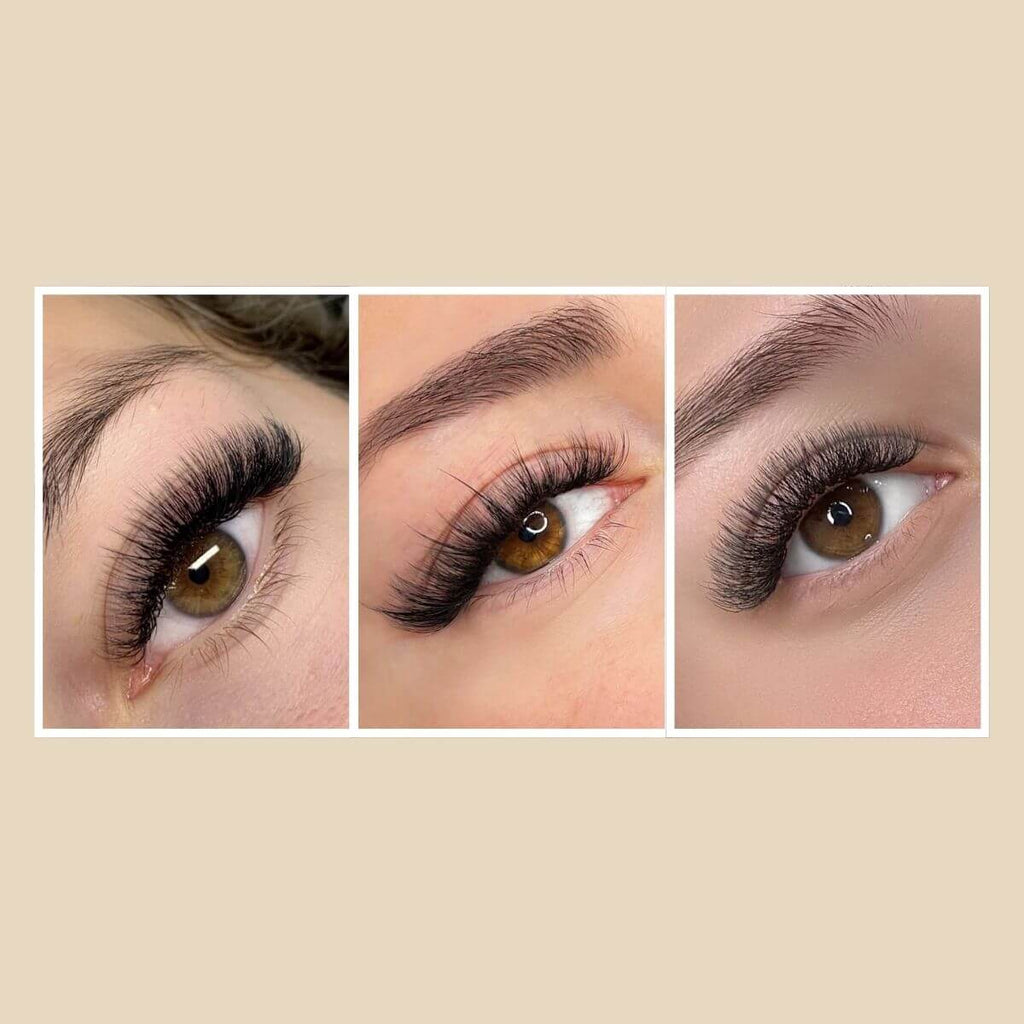
In the professional eyelash industry, the transition from a skilled technician to a master artist is often defined by the "Perfect Line." This aesthetic achievement refers to a top-row uniformity where the tips of the lash extensions appear aligned, creating a dense, sharp silhouette. Unlike standard mapping, which can result in a jagged or "stair-step" appearance, the Perfect Line technique requires a sophisticated understanding of vertical lash layering and precise length compensation.
Commercial Disclosure: This guide includes examples of products from our professional range. Our recommendations are based on internal quality control testing, feedback from our partner technicians, and observations of common application challenges. We may benefit from sales generated through links in this article.
Perfect Line: Quick-Reference Checklist
For technicians looking for immediate application, here are the essential steps to verify your set:
- [ ] Identify Rows: Map the natural lashes into at least three vertical layers (Bottom, Middle, Top).
- [ ] Sequence: Apply to the bottom row first to ensure clear access and prevent "stickies."
- [ ] Length Graduation: Increase length by 1mm–2mm as you move from the top row to the bottom row.
- [ ] Curl Stratification: Use tighter curls (e.g., D-curl) on lower rows and softer curls (e.g., C-curl) on top.
- [ ] Safety Check: Ensure a minimum 0.5mm gap from the eyelid to prevent irritation.
Methodology & Sources
The technical heuristics provided in this guide—such as the 0.5mm spacing and 1.5mm row gap—are derived from our internal observations of professional lash sets and technician surveys. While these figures represent common industry patterns, individual client anatomy (eye shape and lash growth density) varies. These should be treated as professional "rules of thumb" rather than absolute anatomical constants. Our safety protocols are aligned with guidelines from the American Academy of Ophthalmology (AAO) and the CDC.
The Anatomy of Vertical Layering
To achieve top-row uniformity, one must recognize that the eyelid is not a flat surface. Eyelashes are distributed across a vertical plane. Based on our observations of professional sets, the distance between the highest and lowest natural lash rows typically varies between 1mm and 2mm.
When you apply a 12mm extension to the top row and a 12mm extension to the bottom row, the bottom extension will physically sit lower on the face. To the observer, this often creates a "messy" tip line. The Perfect Line technique compensates for this by varying the lengths and curls used in each specific layer.
The Row-Based Mapping Model (Heuristic-Based)
The most reliable approach to this technique involves a "bottom-up" application sequence. A common industry observation is that applying the longest lashes to the top row first can physically block access to the lower layers, increasing the risk of "stickies"—adhesive bridges between adjacent lashes.
We recommend mapping and applying to the deepest (bottom) row first, then the middle, and finally the top row. This approach is designed to ensure each layer is isolated and the artist has a clear view of the transition.
| Lash Layer | Strategic Length Adjustment | Recommended Curl | Technical Rationale |
|---|---|---|---|
| Top Row | Baseline (e.g., 10mm) | C or CC | Aims to prevent a "heavy" look; creates a soft finish. |
| Middle Row | Baseline + 1mm (e.g., 11mm) | CC or D | Designed to fill volume and provide transition. |
| Bottom Row | Baseline + 2mm (e.g., 12mm) | D or DD | Intended to lift the base to meet the visual plane. |
Heuristic Note: This model assumes a vertical growth gap of approximately 1.5mm. By increasing the length and tightening the curl on the lower rows, we attempt to compensate for the lower point of origin, aiming for all tips to terminate at a similar horizontal level.

Technical Precision: Curl Stratification and Spacing
Beyond length, curl stratification is a key tool for achieving depth and uniformity. Using a tighter curl (such as a D-curl) on the bottom row and a slightly more open curl (such as a C-curl) on the top row can enhance the perception of depth. The tighter curl on the bottom row lifts those lashes upward, while the flatter curl on the top row assists in creating a smooth edge.
When working with high-density sets, such as those using 0.07MM Cashmere Premium Mega Volume Eyelash Extensions, weight management is critical. As explored in our guide on Safe Weight Limits, the total load on a natural lash should be carefully calculated to mitigate the risk of mechanical damage.
The 0.5mm Spacing Rule
Retention challenges can increase with multi-layer sets. A critical heuristic we employ is maintaining approximately 0.5mm of space between the bases of fans on adjacent natural lashes. This is intended to prevent adhesive bridges and premature shedding.
- How to Verify: Technicians can use a high-magnification mirror or a specialized lash ruler to ensure the adhesive bond does not touch the eyelid skin or bridge multiple lashes.
To maintain this precision, the choice of adhesive is important. A high-performance glue like the 1-2 Second Gold Eyelash Extension Glue is often preferred by experienced technicians. Its viscosity is designed for an efficient bond, which is helpful when working in tight layers where a slow-drying glue might cause fans to lean.
Clinical Safety and Salon Sanitation
A "Perfect Line" should never come at the expense of ocular health. According to the American Academy of Ophthalmology (AAO), risks associated with extensions can include infection, trauma, and allergic reactions to chemical components like formaldehyde.
Preventing Ocular Surface Disease
Recent 2024 investigations into Ocular Surface Disease (PMC) highlight how long-term extension wear may alter the ocular surface microbiome. This supports the use of lash primers and sealants to help restore pH balance and seal the cuticle after application.
Furthermore, poor hygiene can lead to Blepharitis—an inflammation of the eyelids. The Mayo Clinic notes that proper lid hygiene is a primary defense. We recommend educating clients that daily washing with a dedicated foam cleanser is an essential practice for both retention and health.
Safety Logic: Our sanitation recommendations are grounded in CDC guidelines on conjunctivitis prevention. We prioritize disposable consumables and sterilization to maintain high professional standards.

Troubleshooting: Irritation vs. Allergy
Diagnosing client complaints of burning or redness is a critical professional skill.
- Dry Eye Syndrome: As noted by WebMD, dry eye can be exacerbated by adhesive fumes. If a client experiences burning during the service, it may be due to incomplete eyelid closure.
- Contact Dermatitis: A 2024 study in PubMed focuses on dermatitis patterns from acrylate-containing cosmetics. Reactions are often delayed (48h+). We recommend a strict Patch Test Protocol—applying a few lashes 24-48 hours before a full set—to help identify potential sensitivities.
- Chemical Injury: To help prevent adhesive from entering the eye, high-quality gel patches and tape should be used to ensure the eye remains fully closed throughout the procedure.
When to Refer: If a client experiences persistent pain, vision changes, or significant swelling, they should be advised to seek professional medical attention immediately.
Advanced Material Science: The PBT Factor
The longevity of a "Perfect Line" depends on the quality of the synthetic fibers used. Most professional lashes are made of Polybutylene Terephthalate (PBT). Understanding PBT curl memory is helpful for predicting how a set will look after several weeks.
If inferior fibers are used, technicians may observe fiber relaxation or curl drop. For artists specializing in volume, 0.05MM Easy Fanning Eyelash Extensions are designed to maintain the fan shape without over-stressing the natural lash.
Import and Compliance
For salon owners, sourcing products involves legal considerations. The Health Canada 2023-2024 Enforcement Report recently identified non-compliance regarding the labeling of cyanoacrylate-based adhesives. Partnering with manufacturers that provide chemical transparency is a recommended strategy for long-term business stability.
Achieving the "Blackout" Effect
For clients seeking maximum density, the Perfect Line often complements the "Blackout Look." This involves achieving high density while maintaining top-row uniformity. Using fine diameters like 0.07MM Easy Fanning Eyelash Extensions allows for larger fans that remain lightweight. By following density strategies for mega volume, artists can create a lush, velvet-like appearance.
Summary of Practice
Mastering the Perfect Line is a technical discipline requiring:
- Vertical Awareness: Identifying the 3-5 rows of natural growth.
- Logical Sequencing: Working from the bottom row up.
- Strategic Compensation: Using length differentials (1.0mm-2.0mm) and curl stratification.
- Rigorous Hygiene: Adhering to standards from the CDC and Mayo Clinic to protect client health.
Disclaimer: This article is for informational purposes only and does not constitute professional medical, legal, or financial advice. Eyelash extension application involves chemicals and proximity to the eye; always follow local regulations and consult with a medical professional regarding ocular health concerns.
References
- American Academy of Ophthalmology - Eyelash Extension Safety
- CDC - Conjunctivitis Prevention
- Mayo Clinic - Blepharitis Symptoms and Causes
- Health Canada - Cosmetic Regulations Enforcement Report 2023-2024
- PubMed - Contact Dermatitis from Acrylates (2024)
- PMC - Ocular Surface Microbiome Changes (2024)