


Home Eyelash Extension Supplies Guide
Ombre Fan Geometry: Graduating Color Within a Single Fan

Executive Summary: Key Principles of Ombre Fan Geometry
To achieve professional-grade ombre fans, prioritize matte-finish fibers to diffuse light and hide transition lines. We recommend a 5:3:1 color ratio (a visual heuristic) to create a natural gradient and the Intersperse Pinch Method to maintain a narrow, healthy base. Always ensure the total mass of the fan does not exceed the mechanical load capacity of the natural lash to prevent traction alopecia.
The Evolution of Volume: Mastering Ombre Fan Geometry
In the competitive landscape of professional lash artistry, the transition from standard volume sets to bespoke color design represents a significant leap in technical authority. While layering different colored rows is a common entry-level technique, advanced artistry often culminates in the Ombre Fan. This technique requires the artist to graduate color within a single fan base, creating a seamless gradient that mimics natural light diffusion.
Achieving this requires more than just aesthetic intuition; it demands an understanding of fiber geometry, weight distribution, and the chemical interactions between adhesives and synthetic PBT (polybutylene terephthalate). For the professional artist, mastering the ombre fan is about reducing mechanical stress on the natural lash while delivering a customized outcome that supports long-term client trust.
The Physics of Color Blending: Fiber Texture and Light Diffusion
The primary challenge in creating a multi-hue fan is preventing a "harsh stripe" effect. When fibers of different colors are placed side-by-side, the human eye may perceive distinct vertical lines. To mitigate this, artists should consider the light-reflective properties of their materials.
Why Matte Fibers Often Outperform Glossy Options
High-shine synthetic fibers tend to highlight transition lines because they reflect light at sharp angles. In many professional applications, matte-finish fibers, such as the 0.03MM Cashmere Premium Mega Volume Eyelash Extensions (Note: Example product from our SenseLashes brand), are more effective for color blending. The matte surface diffuses light, creating a "soft focus" effect that helps obscure the boundaries between different colored fibers. While glossy fibers can be used for specific "wet look" effects, matte is generally more forgiving for seamless gradients.
The Ratio-Based Approach to Color Graduation
Success in ombre fan geometry often relies on a mathematical ratio rather than equal distribution. Based on common patterns observed in professional application and visual modeling, we recommend the following 5:3:1 ratio as a practical heuristic (rule of thumb) for a standard 9-10D fan:
- Base Color (Darkest): 5 fibers. This provides the depth and "eyeliner effect" at the lash line.
- Mid-Tone Color: 3 fibers. This acts as the bridge, softening the transition.
- Accent Color (Lightest): 1 fiber. This provides the "pop" of color without overwhelming the fan structure.

Heuristic Note: This 5:3:1 ratio is derived from visual perception modeling. By anchoring the fan with a higher concentration of darker fibers at the base, the artist helps ensure the fan maintains a professional, dense appearance while the tips exhibit the desired color graduation.
Technical Execution: The Intersperse Pinch Method
The geometry of the fan base is a critical factor for both aesthetics and retention. In a multi-hue fan, the base should ideally remain narrow and "pointy." A bulky base, which can be caused by improper pinching or excessive adhesive, is a common contributing factor to premature shedding and potential client discomfort.
Step-by-Step Fan Construction
- Selection: Pick up the fibers in the order of the ratio mentioned above. Place the darkest fibers on the lash tile first, followed by the mid-tones, and finally the accents.
- The Intersperse: Instead of layering them in distinct blocks, use your tweezers to "shuffle" or intersperse the fibers slightly before picking them up. This helps ensure the colors are mixed within the fan structure.
- The Pinch: When pinching the base, concentrate pressure at the very bottom. According to technical insights on Fiber Texture and Volume Fan Creation (SenseLashes internal guide), the elasticity of the fiber influences how the fan "blooms" once released.
- The 1.5x Diameter Rule (Weight Management Heuristic): To support natural lash health, a common industry heuristic suggests that the combined "equivalent mass" of the fan should not significantly exceed the load of a single 0.15mm-0.18mm classic lash, depending on the client's natural lash strength.
Calculation Example: If a natural lash can safely support a 0.10mm extension, a fan of 9 fibers at 0.03mm diameter is often considered safe. This is because the total cross-sectional area of nine 0.03mm fibers ($\approx 0.0063 mm^2$) is actually less than that of a single 0.10mm fiber ($\approx 0.0078 mm^2$). Using this "mass-equivalent" logic helps prevent mechanical overloading.

Health, Safety, and Professional Compliance
Advanced artistry must never compromise ocular health. The American Academy of Ophthalmology (AAO) notes that risks associated with extensions can include infection, trauma, and allergic reactions, particularly to certain adhesive components.
Adhesive Chemistry and Safety
A study by Amano et al. (2012) identified that certain adhesives can release levels of formaldehyde that may lead to keratoconjunctivitis in sensitive individuals. Modern, professional-grade adhesives are generally formulated to be more stable, but "dwell time" (the time a fan is held before placement) is longer with complex ombre fans. It is imperative to use adhesives that comply with regional safety standards, such as those outlined in the Health Canada 2023-2024 Compliance Report.
Mitigating Risks
- Weight Management: Use ultra-light fibers like the 0.05MM Cashmere Premium Mega Volume Eyelash Extensions (SenseLashes brand example) to reduce the risk of traction alopecia.
- Hygiene Education: Educate clients on "Blepharitis Prevention." According to the Mayo Clinic, poor eyelid hygiene is a leading cause of inflammation; however, clients with pre-existing ocular conditions or active infections should be advised to seek medical consultation before application.
Troubleshooting Ombre Fan Retention
If multi-hue fans are shedding prematurely, the issue often lies at the "Base Junction." As discussed in our guide on Adhesive Micro-Beading, controlling the volume of adhesive at the base is vital for a secure bond.
| Issue | Potential Cause | Professional Solution |
|---|---|---|
| Fan Closing | Excessive adhesive or poor "bloom" | Adjust Tweezer Tension and prefer matte fibers. |
| Premature Shedding | Bulky base or "stickies" | Ensure the base is a "pointy" junction; use the "Slide and Place" technique. |
| Harsh Color Lines | Imbalanced ratio | Apply the 5:3:1 heuristic and intersperse fibers during the pinch. |
| Client Irritation | Adhesive fumes or sensitivities | Evaluate symptoms against WebMD's Dry Eye Guide and refer to a specialist if persistent. |
Methodology Note: This troubleshooting matrix is a diagnostic heuristic based on common feedback from high-volume salons and internal application testing.
The Role of Premade Fans
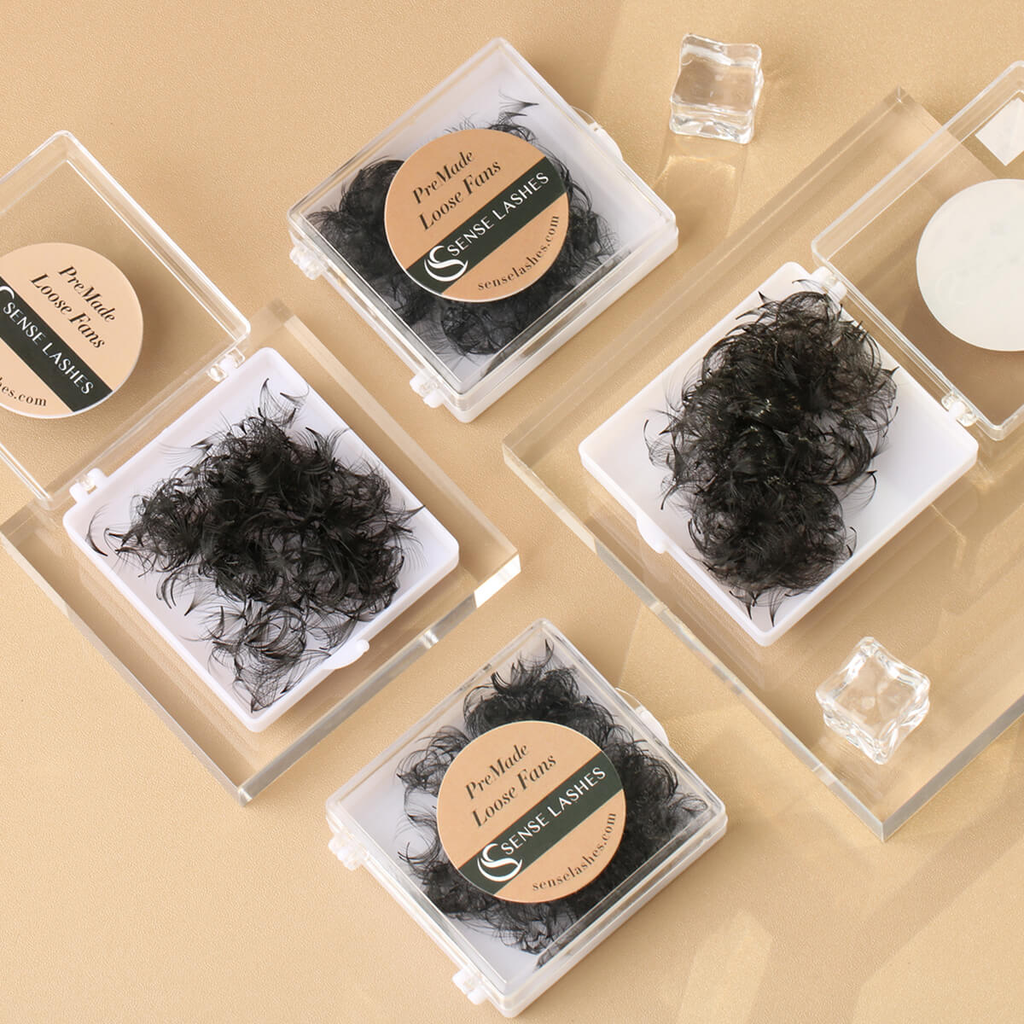
For artists managing tight schedules, high-quality premades offer a reliable alternative. The 10D Handmade Loose Premade Fans Pointy Base (Note: Featured product from SenseLashes) feature heat-bonded bases designed to mimic the look of handmade fans. These can be interspersed with handmade ombre fans to increase efficiency while maintaining a bespoke aesthetic.

Professional Sanitation SOP
To maintain safety standards, every professional station should follow a strict sanitation protocol, aligned with general CDC guidelines on infection prevention.
- Hand Hygiene: Wash hands thoroughly before and after every client interaction.
- Disposable Consumables: Use single-use mascara wands and lint-free applicators.
- Tool Sterilization: Use medical-grade disinfectant (EPA-registered) for all tweezers.
- Adhesive Management: Replace your adhesive drop every 15–20 minutes to maintain optimal viscosity and bond strength.
Summary of Key Takeaways
- Texture Matters: Matte-finish fibers help diffuse light, which is often more effective for creating seamless color gradients.
- The 5:3:1 Heuristic: Use a higher concentration of dark base fibers to maintain lash line definition.
- Base Geometry: Focus on a "pointy" base to support better retention and minimize mechanical stress.
- Safety Compliance: Reference AAO and Mayo Clinic guidelines when educating clients on hygiene.
By integrating these technical principles with high-quality materials and rigorous safety standards, you elevate your practice from a service to an art form.
Disclaimer: This article is for informational purposes only and does not constitute professional medical, legal, or financial advice. Always consult with a qualified health professional regarding eye health concerns and follow your local licensing regulations for lash application.
References
- American Academy of Ophthalmology (AAO) - Eyelash Extension Safety
- Mayo Clinic - Blepharitis Symptoms and Causes
- Health Canada - Cosmetic Regulations Enforcement Report 2023-2024
- CDC - Conjunctivitis (Pink Eye) Prevention
- PubMed - Amano et al. (2012) on Formaldehyde in Lash Glue
- Grand View Research - False Eyelashes Market Analysis
- PMC - Ocular Surface Changes and Extensions