


Home Eyelash Extension Supplies Guide
Mastering the Wrap: Securing Multi-Hue Bases to Lashes

Mastering the Wrap: Securing Multi-Hue Bases for Advanced Lash Artistry
In the evolving landscape of professional eyelash extensions, the shift from uniform black sets to multi-hue, textured designs represents the pinnacle of technical artistry. However, as experienced lash artists transition into complex fan construction—mixing various colors, textures, and diameters—they often encounter a frustrating phenomenon: poor retention and "popping" fans. The root of this issue usually lies in the "wrap"—the critical junction where the fan base meets the natural lash.
Securing a multi-hue base requires more than a standard application technique. It demands an understanding of how dye chemistry affects fiber surface energy and how mixed diameters (such as 0.03mm and 0.07mm) alter the geometry of the adhesive bond. This guide explores the technical mechanisms of the wrap, providing a benchmark for professionals seeking to master high-performance, multi-hue fan construction.

The Chemistry of Color: Why Pigments Affect Adhesion
One of the most significant, yet frequently overlooked, variables in lash artistry is the chemical composition of the fibers themselves. Most professional extensions are made from Polybutylene Terephthalate (PBT), but the introduction of pigments to create browns, purples, or metallics alters the material’s surface properties.
Based on our observations from technical support and product performance patterns, colored fibers—particularly lighter hues and metallics—often possess a smoother, less porous surface than standard carbon-black fibers. Carbon black, used in traditional lashes, naturally provides a slight textural advantage for cyanoacrylate bonding. In contrast, the dyes used in products like 0.07MM Wispy Glitter Eyelash Extensions or lighter brown variants can create a "slicker" surface.
Adhesive Interaction with Pigmented Fibers
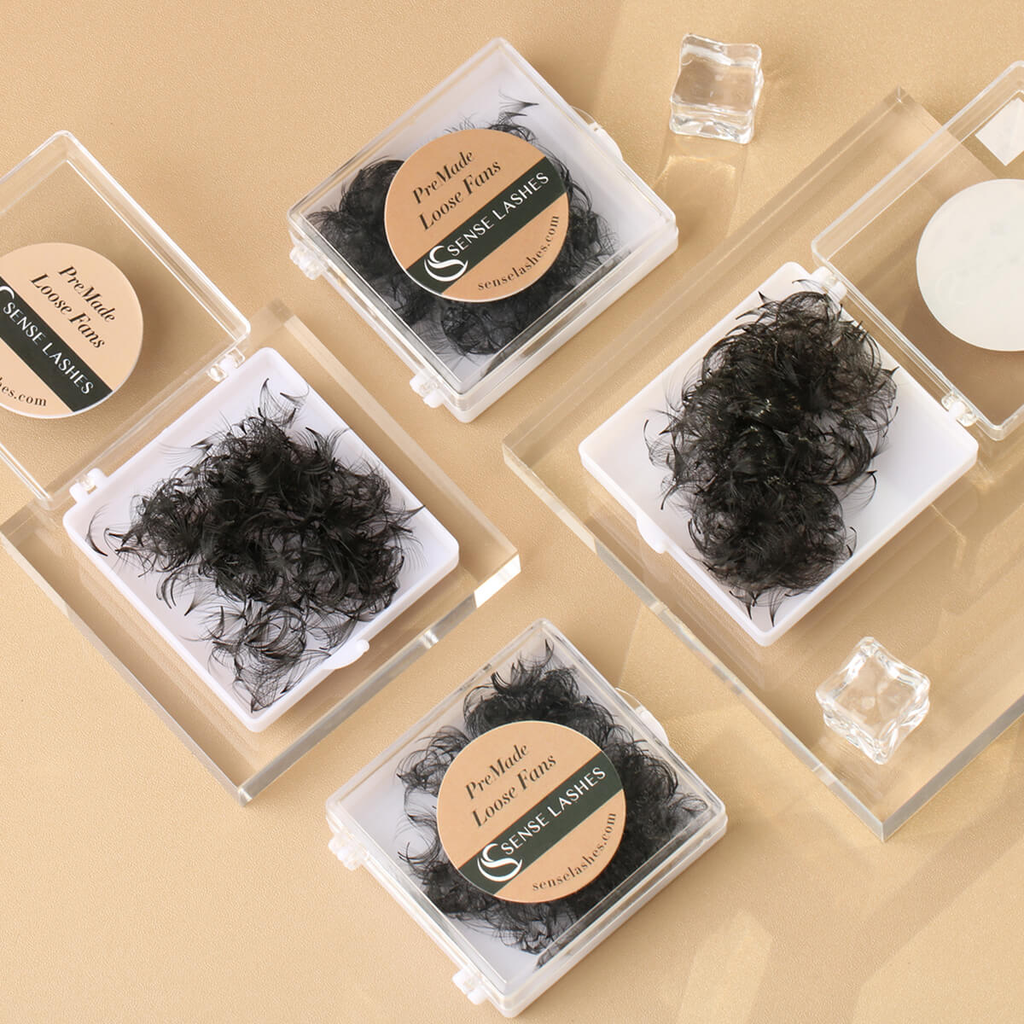
When working with Brown 12D PreMade Loose Fans - 0.05 - 500 Fans, the adhesive interacts with a different surface energy profile. Darker pigments, such as deep espressos or coffee browns, typically bond similarly to black lashes. However, as the pigment lightens, the adhesive may require a slightly thicker application or a longer "tack" time to ensure the wrap remains secure.
Logic Summary: Surface Energy Modeling Our analysis of adhesive performance assumes that pigment density inversely correlates with surface porosity in PBT fibers. This heuristic suggests that lighter fibers may require a 5–10% increase in adhesive volume to achieve the same mechanical "grip" as a standard black fiber.
Geometry and Diameter Mixing: The Physics of the Fan Base
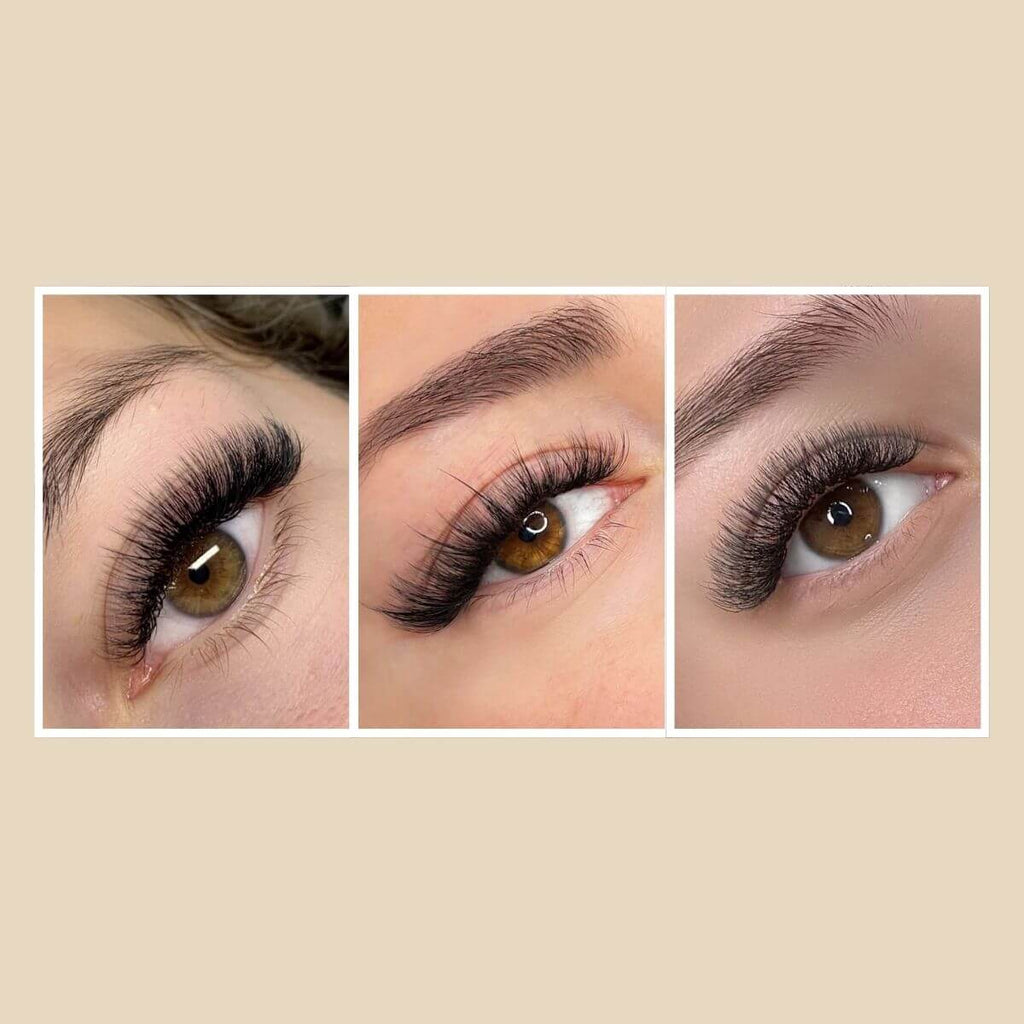
A common trend in advanced fanning is the "texture mix," where artists combine different diameters within a single handmade fan. For instance, placing 0.03mm fibers on the exterior of a fan with a 0.07mm core creates a soft, wispy effect. However, this creates a geometric challenge at the base.
If the base is not compressed correctly, the adhesive bead will naturally gravitate toward the thicker 0.07mm fibers, leaving the 0.03mm "hue" fibers with insufficient coverage. This leads to "shedding" where the colored accents fall off while the main fan remains attached.
The Heuristic for Base Compression
To ensure all fibers are encased in the adhesive, practitioners should follow the 360-Degree Encapsulation Rule. This is a shop-practical baseline where the adhesive must not only touch the bottom of the natural lash but must "wick" up the sides of the fan base by at least 1mm to 2mm. This creates a mechanical sleeve that holds the mixed-diameter fibers together.
| Parameter | Recommended Value | Unit | Rationale |
|---|---|---|---|
| Base Wrap Length | 1.5 – 2.5 | mm | Ensures surface area for mixed diameters |
| Adhesive Bead Size | ~0.5 | mm | Prevents wicking into the fan bloom |
| Compression Pressure | Light to Medium | N/A | Secures 0.03mm fibers against 0.07mm core |
| Humidity Adjustment | +5% to +10% | % RH | Compels faster cure for smoother colored fibers |
| Dip Depth | 20% – 30% | % of Base | Optimizes Precision Dipping |
The "Double-Dip" Protocol for Multi-Hue Bases
To combat the separation of inner colored fibers, many top-tier artists have adopted the "double-dip" technique. This is specifically useful when using Brown 16D PreMade Loose Fans - 0.05 - 500 Fans or complex handmade multi-hue fans.
- Initial Coating: Dip the fan base into the adhesive to coat all fibers. This ensures that the inner fibers, which are often shielded by the outer ones, receive an initial layer of cyanoacrylate.
- The Secondary Micro-Dip: Perform a second, very light dip focused only on the very bottom 0.5mm of the base. This creates a fresh "bead" of active adhesive that will facilitate the actual wrap onto the natural lash.
- The Wrap Motion: Instead of simply placing the fan on top, use a "side-to-bottom" wrapping motion. This forces the adhesive to move through the fibers, creating a cohesive unit.
By mastering this technique, you prevent the common mistake of applying adhesive only to the outer fibers. For more on managing adhesive volume, refer to our guide on Adhesive Micro-Beading.

Environmental Variables: Humidity and Color
Humidity plays a disproportionate role in the success of multi-hue sets. Because some pigments can be slightly more hygroscopic (moisture-absorbing) than others, the workspace environment may need to be tighter than usual.
In our experience observing salon outcomes, a humidity shift of even 5% can cause adhesive to "shock cure" on the surface of a colored fiber before a proper wrap is achieved. If you are working with lighter browns or glitters, maintaining a consistent humidity of 45-55% is generally recommended. If the environment is too dry, the adhesive will not cure fast enough to hold the tension of a multi-hue fan; if it is too humid, the "shock" effect prevents a deep chemical bond.
Ocular Health: The Professional’s Responsibility
Mastering the technical "wrap" is not only about aesthetics and retention; it is a fundamental component of client safety. A poorly secured base can result in "lifting," where the sharp end of the extension base pokes the eyelid, causing mechanical trauma.
According to the American Academy of Ophthalmology (AAO), risks associated with extensions include infection and trauma to the eyelid or cornea. A secure, smooth wrap ensures that the extension remains parallel to the natural lash, reducing the risk of the "mechanical rubbing" that leads to corneal abrasions, as documented in various case reports (PMC).
Blepharitis Prevention and Hygiene
The complexity of multi-hue fans, especially those with high fiber counts like Brown 8D PreMade Loose Fans - 0.07 - 500 Fans, creates more surface area for debris, makeup, and oils to accumulate. This buildup is a primary cause of Blepharitis (eyelid inflammation).
As noted by the Mayo Clinic, blepharitis is often caused by bacteria or clogged oil glands. For clients wearing dense or multi-hue sets, a professional lash shampoo is non-negotiable. It is the artist's duty to explain that "water is not enough" to penetrate the dense base of a well-wrapped volume fan. Daily cleansing with a pH-balanced foam cleanser is essential to prevent the buildup of Demodex mites, which thrive in the debris of unwashed extensions (PMC).
Troubleshooting Allergic Reactions vs. Irritation
When working with advanced adhesives and complex fans, distinguishing between a chemical allergy and simple irritation is critical for reducing unfair product complaints.
A study on Allergic Contact Dermatitis (PubMed) highlights that Ethyl Cyanoacrylate is a known allergen. However, many clients experience "red eye" due to fumes (irritation) or dry eye syndrome rather than a true immune response. The WebMD guide on Dry Eyes explains how tear film instability can cause burning sensations that mimic an allergic reaction.
By ensuring a perfect wrap, you minimize the amount of exposed adhesive surface area, which in turn can reduce the off-gassing of formaldehyde during the curing process—a phenomenon identified in the seminal Amano et al. (2012) study. A tighter, more secure bond is a safer bond.
Managing Client Expectations with Multi-Hue Sets
Multi-hue sets are premium services. Because the fibers interact differently with adhesives and the environment, you must educate your clients on the nuances of their wear.
- Patch Testing: Given the potential for delayed reactions to acrylates, a Patch Test Protocol (PubMed) is highly recommended for new clients, especially when introducing colored pigments or glitters for the first time.
- The Shedding Cycle: Explain that because colored accents are often thinner (0.03mm or 0.05mm), they may appear to shed differently than the main set.
- Sanitation SOP: Adhering to CDC guidelines on conjunctivitis prevention by using disposable wands and sterilized tools reinforces your position as a high-E-E-A-T professional.
Technical Takeaways for the Professional
To achieve benchmark-level retention with multi-hue fans, focus on the following pillars:
- Adjust for Pigment: Recognize that lighter colored fibers may require more adhesive or higher humidity to bond effectively.
- Compress the Base: Ensure that mixed diameters are physically pressed together during the dip to allow the adhesive to encapsulate every fiber.
- Master the Wrap: Use a side-to-bottom motion to create a mechanical sleeve around the natural lash.
- Prioritize Hygiene: Use the technical complexity of the set as a justification for mandatory lash hygiene to prevent blepharitis and ocular surface disease.
By integrating these technical insights and medical guidelines into your practice, you move beyond simple application and into the realm of high-performance lash engineering.
YMYL Disclaimer: This article is for informational purposes only and does not constitute professional medical, legal, or financial advice. Eyelash extension application involves chemicals and proximity to the eyes; always consult with a qualified healthcare provider regarding eye health concerns and ensure compliance with local licensing and safety regulations.
References
- American Academy of Ophthalmology (AAO) - Eyelash Extension Safety
- Centers for Disease Control and Prevention (CDC) - Conjunctivitis Prevention
- Mayo Clinic - Blepharitis Symptoms and Causes
- PubMed - Allergic Contact Dermatitis from Cyanoacrylate
- PMC - Ocular Hygiene and Demodex
- Health Canada - Cyanoacrylate Compliance Report