


Home Eyelash Extension Supplies Guide
Curl Mapping for Mature Eyes: Managing Skin Laxity

The Technical Challenge of Mature Ocular Anatomy
In the professional lash industry, the "mature client" represents one of the most loyal but technically demanding demographics. Unlike younger clients with firm tarsal plates and tight eyelid skin, mature clients often present with significant skin laxity—a condition where the skin of the upper eyelid loses elasticity and begins to descend over the lash line. This anatomical shift, often referred to as ptosis or dermatochalasis in clinical settings, fundamentally changes the physics of lash extensions.
When skin hangs over the lash base, it creates a mechanical "curtain effect" that can push extensions downward into the visual field or cause the tips to rub against the brow bone. For the professional artist, the objective shifts from pure aesthetic enhancement to a delicate balance of lifting the eye’s appearance while managing the biomechanical load on fragile, thinning skin. Achieving high retention and client comfort in these cases requires moving beyond standard mapping and adopting a "Pro-Grade" technical framework.
Advanced Mapping: The Graded Curl Strategy
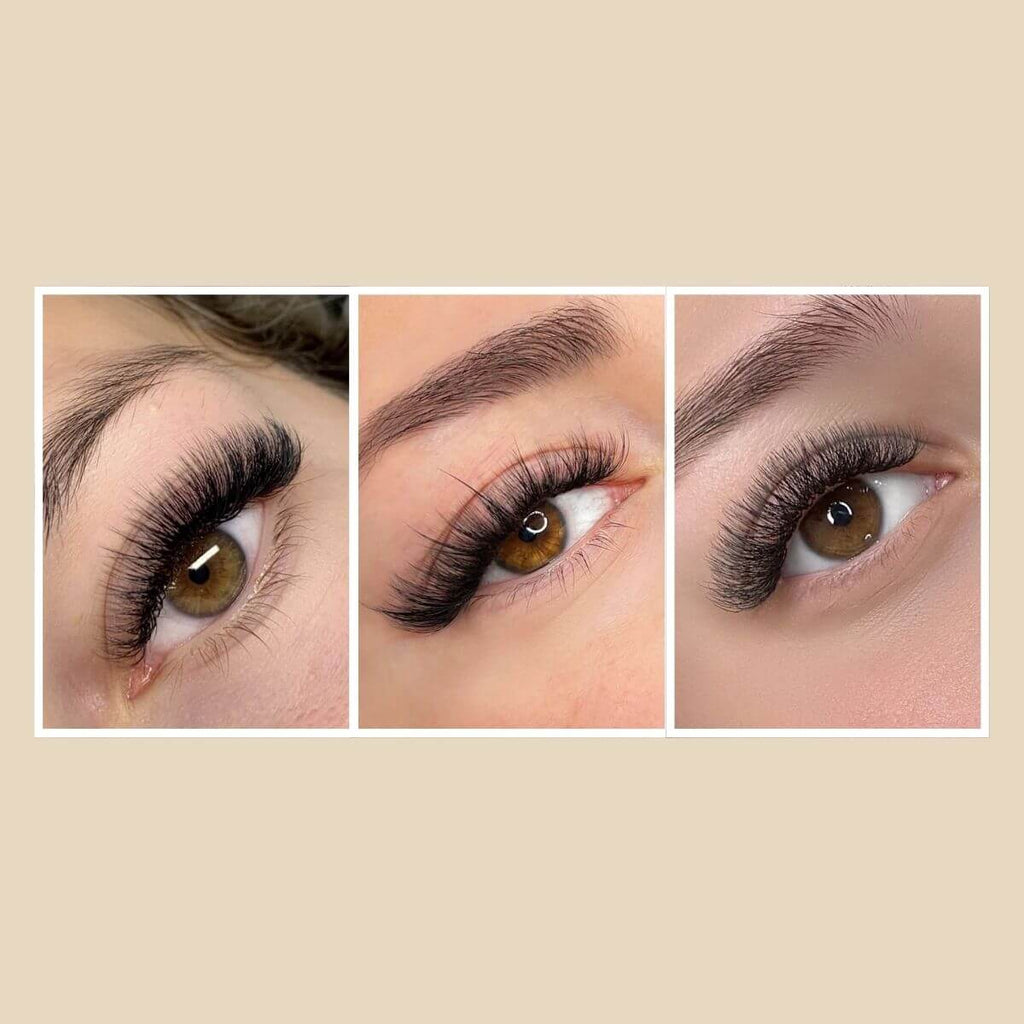
A common mistake in salon environments is applying a uniform curl across the entire lash line. On a mature eye with laxity, a heavy D-curl across the whole map often results in a "cluttered" look where the lashes appear to fight the eyelid skin. Instead, we recommend a Graded Curl Approach, which transitions through different curvatures to accommodate varying degrees of skin support across the lid.
The 20-60-20 Distribution Model
Based on our observations of successful applications for mature eye shapes, we have developed a heuristic for distributing curls to maximize lift while minimizing friction:
- The Inner 20% (Medial Canthus): Use a J-curl or a soft C-curl. In this area, the skin is at its thinnest and most sensitive. A flatter curl prevents the extension from poking the bridge of the nose or the inner lid as the eye moves.
- The Mid 60% (Central Zone): Transition to a standard C or CC-curl. This provides the structural support needed to "prop up" the look of the eye without the tips of the lashes curving back so sharply that they touch the descending eyelid skin.
- The Outer 20% (Lateral Canthus): This is where you can selectively use a D-curl to achieve a visual "cat-eye" lift. However, this should only be done if the client’s skin at the outer corner does not exhibit extreme drooping, which could cause the D-curl to "trap" the lid skin.
Logic Summary: This mapping assumes that the central tarsal plate provides the most stable anchor point, while the corners are most prone to mechanical irritation from skin-to-lash contact. By using flatter curls in the corners, we reduce the leverage of the extension against the natural lash root.

The Physics of Weight: Why Diameter Matters
The American Academy of Ophthalmology (AAO) notes that excessive weight on the natural lash can lead to traction alopecia or mechanical trauma. For mature clients, whose natural lashes are often finer or in a prolonged telogen (resting) phase, weight management is the primary driver of retention.
We often observe that traditional 0.15mm or 0.12mm classic lashes are too heavy for this demographic. Instead, we advocate for the use of ultra-fine diameters like 0.03mm, 0.05mm, or 0.07mm. Using 0.07MM Cashmere Premium Mega Volume Eyelash Extensions allows the artist to create a soft, full look using 2D or 3D fans that actually weigh less than a single thick classic lash.
The Length-to-Curl Ratio Heuristic
For clients with significant hooding, we utilize a specific "Length-to-Curl Ratio" to prevent the lash tips from contacting the brow bone—a frequent cause of premature shedding and client discomfort.
| Parameter | Value/Range | Unit | Rationale |
|---|---|---|---|
| Max Length (D-Curl) | 12 | mm | Prevents brow bone contact on hooded lids |
| Max Length (C-Curl) | 13-14 | mm | Allows for more projection with less vertical height |
| Recommended Diameter | 0.03 - 0.05 | mm | Minimizes torque on the natural lash root |
| Attachment Gap | 0.5 - 1.0 | mm | Prevents lid friction on lax skin |
| Adhesive Dry Time | 1 - 2 | sec | Allows for precise alignment on sparse lashes |
Modeling Note: This model is a scenario-based estimate for "Grade 2" lid laxity (moderate skin fold). If the client has "Grade 3" laxity (skin touching the lash line), the maximum length should be reduced by an additional 1-2mm across all curl types.
Precision Application: Managing the Gap Rule
Skin laxity means the eyelid skin is not stationary; it moves significantly during blinking and facial expressions. If an extension is placed too close to the lid (less than 0.5mm), the lax skin will constantly rub against the base of the extension. This mechanical friction is often misdiagnosed by clients as an "allergic reaction" because it causes redness and swelling at the lash margin.
As detailed in our guide on The Gap Rule and Allergic Reactions, maintaining a consistent 0.5mm to 1.0mm distance from the eyelid is critical. For mature eyes, we suggest erring on the side of a 1.0mm gap. While this might slightly reduce the "freshness" of the set after two weeks, it drastically improves comfort and ocular health by preventing the extension from digging into the skin fold.
Adhesive Selection and Chemical Safety
Mature eyes are frequently more sensitive to chemical fumes due to a higher prevalence of Dry Eye Syndrome. The 2012 study by Amano et al. highlighted that early lash adhesives often released high levels of formaldehyde and had acidic pH levels, which could lead to keratoconjunctivitis.
In 2025, the standard for professional adhesives has shifted toward pH-neutral, low-fume formulations. For mature clients, we recommend an adhesive with a 1-2 second drying time. While faster glues (0.5s) are popular for speed fanning, the slightly slower dry time gives the artist the necessary window to ensure the extension is perfectly perpendicular to the lid—preventing "leaning" lashes that can snag on lax skin.
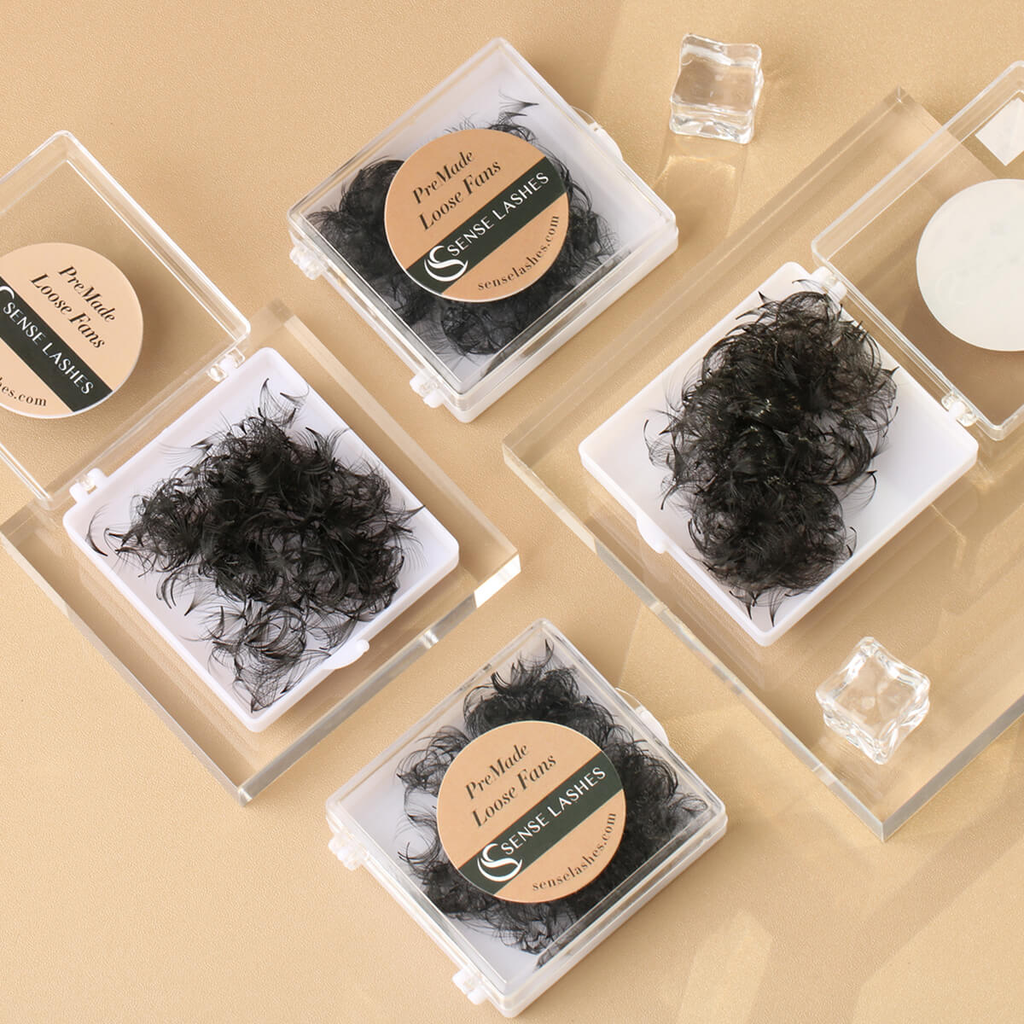
When working with volume, using 0.05MM Easy Fanning Eyelash Extensions or 5D Handmade Loose Premade Fans Pointy Base(500 Fans) can reduce the time the client’s eyes are exposed to adhesive fumes, as these products streamline the application process.

Pathology Prevention: The Professional’s Duty of Care
A salon's reputation is built on safety. Mature clients are statistically more susceptible to certain ocular conditions that lash extensions can exacerbate if hygiene is not prioritized.
Blepharitis and Demodex Management
According to the Mayo Clinic, Blepharitis is an inflammation of the eyelids often caused by clogged oil glands at the base of the lashes. In mature eyes, oil production (meibum) often becomes more viscous. If a client is afraid to wash their extensions, bacteria and Demodex mites can proliferate, leading to severe irritation.
Professionals must educate clients that "water is not enough." A dedicated lash shampoo is a medical necessity, not just an add-on sale. This prevents the buildup of biofilm that leads to premature shedding and ocular surface disease.
Allergic Contact Dermatitis
Recent 2024 studies on Eyelid Dermatitis emphasize that acrylate allergies can develop over time. Because mature skin has a slower barrier recovery rate, a patch test protocol is non-negotiable. We recommend a 48-hour observation period for new clients, as reactions in this demographic can be delayed.
Business Integrity: Compliance and Quality Control
For salon owners, the risk of using non-compliant products is not just a health issue—it's a legal one. The Health Canada 2023-2024 Enforcement Report recently highlighted high non-compliance rates in lash adhesive labeling and chemical safety.
Working with a factory-direct partner who understands PBT Curl Memory Science and adheres to international safety standards (like FDA and EU SCCS guidelines) is the best way to protect your business from inventory seizures or liability claims.
Summary of Technical Specifications for Mature Eyes
To ensure the best outcomes for clients with skin laxity, professionals should adhere to the following technical summary:
- Prioritize Lightweight Fibers: Use 6D Handmade Loose Premade Fans Pointy Base(500 Fans) with 0.07mm or 0.05mm diameters to reduce mechanical load.
- Graded Curl Mapping: Avoid "one-size-fits-all" maps. Transition from J/C in the inner corners to CC/D only where skin support allows.
- Strict Gap Maintenance: Maintain a 0.5mm-1.0mm gap to prevent friction against lax eyelid skin.
- Hygiene Education: Mandate the use of professional lash cleansers to prevent Blepharitis and Demodex.
- Adhesive Precision: Use 1-2 second drying glues for better placement control on sparse, aging lash lines.
By mastering the intersection of ocular anatomy and product chemistry, lash artists can provide mature clients with transformative results that do not compromise the long-term health of the eye.
Disclaimer: This article is for informational purposes only and does not constitute professional medical advice, diagnosis, or treatment. Always seek the advice of a qualified eye care professional with any questions you may have regarding an ocular condition.
References
- Centers for Disease Control (CDC) - Conjunctivitis Prevention
- Mayo Clinic - Blepharitis Symptoms & Causes
- American Academy of Ophthalmology (AAO) - Eyelash Extension Safety
- Health Canada - Cosmetic Regulations Enforcement Report 2023-2024
- PubMed - Amano et al. (2012) Study on Glue Toxicity
- PMC - Demodex Mite Infestation and Ocular Hygiene