


Home Eyelash Extension Supplies Guide
Anchoring the Set: Length Calibration for Unstable Sparse Bases

The Physics of Retention: Why Sparse Bases Fail
For professional lash artists, the "sparse lash line" is often the ultimate test of technical proficiency. Unlike a dense, healthy lash row where neighboring lashes provide structural support, a sparse base leaves each extension isolated. When an extension is applied to a single, thinning natural lash—common in aging demographics—the mechanical forces at play change dramatically.
We often observe that the primary cause of premature "flipping" or "twisting" isn't necessarily the adhesive bond itself, but the lever arm effect. In physics, a longer lever arm amplifies the force applied to a fulcrum. In lashing, the natural lash is the fulcrum, and the extension is the lever. If the extension is too long or too heavy for the sparse base, every blink or facial movement creates lateral torque. This torque eventually overpowers the adhesive's structural integrity, causing the extension to rotate 90 or 180 degrees.
According to a 2024 study published in PubMed (38171996), mechanical damage and chemical toxicity are the leading causes of ocular surface disorders in long-term extension wearers. For sparse bases, this mechanical strain is amplified. To mitigate this, we must transition from "aesthetic mapping" to "mechanical calibration."
Logic Summary: Our calibration model assumes that a sparse natural lash lacks the "lateral bracing" provided by a dense lash line. We treat each isolated lash as a vertical post. The longer the extension, the higher the center of gravity, which increases the risk of the "see-saw" effect during the natural hair growth cycle.
Calibration Heuristics: The 40-50% Rule
The most common mistake we see in modern lash artistry is applying extensions exceeding 12mm to natural lashes shorter than 8mm. On a sparse base, this almost guarantees instability within seven days. To ensure professional-grade retention, we utilize a specific heuristic: the extension length should not exceed the natural lash length by more than 40-50%.
| Natural Lash Length | Max Extension Length (Healthy) | Max Extension Length (Sparse/Aging) | Stability Rating |
|---|---|---|---|
| 6mm | 9mm | 8mm | High |
| 7mm | 10mm | 9mm | High |
| 8mm | 12mm | 11mm | Balanced |
| 9mm | 13mm | 12mm | Balanced |
| 10mm | 15mm | 13-14mm | Optimal |
Note: These ranges are estimated based on common industry practices and mechanical modeling of lash weight distribution.
When working with mature clients, skin laxity also plays a role. As the eyelid skin loses elasticity, the "base" of the lash may sit lower or at a different angle than in younger clients. We recommend referencing our guide on Curl Mapping for Mature Eyes: Managing Skin Laxity to understand how curl selection interacts with these length calibrations.

Diameter and Weight: The 0.03mm Advantage
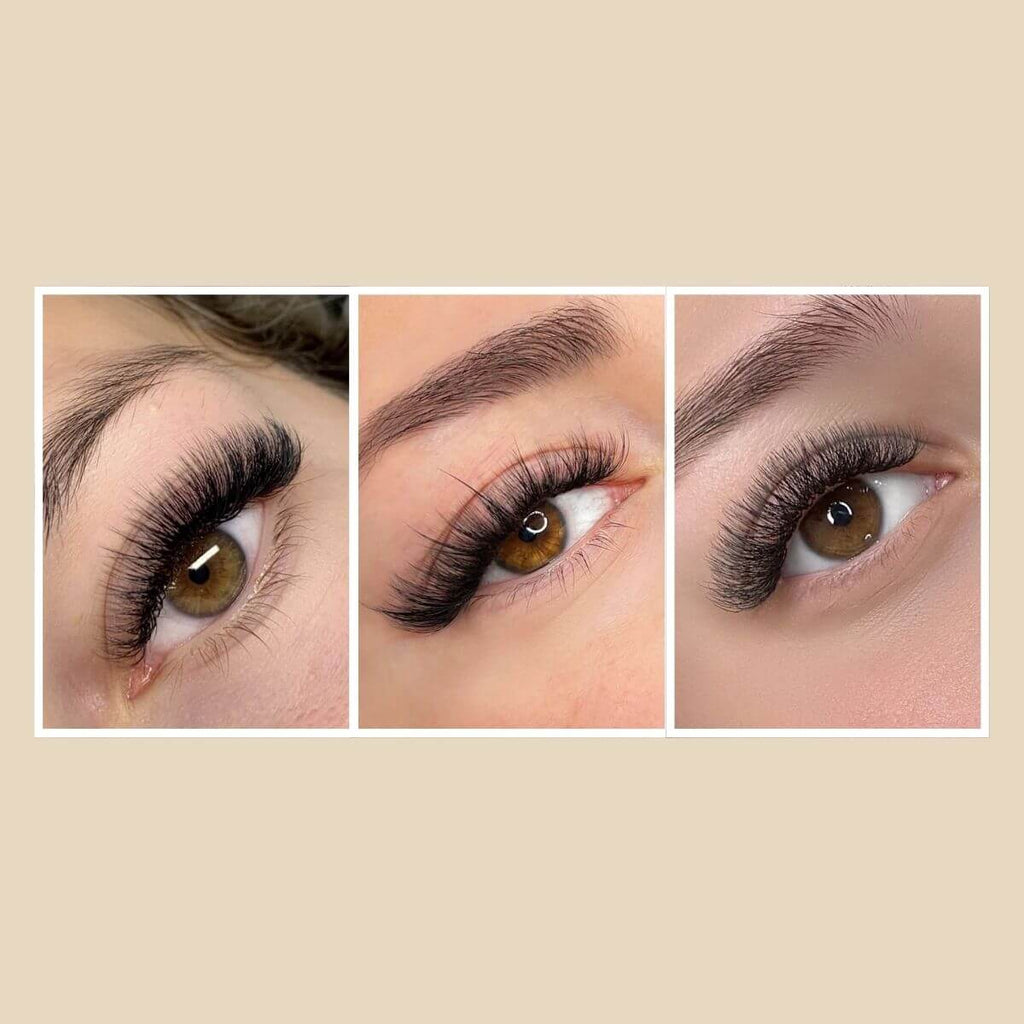
In a sparse set, the goal is often to create the illusion of fullness without adding physical bulk. Traditional 0.15mm classic lashes are frequently too heavy for an aging, thinning natural lash. Instead, we advocate for the use of ultra-lightweight volume fans.
Using 0.05MM Cashmere Premium Mega Volume Eyelash Extensions allows the artist to build a multi-dimensional fan that wraps around the natural lash, creating a 360-degree bond. This "wrap" technique is superior to the "top-mount" technique for sparse bases because it distributes the weight more evenly around the natural lash's circumference. For even more fragile bases, dropping to a 0.03mm diameter is the safest professional choice.
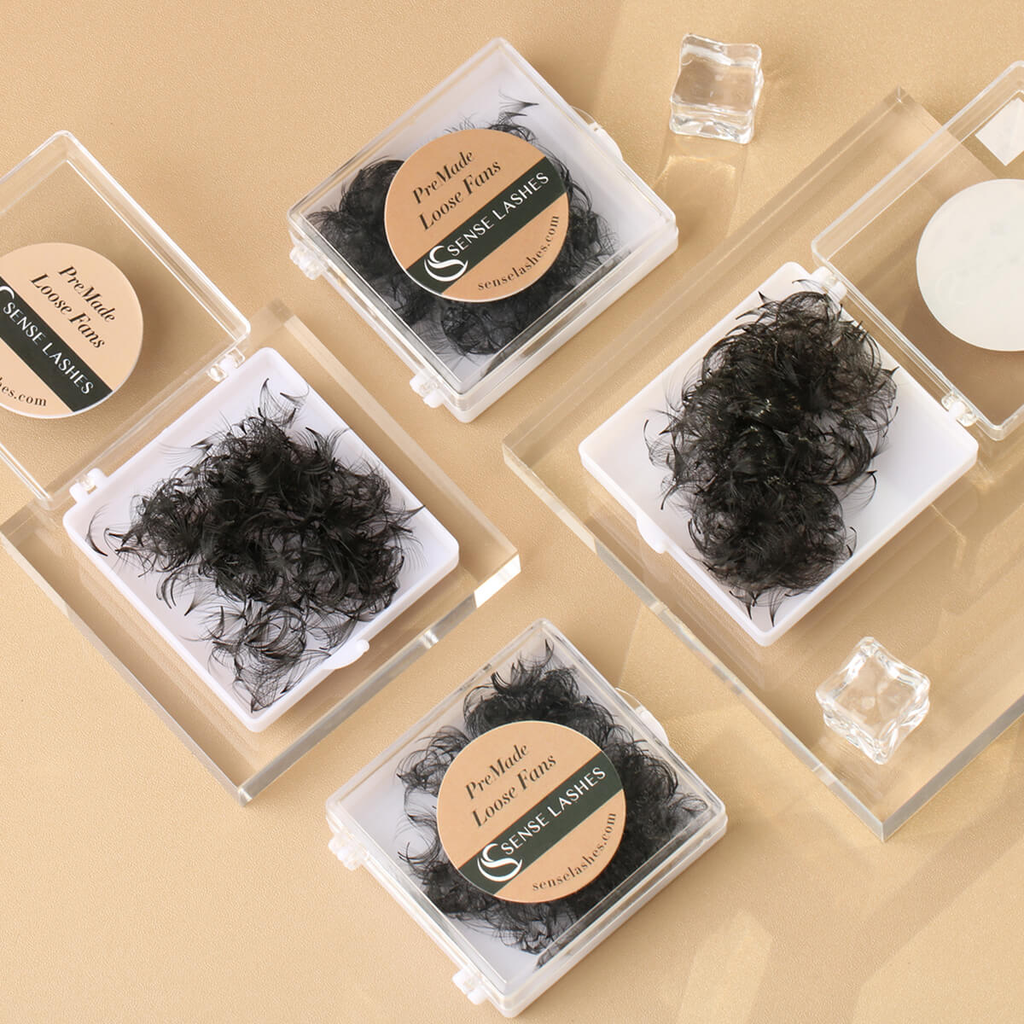
The 10D Handmade Loose Premade Fans Pointy Base(500 Fans) are particularly effective here. The "pointy base" is not just an aesthetic choice; it provides a longer, slimmer bonding area that sits flush against the natural lash. This reduces the "lever" effect at the base and prevents the extension from prying itself off when the client sleeps or cleans their lashes.
Methodology Note (Weight Modeling):
- Assumption: A 0.15mm classic lash has a specific mass (M).
- Calculation: A 5D fan of 0.05mm lashes typically weighs less than a single 0.15mm lash.
- Application: By using 0.05mm or 0.03mm diameters, we increase the surface area for the adhesive without increasing the total mass pulling on the follicle.
Managing the Ocular Surface: Safety and Health
When dealing with sparse lashes, we must ask why they are sparse. Often, it is a result of age, but it can also be a symptom of underlying ocular surface disease. According to the American Academy of Ophthalmology (AAO), extensions carry risks of infection and allergic reactions, particularly to formaldehyde-releasing agents.
Blepharitis Prevention: Why Water is Not Enough
A major "gotcha" in the industry is the myth that clients should keep their lashes dry to preserve the bond. In reality, poor hygiene leads to Blepharitis—an inflammation of the eyelids often caused by bacteria or Demodex mites. Research published in PMC (10361280) highlights that Demodex infestation is significantly higher in individuals with poor ocular hygiene.
For sparse lashes, Blepharitis is a "set killer." The inflammation causes the natural lashes to shed prematurely, taking the extension with them. We must educate clients that daily washing with a dedicated lash foam cleanser is non-negotiable. This isn't just "cleaning"; it is preventative medicine for the eyelid.
Troubleshooting: Dry Eyes vs. Allergic Reactions
Clients with sparse lashes often complain of burning or redness. As a professional, you must distinguish between a product reaction and a pre-existing condition. WebMD notes that dry eye syndrome can be exacerbated by the fumes of cyanoacrylate. If a client has chronic dry eyes, their tear film is unstable, which can lead to "wicking"—where the adhesive fumes travel into the eye more easily.
If the irritation persists, consider the chemistry. A study in PubMed (35674514) identifies Ethyl Cyanoacrylate as a common culprit for allergic contact dermatitis. In these cases, switching to a lower-fume, higher-viscosity adhesive is essential.

Adhesive Selection for High-Torque Environments
On a sparse base, the "drift" of an extension during the curing process is your greatest enemy. If the extension leans even a fraction of a millimeter before the glue sets, the lateral torque will cause it to flip later.
We recommend a 0.5 to 1-second fast-drying adhesive for sparse sets. This "instant lock" ensures that the extension stays in the exact orientation you intended. Furthermore, the viscosity should be medium-to-high. A very thin, watery adhesive may travel too far down the lash, potentially reaching the skin or causing "stickies," which are disastrous for the already limited natural lash count.
Historically, lash glues were often acidic, which contributed to irritation. However, following the landmark study by Amano et al. (2012), which identified formaldehyde release and pH issues, modern professional formulas like those used in our sensitive ranges have been balanced to be more pH-neutral. This is critical for the aging eye, which typically has a more sensitive ocular microbiome.
The Import and Compliance Gap
For salon owners, the risk isn't just technical—it’s regulatory. Health Canada’s 2023-2024 report on cyanoacrylate-based adhesives highlighted significant non-compliance in labeling and chemical safety among many manufacturers. Using non-compliant products puts your business at risk of customs seizures and, more importantly, liability.
As a professional-grade manufacturer, we prioritize compliance with FDA Eye Cosmetic Safety guidelines. Ensuring your pigments and adhesives meet these standards is the "safe harbor" your business needs to grow.
Strategic Mapping for Sparse Lash Lines
When the natural lash count is low, "mapping" becomes a game of strategic camouflage. You cannot simply follow a standard "Cat Eye" or "Doll Eye" template.
- Inner Corner Calibration: The inner corners are usually the weakest. Use the shortest lengths possible (6mm-8mm) to avoid irritation and "poking."
- The "Post" Heuristic: Identify the strongest 20% of the natural lashes. These are your "anchor posts." You can apply slightly more volume or 1mm more length here.
- Bridge the Gaps: Use the 0.05MM Easy Fanning Eyelash Extensions to create wider fans that "bridge" the physical gaps in the lash line. By fanning the extensions wider, you cover the skin gaps without needing a high natural lash count.
- Consistency in Curl: For downward-pointing natural lashes, which are common in mature clients, refer to Choosing Curls for Downward-Pointing Natural Lashes to ensure the curl provides lift without adding excessive weight to the tip of the lash.
Sanitation SOP for Salon Longevity
To build a trustworthy brand, your sanitation must be visible. The CDC (Centers for Disease Control) provides clear guidelines on preventing the spread of conjunctivitis. In a professional lash setting, this translates to:
- Disposable Consumables: Always use new mascara wands and lint-free applicators for every client.
- Sterilization: All tweezers must undergo medical-grade disinfection between sets.
- Adhesive Management: Wipe your adhesive nozzle with a lint-free wipe after every drop to prevent "clogging" and bacterial buildup.
By following these protocols, you aren't just protecting the client; you are protecting your reputation. A single infection case can destroy years of business growth.
Summary of Professional Outcomes
Anchoring a set on sparse, unstable bases requires a departure from traditional "long and thick" lash goals. By embracing the 40-50% length rule and utilizing ultra-lightweight materials like 0.07MM Cashmere Premium Mega Volume Eyelash Extensions, you can provide mature clients with the fullness they desire without compromising the health of their natural lashes.
The shift toward professional-grade, compliant products is not just a trend; it is the future of the industry. As the market continues to grow—a fact validated by Grand View Research—the artists who prioritize safety, biomechanics, and technical precision will be the ones who lead the next decade of lash artistry.
Key Takeaways for the Professional:
- Length Control: Never exceed 50% of the natural lash length on sparse bases.
- Weight Reduction: Use 0.03mm or 0.05mm diameters to minimize lateral torque.
- Base Geometry: Prioritize pointy-base premade fans for a more stable bonding area.
- Client Education: Market lash shampoo as "Blepharitis Prevention" to ensure long-term natural lash health.
- Adhesive Precision: Use fast-drying, medium-viscosity adhesives to "lock" the extension before it can drift.
Disclaimer: This article is for informational purposes only and does not constitute professional medical or legal advice. Always consult with a qualified eye care professional regarding ocular health concerns.
References
- CDC - Conjunctivitis Prevention
- Mayo Clinic - Blepharitis Symptoms and Causes
- American Academy of Ophthalmology - Eyelash Extension Safety
- Health Canada - Cyanoacrylate Compliance Report 2023-2024
- PubMed - Amano et al. (2012) Study on Glue Toxicity
- PMC - Demodex and Ocular Hygiene
- Grand View Research - Eyelash Market Analysis