


Home Eyelash Extension Supplies Guide
Troubleshooting Patchy Gradients: Why Color Blends Look Uneven

Troubleshooting Patchy Gradients: Why Color Blends Look Uneven
In the realm of advanced lash artistry, the transition from a natural black base to a vibrant color gradient represents the pinnacle of technical skill. However, even seasoned professionals frequently encounter the "patchy gradient" phenomenon—where color transitions appear as distinct, blocky steps rather than a seamless flow. This aesthetic failure is rarely the result of poor color choice alone; it is typically a mechanical issue rooted in fiber diameter mismanagement, fan geometry, and adhesive behavior.
Achieving a professional-grade blend requires a deep understanding of how different lash specifications interact with light and the natural lash line. When a gradient looks uneven, it is often because the artist has ignored the visual weight of the fibers or failed to account for the "peek-through" effect of the underlying natural lashes. By mastering the physics of fiber distribution and the chemistry of professional adhesives, you can eliminate these visual "steps" and deliver the consistent, high-performance results your clients expect.
The Physics of Fiber Distribution: Diameter Matching and Weight
A common mistake in colored lash application is using a uniform diameter across the entire set. If you use a 0.07mm diameter for both the natural black base and the colored highlight, you inadvertently create a visible "step" in the gradient. This occurs because different colors reflect light differently; a dark black fiber appears denser than a lighter brown or colored fiber of the same diameter.
To mitigate this, experienced artists employ a diameter-shifting heuristic. Instead of a 1:1 ratio, we recommend a gradual transition in diameter to balance the visual weight. For instance, transitioning from 0.03MM Cashmere Premium Mega Volume Eyelash Extensions at the inner corners to a slightly thicker diameter in the mid-section creates a smoother visual gradient.
Logic Summary: The Diameter-Weight Heuristic Our analysis of visual density suggests that lighter colors require approximately 15-20% more physical volume (either through diameter or fan count) to match the perceived "weight" of deep black fibers. This is a heuristic based on light absorption patterns, not a fixed laboratory constant.
| Section | Fiber Type | Diameter | Goal |
|---|---|---|---|
| Inner Corner | Black Cashmere | 0.03mm - 0.05mm | Soft, natural start |
| Mid-Lid | Brown/Transition | 0.07mm | Building density |
| Outer Corner | Colored Spikes | 0.10mm | High-impact definition |
By shifting diameters, you use the subtle physical thickness of the lash to bridge the gap between colors. This technique ensures that the transition feels intentional and fluid, rather than a series of disconnected segments.

Density Management and Fan Geometry
The "openness" of a lash fan is a critical, yet often overlooked, variable in gradient troubleshooting. A tight, dense 16D fan creates a solid, opaque block of color. While this might be desirable for a "color pop" style, it is the primary cause of patchiness in a gradient. When these dense blocks are placed next to natural lashes, the contrast is too sharp.
To facilitate a softer transition, we observe that more open fans (6D-8D) allow the underlying black lashes to "peek through." This creates a natural interlacing effect, where the black and colored fibers occupy the same visual space.
The Role of Premade Fans in Consistency
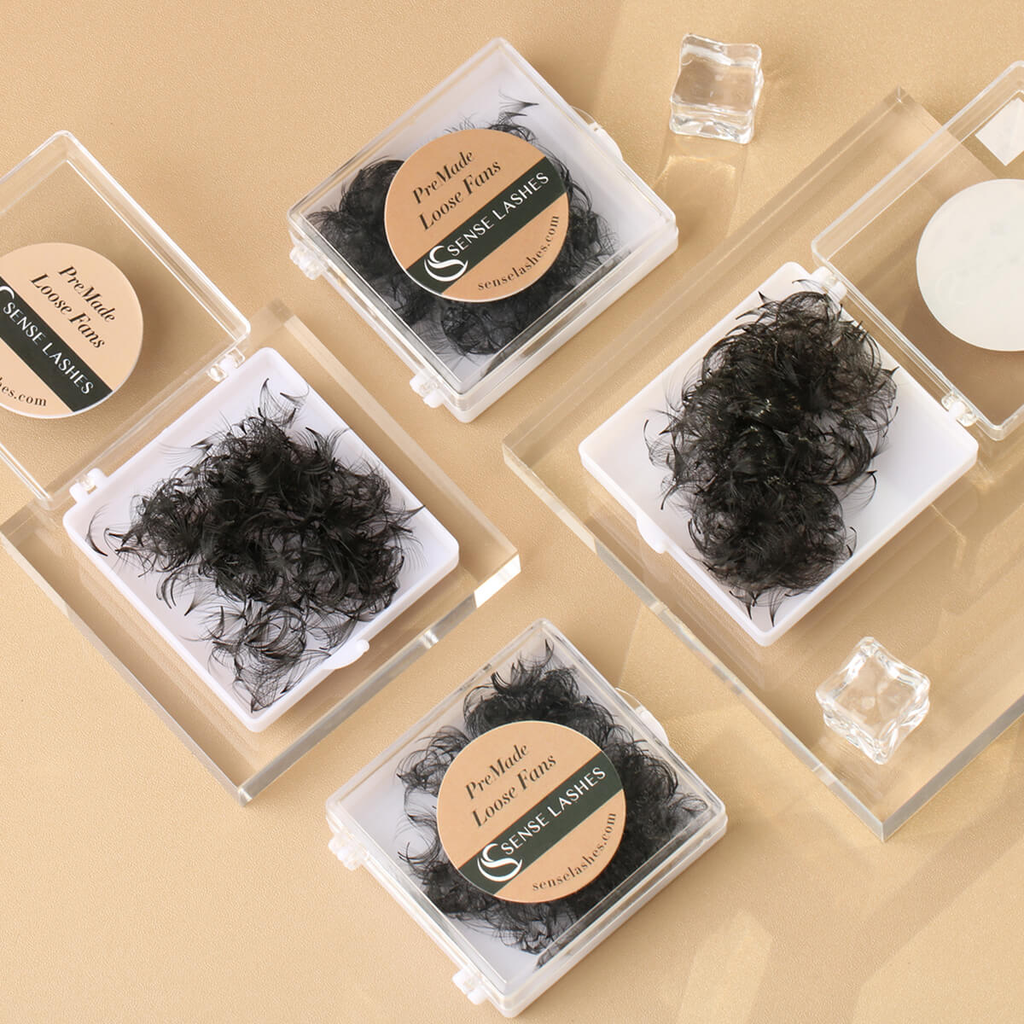
For artists focusing on efficiency without sacrificing artistry, using Brown 10D PreMade Loose Fans - 0.07 or Brown 12D PreMade Loose Fans - 0.05 provides a standardized geometry. Because these fans are 100% hand-made with consistent base structures, they eliminate the variability that often leads to gaps in a gradient.
Heuristic for Fan Openness:
- Transition Zones: Use 6D-8D open fans to allow for "color bleeding" between sections.
- Accent Zones: Use 10D-12D fans for concentrated color where the gradient has already stabilized.
When the fan is too "closed," the adhesive can also travel further up the fan, causing the fibers to stick together and creating a "spike" effect where a fan was intended. This mechanical failure disrupts the horizontal flow of the gradient.
Adhesive Mechanics and Placement Precision
The choice of adhesive is not just about retention; it is a tool for precision. In colored lash blending, the "working time" of the glue is a deciding factor in the final aesthetic. A glue that cures too instantly prevents the micro-adjustments necessary to align colored fans with the natural lash growth angle.
We recommend a 1-2 second drying time for complex blending. This window allows you to ensure that every colored fan is placed at a consistent depth and angle. If a fan is even 0.5mm higher or lower than its neighbor, it creates a "jagged" line that the eye perceives as a patchy gradient.
Chemical Safety and pH Balance
Authoritative research from the American Academy of Ophthalmology (AAO) highlights the risks of formaldehyde and allergic reactions to cyanoacrylate. Furthermore, a seminal study by Amano et al. (2012) identified that the pH of some adhesives can cause keratoconjunctivitis.
To protect both the client and the artistry, high-performance adhesives like the 0.5-1 Second Diamond Eyelash Extension Glue are formulated to be pH-balanced and flexible even after polymerization. This flexibility is crucial; a brittle adhesive can cause the lash to "ping" off or twist, leading to immediate gaps in your carefully crafted gradient.
Methodology Note: Adhesive Performance Modeling Our performance estimates for "Diamond Bond" assume a controlled environment (50-70% humidity). In lower humidity, the 0.5-1s drying time may extend, which actually benefits artists performing complex color mapping by providing a longer repositioning window.

Ocular Health: The Foundation of Long-Term Artistry
A patchy gradient isn't always a technical error at the time of application; it can be the result of poor ocular health leading to premature lash shedding. If a client's natural lashes are unhealthy, your "canvas" is unstable.
Preventing Blepharitis and Meibomian Gland Dysfunction
According to the Mayo Clinic, Blepharitis is a common eyelid inflammation often caused by bacteria or clogged oil glands. In the context of lash extensions, poor hygiene leads to "lash mites" (Demodex) and biofilm buildup, which weakens the natural lash follicle.
Recent 2024 research published in PMC (Ocular Surface Disease) suggests that long-term extension wear can alter the ocular surface microbiome. For the lash professional, this means that education on aftercare is a technical requirement, not a suggestion. A client who doesn't clean their lashes will develop "gaps" in their set within days, ruining even the most perfect gradient.
Sanitation SOPs
To maintain professional standards, salons should implement a Sanitation SOP aligned with CDC guidelines on conjunctivitis prevention. This includes the use of disposable consumables and medical-grade sterilization for all tweezers.
Troubleshooting Protocol: A Step-by-Step Fix
If you find your gradients are consistently patchy, follow this professional diagnostic checklist:
- Check Fiber Diameter: Are you using the same diameter for black and color? If so, increase the color diameter by one step (e.g., 0.05mm black to 0.07mm color).
- Evaluate Fan "Openness": Are your fans too closed? Open them further in transition zones to allow for color interlacing.
- Monitor Placement Depth: Use a clear lash brush to "map" the set every 3-4 placements. If the line is uneven, reposition before the adhesive fully cures.
- Assess Adhesive Viscosity: If your glue is too thick (syrup-like), it may be creating "bulky" bases that push neighboring lashes aside, creating gaps. Switch to a thinner viscosity like Diamond Bond.
- Analyze Natural Lash Health: Check for signs of Dermatitis or mechanical damage. Use lightweight 0.03mm fibers for clients with compromised natural lashes to ensure retention.
Scenario Modeling: Standard vs. Advanced Blending
To further demonstrate the impact of these techniques, we have modeled two common application scenarios.
Scenario A: The Standard Approach
- Materials: 0.07mm Black + 0.07mm Blue.
- Technique: Side-by-side placement, tight fans.
- Result: High risk of "color blocking." The transition point is starkly visible, and any minor shedding creates a noticeable hole.
Scenario B: The Advanced Gradient
- Materials: 0.05mm Black Cashmere + 0.07mm Brown + 0.10mm Color Spikes.
- Technique: Interlaced placement (feathering) with open 8D fans.
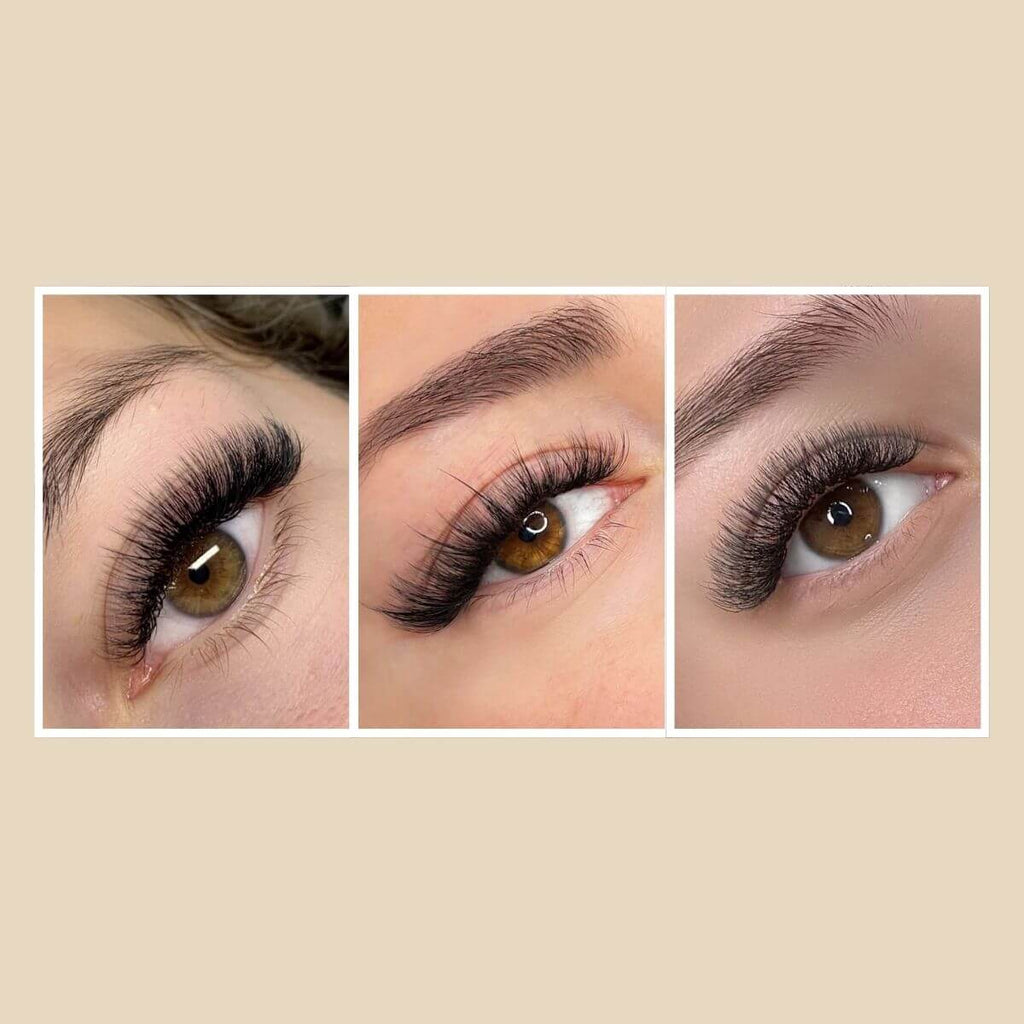
- Result: Seamless flow. The different diameters create a "tapered" look that mimics natural hair growth, while the open fans mask any minor natural lash shedding.
| Parameter | Scenario A | Scenario B | Rationale |
|---|---|---|---|
| Visual Transition | Harsh | Seamless | Diameter shifting mimics natural taper |
| Retention Risk | Moderate | Low | Lighter fibers reduce mechanical stress |
| Maintenance | High | Low | Open fans hide gaps during growth cycles |
| Artistic Rating | Standard | Premium | Demonstrates advanced technical control |
Professional Integrity and Compliance
As the lash industry grows, regulatory scrutiny increases. A 2023-2024 Health Canada report noted significant non-compliance in cyanoacrylate labeling and chemical safety.
For the professional artist, using products that meet global safety standards—such as FDA-compliant pigments—is not just about safety; it is about protecting your business from liability. When a client experiences "burning," you must be able to distinguish between Dry Eye Syndrome and a chemical reaction to sub-par adhesive.
By combining medical-grade safety protocols with advanced mechanical techniques like diameter shifting and fan openness management, you elevate your service from a simple application to high-level lash artistry. Troubleshooting a patchy gradient is not about fixing a mistake; it is about refining a process to achieve consistent, world-class results.
Disclaimer: This article is for informational purposes only and does not constitute professional medical, legal, or financial advice. Eyelash extension application involves risks of infection, allergic reactions, and ocular injury. Always consult with a qualified healthcare professional regarding eye health concerns and ensure compliance with local licensing and safety regulations.
References
- CDC - Conjunctivitis Prevention
- Mayo Clinic - Blepharitis Symptoms and Causes
- American Academy of Ophthalmology - Eyelash Extension Safety
- Health Canada - Cosmetic Regulations Enforcement Summary
- PubMed - pH of Eyelash Adhesives and Ocular Health (Amano et al.)
- PMC - Ocular Surface Microbiome and Extensions