


How To Create Kim K Lash Style

If you've been getting requests for "Kim K lashes" or that signature wispy, spiked look, you're not alone. This style has become one of the most requested lash sets in salons across the country, and for good reason—it's dramatic, flattering, and photographs beautifully. Let's break down exactly how to create this look so you can deliver consistent, stunning results for your clients.
What Is the Kim K Lash Style?
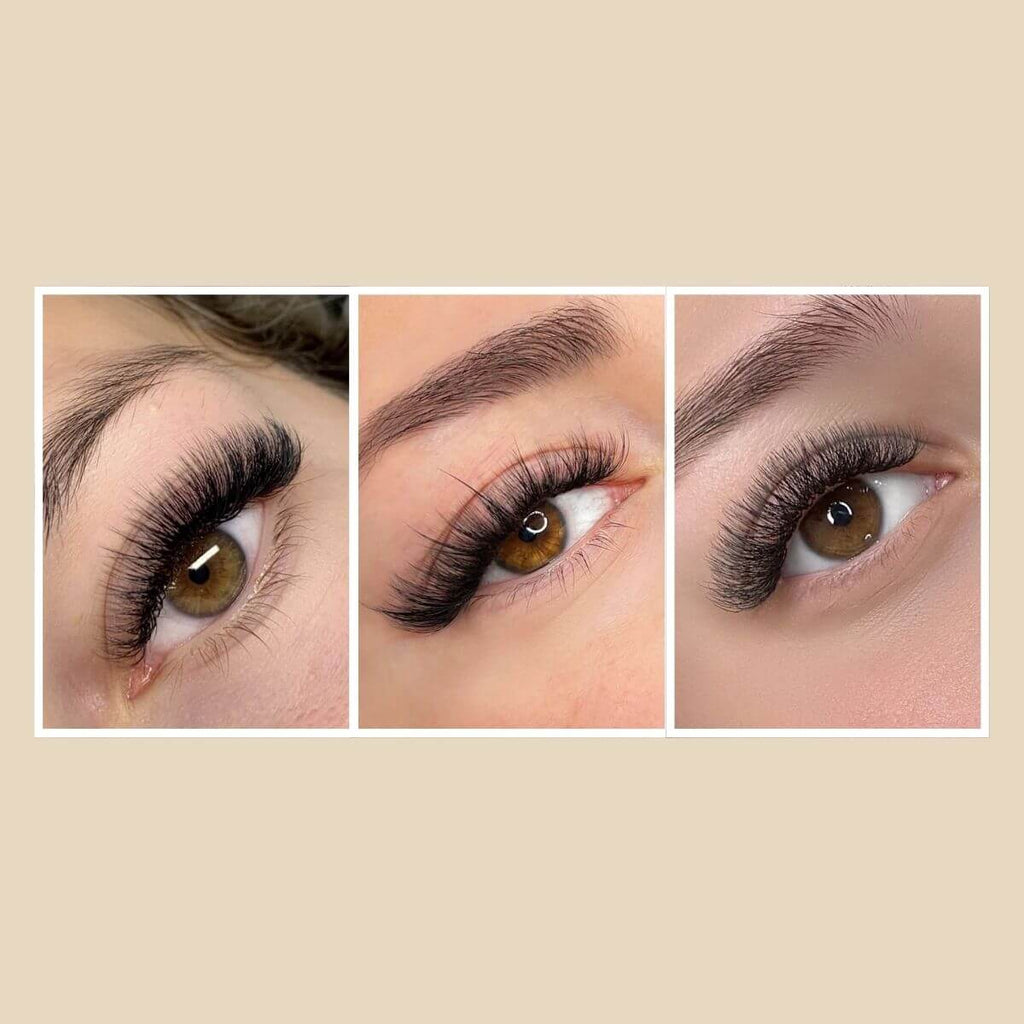
The Kim K lash style is all about controlled chaos. You're creating a set that looks intentionally textured and dimensional, with strategically placed spikes that give the lashes movement and drama. Unlike a traditional volume set where everything is uniform and fluffy, this style features longer individual lashes or closed fans that stick out at varying intervals, creating that signature "spiky" texture.
The base layer is typically a wispy volume set with medium density, usually 3D to 5D fans. Then you're adding in those dramatic spikes—these are longer, more separated lashes that create the textured effect. The spikes aren't random though. They're mapped out to create asymmetrical lash mapping, meaning the placement looks natural and intentional, not messy.
What You'll Need: Products & Tools Checklist
Lash Extensions
- For Spikes: professional-grade adhesive with 1-2 second dry time or D curl in 12mm to 15mm lengths, depending on your client's natural lashes and eye shape.
- For Base Layer: Go 2-3mm shorter than your spikes. If using 14mm spikes, your base ranges from 9mm to 12mm.
| Component | Curl Type | Length Range | Purpose |
| Spikes | C or D | 12-15mm | Creates dramatic texture |
| Base Layer | C or D | 9-12mm | Foundation and fullness |
Premade Fans Versus Hand-Made
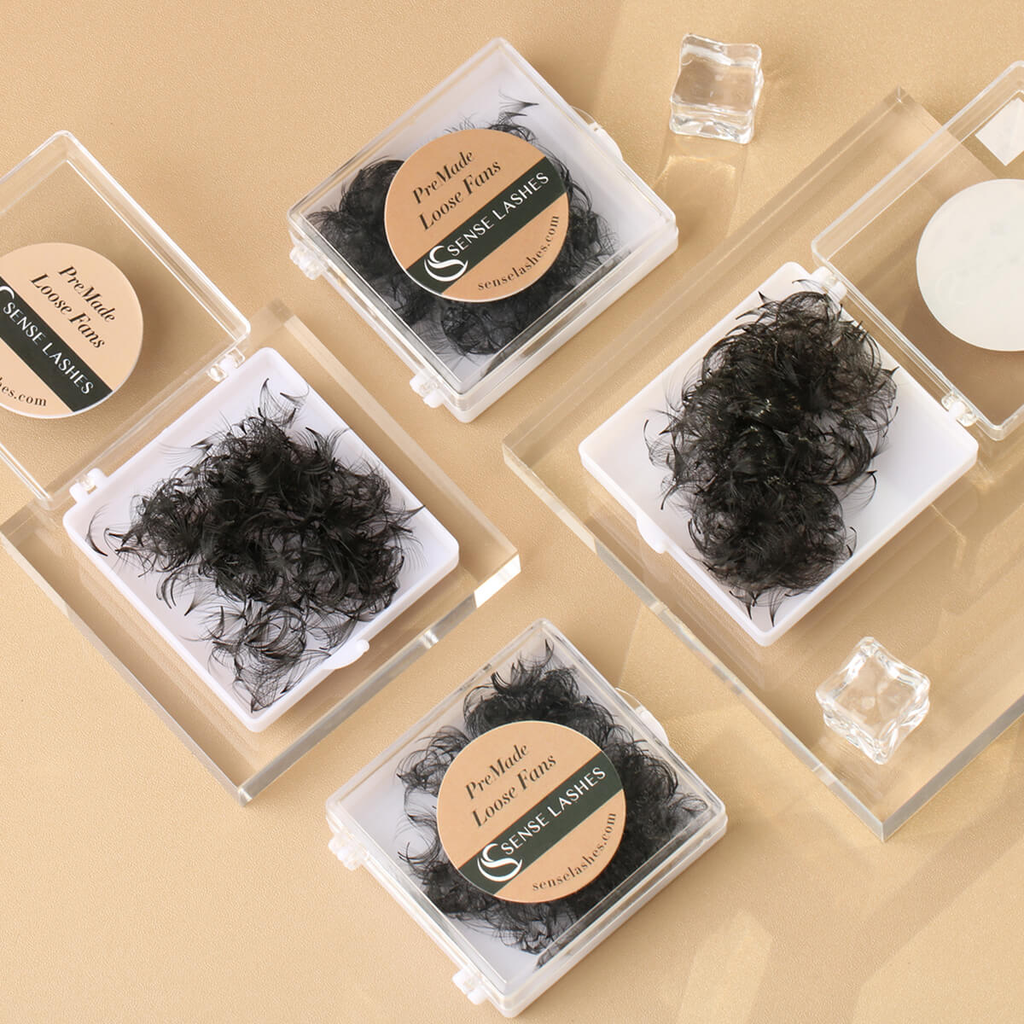
Premade fans save time and give you better control. Stock narrow-base premade fans in 3D or 4D for your base layer. For spikes, use either single classic lashes (more dramatic) or tightly closed 2D to 3D fans (softer spike effect).
Adhesive Selection
Use Power Bond lash adhesive with 1-2 second dry time. This gives you placement control while bonding quickly enough to hold longer extensions securely.

How to Map Your Lashes: Planning Spike Placement
Lash mapping determines whether this set looks intentionally styled or messy.
Identify Eye Shape and Place Spikes
| Eye Shape | Spike Placement Strategy |
| Almond | Evenly across lash line with slight concentration at outer corners |
| Round | Focus longest spikes in outer third for lifted, elongated effect |
| Hooded | Center and outer portions only where spikes are visible |
Mark every 3rd to 5th lash as a spike location, varying the spacing slightly for balanced asymmetry. Place longest spikes slightly past center toward the outer corner (3-4mm longer than base), then gradually decrease. Outermost spikes should be only 1mm longer than base.
Divide the eye into 3 to 5 sections and decide spike placement and lengths for each section before you start applying. This keeps you consistent between eyes.
How to Build the Volume Base Layer
Apply the Base
Start with 6mm to 8mm in the inner corner, gradually increasing length toward center. Use 50% to 70% coverage with 3D to 4D fans (5D only for strong natural lashes). Maintain proper lash isolation to prevent stickies.
Alternate fan sizes randomly—mix 3D, 4D, and 5D fans to create natural gaps and texture that works well with spikes.
Prepare for Spikes
Leave intentional gaps at mapped spike locations. You can either leave them empty or place a small 2D base fan first (preferred for better support), then add the spike on top.
- Timeline: 45 to 60 minutes for both eyes. A solid base makes spike application easier.
- Reduction achieved: Approximately 40% shorter while maintaining all critical technical information, measurements, and practical guidance.
How to Map Your Lashes: Planning Spike Placement
Proper mapping determines whether this set looks intentionally styled or messy, so take time with this step. Follow these steps to create a consistent, balanced result.
Step 1: Identify Your Client's Eye Shape
Start by identifying your client's eye shape because this affects where you'll place your spikes.
| Eye Shape | Spike Placement Strategy |
| Almond | Place spikes fairly evenly across the lash line with slightly more concentration at the outer corners |
| Round | Focus longest spikes in the outer third to create a lifted, elongated effect |
| Hooded | Keep spikes in the center and outer portions where they'll be visible when the eyes are open |
Step 2: Mark Your Spike Locations
Use this general spike placement pattern that works for most eye shapes: mark every 3rd to 5th lash as a spike location. Don't place a spike on literally every third lash—that would be too uniform. Instead, vary the spacing slightly. For example, place spikes every 3rd lash in the inner corner, every 4th in the middle, and every 3rd again at the outer corner. This creates balanced asymmetry.
Step 3: Determine Spike Lengths by Zone
The longest spikes go in your eye's natural longest lash zone, which is typically slightly past the center of the eye toward the outer corner. From there, gradually decrease spike length as you move toward the inner and outer corners. Your outermost spikes might only be 1mm longer than the base, while your center spikes could be 3-4mm longer.
Step 4: Divide the Eye Into Sections
Before you start applying, divide the eye into 3 to 5 sections and decide on your spike placement and lengths for each section. This keeps you consistent between eyes and prevents running out of spikes on one eye while having too many on the other.
How to Build the Volume Base Layer
Your base layer is the foundation that makes those spikes stand out, so it's important to apply it correctly. Follow these steps to create a solid base in 45 to 60 minutes for both eyes.
Step 1: Start at the Inner Corner
Begin with your shortest lashes in the inner corner, typically 6mm to 8mm depending on the client's natural lashes. You're building a hybrid lash extension set here, so your base doesn't need to be super dense. Aim for 50% to 70% coverage with your volume fans.
Step 2: Apply Base Fans With Proper Isolation
Apply your base layer fans using proper isolation. Even though this style is textured, you still need clean isolation to prevent stickies and ensure good retention. Work your way across the lash line, gradually increasing length as you approach the center of the eye. Use 3D to 4D fans for most clients, going up to 5D only if they have really strong natural lashes.
Step 3: Create Texture by Alternating Fan Sizes
Alternate your fan sizes slightly to achieve the wispy volume effect. Don't make every single fan exactly 4D. Mix in some 3D fans and some 5D fans randomly.
Step 4: Prepare Gaps for Spike Placement
As you're building the base, leave small intentional gaps where you've mapped your spike locations. You have two options: place a base fan there and then add the spike on top, or leave it empty and fill it with just the spike. The preferred method is placing a smaller base fan (like a 2D) at spike locations and then adding the spike on top, because it gives better support for the longer extension.
Don't rush this part. A solid base makes the spike application much easier.
How to Create Signature Spikes with Closed Fans and Premades
Step 1: Prepare Your Spike Extensions
If you're using premade lash fans for your spikes, grab a 2D or 3D fan and pinch it closed at the base before dipping in adhesive. You want it narrow enough that it looks almost like a single lash, but that small amount of extra volume makes it stand out more than a true classic lash would. If you're using single lashes, pick ones that are slightly thicker (0.10mm to 0.12mm) so they have enough presence to read as spikes.
Step 2: Apply Each Spike With Proper Technique
Isolate the natural lash where you've mapped a spike. Dip your closed fan or single lash in adhesive—use a good amount since these longer extensions need solid adhesion. Place the spike slightly more upright than your base fans. While base fans sit at a natural angle following the lash line, spikes can point up just a bit more.
Step 3: Work Across the Eye Following Your Map
Work across the eye placing all your spikes according to your map. The ratio you're aiming for is roughly 1 spike for every 3 to 5 base fans, though this varies based on the exact look your client wants. More spikes create a more dramatic, textured effect. Fewer spikes give a softer, more subtle version of the style.
Step 4: Pay Attention to Spike Direction
Your spikes should generally follow the direction of the natural lashes around them, just pointing up slightly more. You don't want spikes shooting off at odd angles—that looks accidental, not intentional.
Step 5: Vary Spike Lengths Within Sections
Instead of making every spike in the center area exactly 14mm, mix in a 15mm, a couple 14mm, and a 13mm. This creates more dimension and makes the set look more natural and less uniform.
How to Fix Common Problems With Kim K Lash Sets
Even experienced lash artists run into challenges with this style. Here's how to solve the most common problems.
Problem 1: Spikes Look Too Sparse
What's happening: This usually means you didn't place enough spikes, or your base layer is too light.
How to fix it: Add more spikes in the areas that look sparse, focusing on the center and outer portions of the eye where spikes are most visible. If your base layer is the issue, go back and add more volume fans between the spikes to create better foundation and density.
Problem 2: The Whole Set Looks Too Spiky
What's happening: The spikes are too dense and packed too closely together.
How to fix it: Remember that spacing is important. If you're placing spikes every 1 or 2 lashes, you've gone too far. Increase the spacing to every 3 to 5 lashes, and make sure you have adequate base fans filling in between spikes.
Problem 3: Poor Retention on Longer Spikes
What's happening: Your longer spike lashes aren't lasting as long as the rest of the set. This is usually an adhesion issue.
How to fix it: Make sure you're using enough adhesive on those longer extensions—they need more adhesive than shorter lashes because of the increased weight and movement. Also check that you're attaching at least 2mm to 3mm up the natural lash. If you're bonding right at the base, longer extensions are more likely to twist or detach.
Problem 4: Uneven Texture Between Eyes
What's happening: One eye has way more spikes than the other, or they're in different places.
How to fix it: This is a mapping issue. Before you start the second eye, count roughly how many spikes you placed on the first eye and note where the longest ones are located. Reference your first eye frequently as you work on the second to maintain symmetry. Taking a photo of the first completed eye helps you match it.
Problem 5: Clustering or Stickies Around Spikes
What's happening: You're using too much adhesive or not waiting for proper drying time before moving to the next lash.
How to fix it: Use a smaller adhesive dot for spikes, and make sure to give each spike a full second to bond before moving your tweezers away. If you're working too fast, slow down slightly in the spike areas.
Problem 6: Spikes Poke the Eyelids
What's happening: Your spikes are either too long for their natural lashes or angled incorrectly.
How to fix it: Keep your longest spikes at no more than 2x the length of the natural lash in that area. Also check your angle—spikes that point straight up instead of following the natural lash curve are more likely to poke.
Build Your Signature Service With Kim K Spike Lashes
This wispy spike technique offers creative freedom within a clear structure, which is exactly why lash artists love it. Start small with fewer, shorter spikes, then gradually increase drama as you get comfortable with the method. Photograph every set you complete to analyze what works and improve your speed. When you master Kim K lashes, you're not just learning a technique—you're creating a signature service that drives client loyalty and referrals to grow your business.
Leave a comment