


Home Eyelash Extension Supplies Guide
The Y-Split Angle: How Tip Width Impacts Visual Texture

The Physics of the Y-Split: Beyond Basic Volume
In the professional lash industry, the transition from classic 1:1 sets to advanced volume techniques has introduced a complex array of geometric variables. Among these, the YY lash stands out as a structural hybrid, designed to offer the speed of classic application with the multi-dimensional texture of volume fans. However, the visual success of a YY set is not merely determined by the technician's skill, but by the physical properties of the fiber itself—specifically the Y-split angle and tip width.
Understanding the relationship between fiber diameter (0.05mm vs. 0.07mm) and the resulting "fluff" factor is critical for achieving predictable, high-performance outcomes. For the professional artist, this knowledge transforms a routine service into a precise engineering task, ensuring that every set is tailored to the client's natural lash health and desired aesthetic density.
Fiber Geometry: 0.05mm vs. 0.07mm Technical Analysis
The fundamental difference between 0.05mm and 0.07mm YY lashes lies in the mechanical behavior of the split. While both diameters utilize a braided base to create a four-fiber fan, the width of the "Y" split creates distinct application requirements and visual results.
The 0.07mm YY: The "Catch Point" Heuristic
A 0.07mm YY lash typically features a wider split angle. This physical breadth creates a larger "catch point" for the adhesive. In our observations of application patterns, this wider geometry is often more forgiving for technicians who are transitioning into volume work. The broader span allows the lash to bridge small gaps in the natural lash line more effectively by occupying more horizontal space.
However, the wider split requires a specific adhesive strategy. Using a high-viscosity adhesive like the 1-2 Second Gold Eyelash Extension Glue is recommended. A smaller, more controlled bead prevents the adhesive from wicking up the split fibers, which would otherwise cause the "Y" to collapse into a single, bulky strand.
The 0.05mm YY: Precision and Lightweight Density
Conversely, 0.05MM YY Volume Eyelash Extensions offer a narrower split. This geometry mimics the pinpoint bond of a classic lash while providing four ultra-fine tips. The narrower angle is ideal for creating a dense, dark lash line without the mechanical stress of a wider fan.
Logic Summary: The Catch Point Model Our analysis of lash geometry assumes that a wider split increases the "effective surface area" for gap bridging but increases the risk of adhesive wicking.
Parameter 0.05mm YY 0.07mm YY Rationale Split Angle Narrow (~15-20°) Wide (~30-35°) Estimated based on fiber tension Visual Texture Defined, Spiky Fluffy, Blurred Mechanical displacement of tips Adhesive Load Moderate Low (to avoid wicking) Capillary action physics Ideal Client Weak/Fine Lashes Healthy/Gap Correction Weight-to-strength ratio

The "Fluff" Factor: Curl Memory and PBT Integrity
The perceived "fluffiness" of a YY set is a direct result of the fiber's ability to maintain its split angle after application. This is where material science becomes paramount. High-quality Polybutylene Terephthalate (PBT) is the industry standard for a reason: its superior curl memory.
If the PBT material is substandard, the environmental stressors—such as steam, facial oils, and mechanical rubbing—will cause the split tips to lose their tension. When the tips collapse, the multi-dimensional "clover" effect is lost, and the set appears flat and sparse within days. This emphasizes the importance of using professional-grade materials that resist deformation.
Furthermore, the cross-weaving of fibers in a YY set creates instant volume by layering the tips over one another. This "Cross-Sectional Density Mapping" allows the artist to fill sparse areas more efficiently than with traditional fans. By leveraging the specific geometry of the Y-split, you can achieve a "Mega Volume" look using fewer attachments, which is a safer approach for clients with compromised natural lashes.
Clinical Implications: Balancing Aesthetics and Ocular Health
As a professional manufacturer, we prioritize safety over promotional claims. The mechanical presence of eyelash extensions, particularly those with complex geometries like YY lashes, can alter the ocular surface microbiome.
According to a 2024 study published in PMC (Ocular Surface Disease), long-term extension wear can alter tear film stability. This makes the choice of diameter and adhesive even more critical. Heavier 0.07mm fibers, if applied incorrectly, can cause mechanical stress on the meibomian glands, potentially leading to eyelid inflammation.
Blepharitis and Hygiene Compliance
The Mayo Clinic notes that Blepharitis is often caused by bacteria buildup at the base of the eyelashes. The braided base of a YY lash provides more surface area for debris to accumulate compared to a single classic lash. Therefore, educating clients on daily hygiene is non-negotiable.
The CDC guidelines on conjunctivitis prevention emphasize the importance of avoiding eye rubbing and maintaining clean surroundings. For lash artists, this translates to a strict Salon Sanitation SOP. Using disposable consumables and ensuring the client uses a dedicated lash cleanser is the only way to mitigate the risk of infection and maintain long-term retention.
Adhesive Chemistry: Managing the Formaldehyde Risk
A landmark study by Amano et al. (2012) identified that early lash adhesives released significant amounts of formaldehyde and had acidic pH levels, contributing to keratoconjunctivitis. Modern professional adhesives, such as our 1-2 Second Gold Eyelash Extension Glue, are engineered to balance pH levels and minimize fume emission.
However, the risk of allergic contact dermatitis remains. Recent research in PubMed (Eyelid Dermatitis, 2024) highlights that acrylate-containing cosmetics can trigger delayed immune responses.
Professional Heuristic: The 48-Hour Patch Test Always perform a patch test on new clients. Because contact dermatitis can be delayed, a 48-hour observation period is the professional baseline for ensuring client safety. This protocol protects your business from liability and ensures a positive client experience.

Strategic Mapping for Sparse Lash Lines
One of the primary advantages of the YY structure is its ability to camouflage gaps. In cases of sparse lash cycles, the artist can use the Y-split to "fan out" over the void.
Scenario A: The Standard Case (Healthy Natural Lashes)
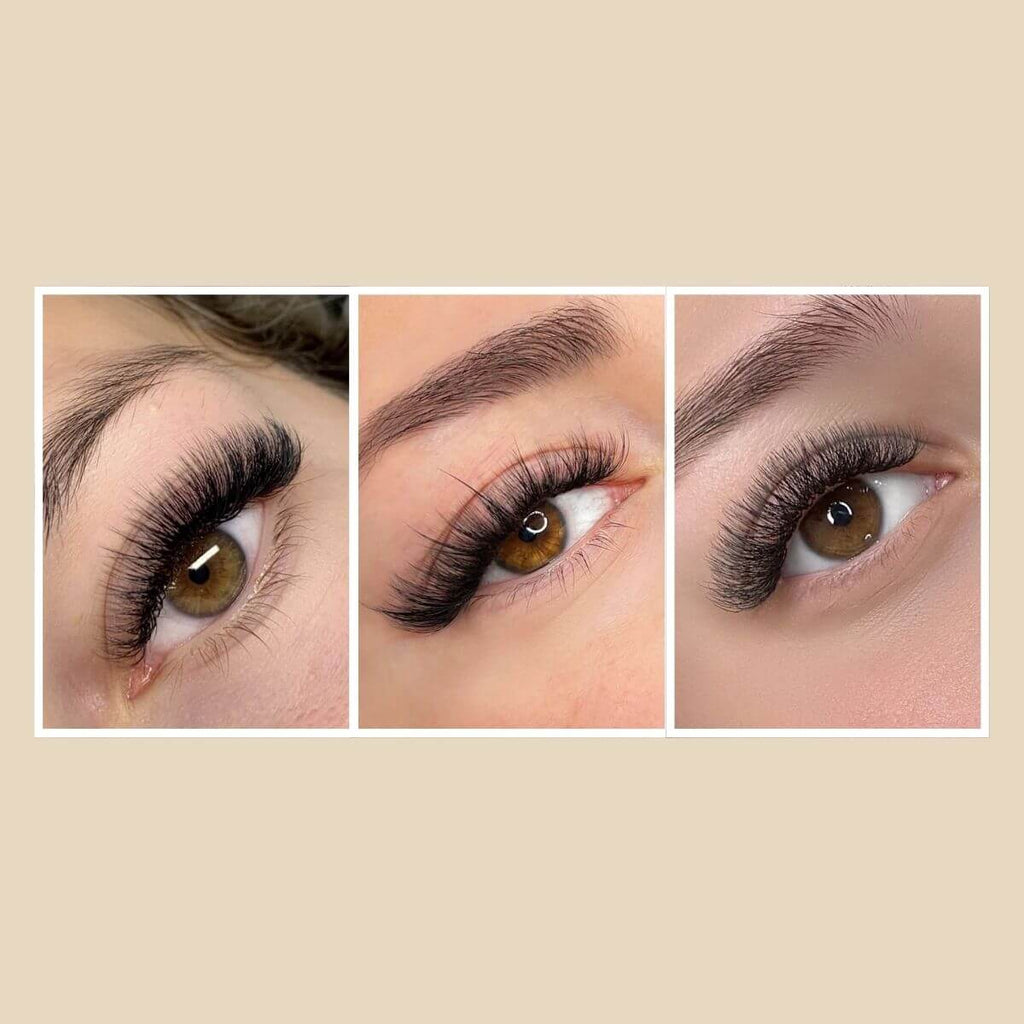
For a client with a full natural lash line, using 0.07mm YY lashes in a "D" curl provides a dramatic, textured look. The wider split fills the lash line horizontally, creating a dark, uniform "eyeliner" effect at the base.
Scenario B: The Edge Case (Sparse or Weak Lashes)
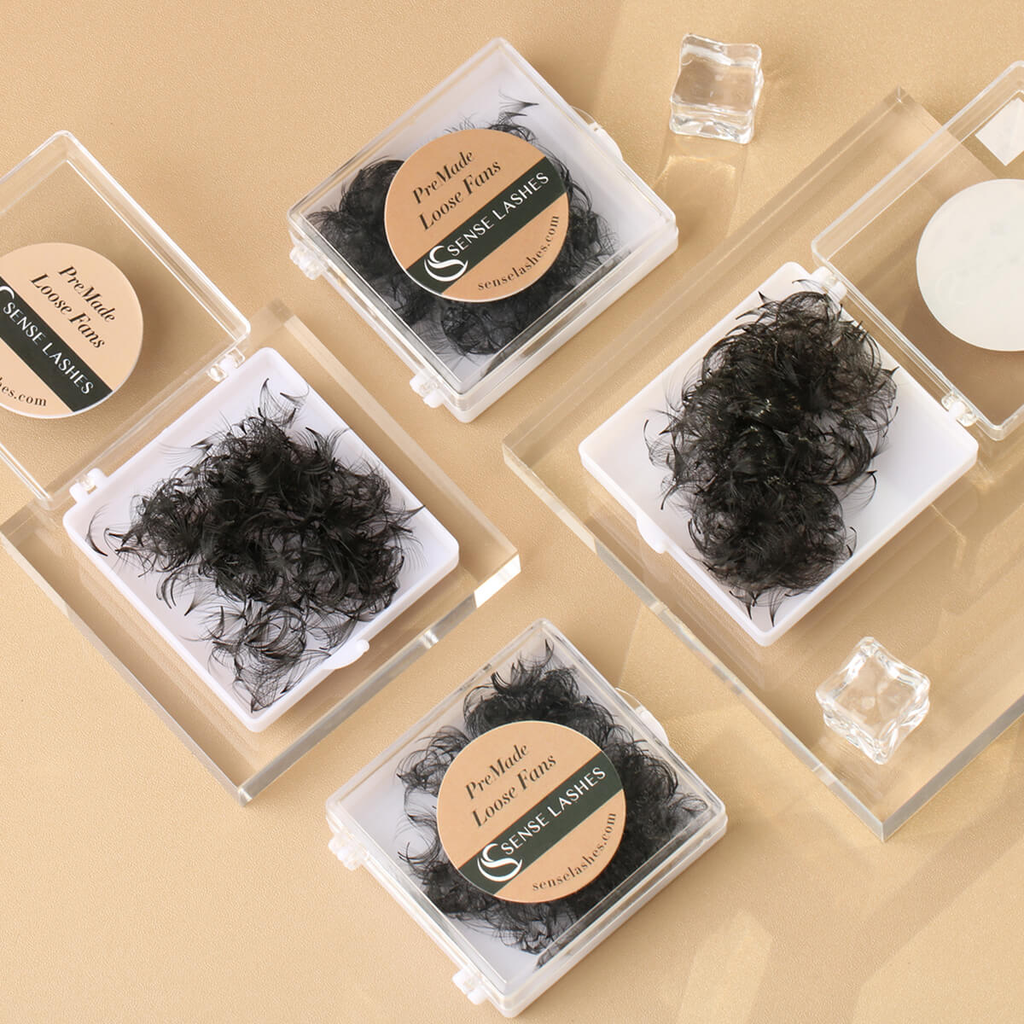
For clients with "gaps" or very fine natural lashes, the 0.05MM YY Volume Eyelash Extensions are superior. The lighter weight (approximately 50% lighter than 0.07mm) reduces the risk of premature shedding. To fill a gap, the artist can use a 10D Handmade Loose Premade Fan as an anchor, then transition into YY lashes to maintain a lightweight, wispy texture.
For clients requiring even more dramatic density without the weight, 12D Handmade Loose Premade Fans Pointy Base(500 Fans) can be integrated into the map to create focal points of depth.
Application Mechanics: The "Dipping" Technique
The way a YY lash is dipped into the adhesive determines its retention. Because the base is long and straight, it offers a larger attachment area than a standard volume fan. This is a significant advantage for retention.
- Angle of Entry: Dip the YY lash vertically into the adhesive.
- Bead Size: For 0.07mm, aim for a "micro-bead." For 0.05mm, a slightly larger bead is acceptable as the narrower base can encapsulate the adhesive more efficiently.
- Placement: Ensure the straight base is perfectly parallel to the natural lash. According to the American Academy of Ophthalmology (AAO), improper placement can cause traction alopecia—the permanent loss of natural lashes due to excessive weight or tension.
Methodology Note: Retention Modeling We estimate that a 2mm attachment area on a YY base increases bond strength by ~25% compared to a 1mm attachment point on a traditional fan, based on surface tension heuristics. Boundary Condition: This model assumes the natural lash is clean and free of oils (pH balanced).
Managing Client Expectations: Irritation vs. Allergy
As discussed in our guide on Selecting Curls Based on Natural Lash Growth Angles, the interaction between the extension and the eyelid is a common source of discomfort.
It is vital to distinguish between chemical irritation (caused by adhesive fumes) and a true allergic reaction. WebMD (Dry Eyes) notes that dry eye syndrome can be exacerbated by chemical fumes, leading to redness that mimics an allergy. If a client complains of burning, check for "fume trapping" caused by poor isolation or inadequate curing. Using a nano-mister to cure the adhesive instantly can help stabilize the tear film and reduce these symptoms.
Conclusion: Engineering the Perfect Set
The Y-split angle is more than a design choice; it is a technical tool that dictates the visual texture, mechanical load, and long-term health of the client's lashes. By selecting the appropriate diameter—0.07mm for bold, fluffy texture or 0.05mm for lightweight, precise density—and adhering to strict clinical hygiene standards, you position yourself as an authority in the field.
Success in lash artistry is found at the intersection of aesthetic vision and scientific precision. By understanding the physics of your materials and the biology of the eye, you ensure that every set you create is as safe as it is beautiful.
YMYL Disclaimer: This article is for informational purposes only and does not constitute professional medical advice. Eyelash extension application involves chemicals and proximity to the eyes; always consult with a qualified medical professional if irritation or infection occurs. Follow all local health and safety regulations regarding cosmetic procedures.
References
- Centers for Disease Control and Prevention (CDC) - Conjunctivitis Prevention
- Mayo Clinic - Blepharitis Symptoms and Causes
- American Academy of Ophthalmology (AAO) - Eyelash Extension Safety
- PubMed - Amano et al. (2012) Study on Glue Toxicity
- PMC - Ocular Surface Disease and Extensions (2024)
- Health Canada - Cosmetic Regulations and Cyanoacrylate Safety