


Home Eyelash Extension Supplies Guide
The Science of Sheen: How Fiber Finish Alters Color Vibrance

The Technical Relationship Between Fiber Finish and Visual Saturation
In professional lash artistry, the difference between a high-end, editorial finish and an artificial, "plastic" look often comes down to a single technical specification: the sheen of the fiber. While many artists focus primarily on curl and diameter, the surface finish—specifically the distinction between matte and glossy—dictates how light interacts with the lash set. This interaction, governed by the principles of optical physics, determines the perceived vibrance of the color, whether you are working with a deep black or a nuanced brown.
Understanding the "Science of Sheen" allows artists to move beyond trial and error. By analyzing how light reflects off Polybutylene Terephthalate (PBT) fibers, we can predict the visual outcome of a set under various lighting conditions, from the harsh LEDs of a studio to the soft, natural light of a client's daily life. This guide explores the mechanisms of light reflection, the material science of fiber coatings, and the critical safety considerations that accompany professional lash application.
The Physics of Light: Specular vs. Diffuse Reflection
To understand why a "Super Matte" lash appears darker than a glossy one, we must look at how light behaves when it strikes a surface. There are two primary types of reflection that occur on synthetic lash fibers: specular reflection and diffuse reflection.
Specular Reflection and the "Grey" Effect
Glossy finishes are characterized by a smooth, glass-like surface. When light hits this surface, it undergoes specular reflection—meaning the light reflects at a single, concentrated angle. In a salon environment with overhead lighting, this creates "hot spots" or specular highlights on the lashes.
A common frustration for artists is using glossy black lashes to achieve a "deep black" look, only to find the finished set appears grayish or washed out under studio lights. This occurs because the concentrated reflection of the light source overpowers the underlying black pigment. The eye perceives the reflected light rather than the color of the fiber itself.
Diffuse Reflection and Color Dominance
Conversely, matte finishes are achieved through manufacturing processes like laser-etching or specific chemical coatings that create a micro-textured surface. When light hits a matte lash, it undergoes diffuse reflection, scattering in many different directions.
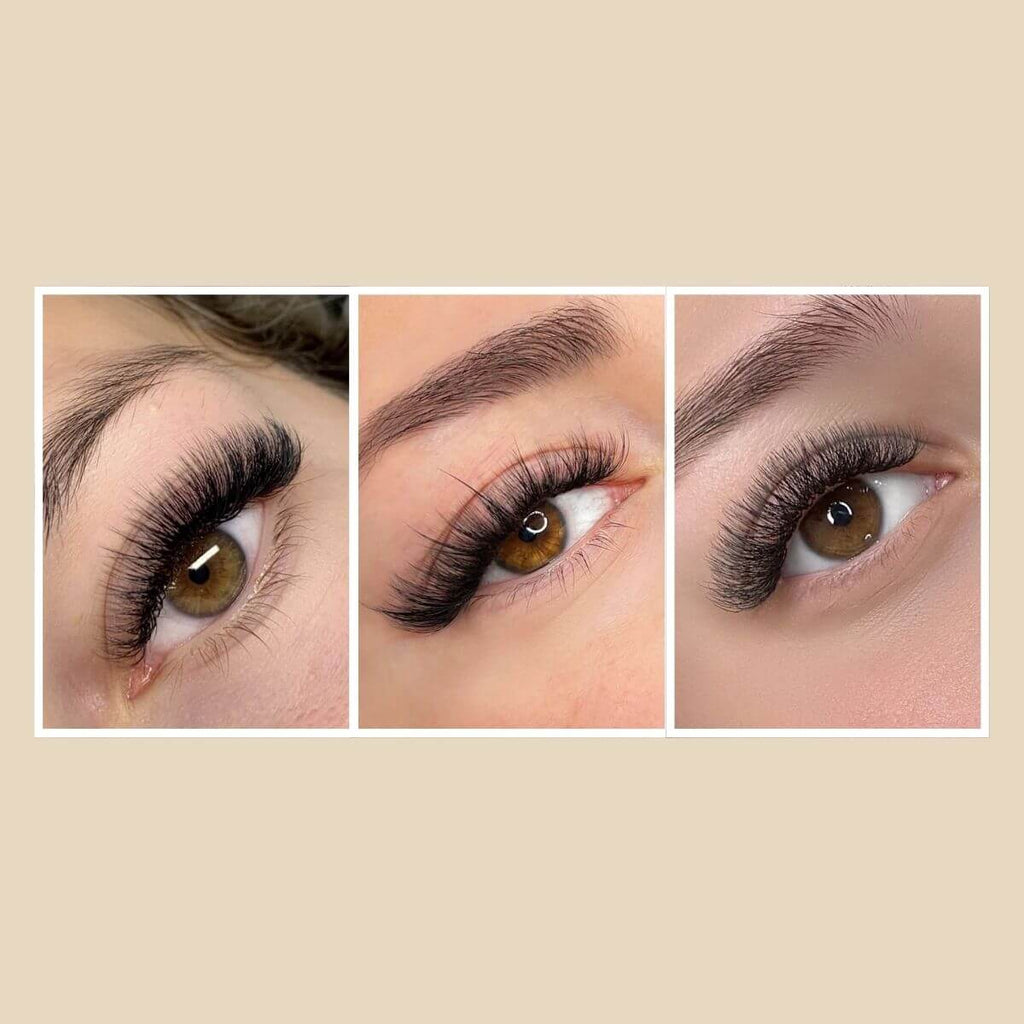
Because the light is scattered rather than reflected in a concentrated beam, the fiber absorbs more incidental light. This allows the base pigment—the actual color of the PBT—to dominate the visual field. This is why products like the 0.07mm Royal Sable Volume Eyelash Extensions(Super Black, Super Matte) provide a significantly deeper, richer black than their glossy counterparts.
Logic Summary: Our analysis of fiber sheen is based on the inverse relationship between specular reflection and perceived color saturation. We assume standard professional lighting (approx. 5000K) where high-gloss surfaces create a visual "veil" of reflection that reduces pigment clarity.

Material Science: PBT Engineering and Surface Treatment
The majority of high-quality professional lashes are made from Polybutylene Terephthalate (PBT), a semi-crystalline engineering thermoplastic. The "sheen" of the lash is not just a cosmetic layer; it is a result of how the PBT is extruded and treated during the manufacturing phase.
The Role of Laser-Etching
To achieve a "Super Matte" finish, manufacturers often use laser-etching technology. This process creates microscopic indentations on the surface of the fiber. These indentations are invisible to the naked eye but serve to disrupt the path of incoming light. In addition to improving color vibrance, this texture can also influence how the adhesive bonds to the fiber. As discussed in our technical guide on How Fiber Surface Texture Impacts Adhesive Bond Strength, a textured surface provides more "mechanical keying" for the cyanoacrylate to grip.
Fiber Diameter and Pigment Density
The diameter of the fiber plays a crucial role in color perception. A 0.07mm fiber has a larger surface area than a 0.03mm fiber. This increased surface area allows for a higher concentration of pigment to be visible.
In practice, a 0.07MM Cashmere Premium Mega Volume Eyelash Extensions with a matte finish will appear more vibrant than a 0.03mm fiber of the same material. The thicker fiber provides a "denser" canvas for the colorant, which is particularly important when working with Deep Black vs. Natural Black profiles.
| Parameter | Matte Finish | Glossy Finish | Impact on Artistry |
|---|---|---|---|
| Light Interaction | Diffuse Scattering | Specular Reflection | Matte hides "hot spots" |
| Color Perception | High Saturation | Low Saturation (Reflective) | Matte looks darker/richer |
| Adhesive Grip | High (Textured) | Moderate (Smooth) | Matte often improves retention |
| Visual Texture | Natural/Velvet | Synthetic/Plastic | Matte mimics natural hair |
| Best Use Case | Deep Black/Daily Wear | Editorial/High-Shine | Mix for dimensional sets |
The Art of Colored Lashes: Vibrance in Brown and Vivid Hues
When working with colored lashes, such as brown or blue, the choice of finish becomes even more critical. Because colored pigments are naturally lighter than carbon black, they are more susceptible to being "washed out" by surface sheen.
Why Brown Lashes Require Matte Finishes
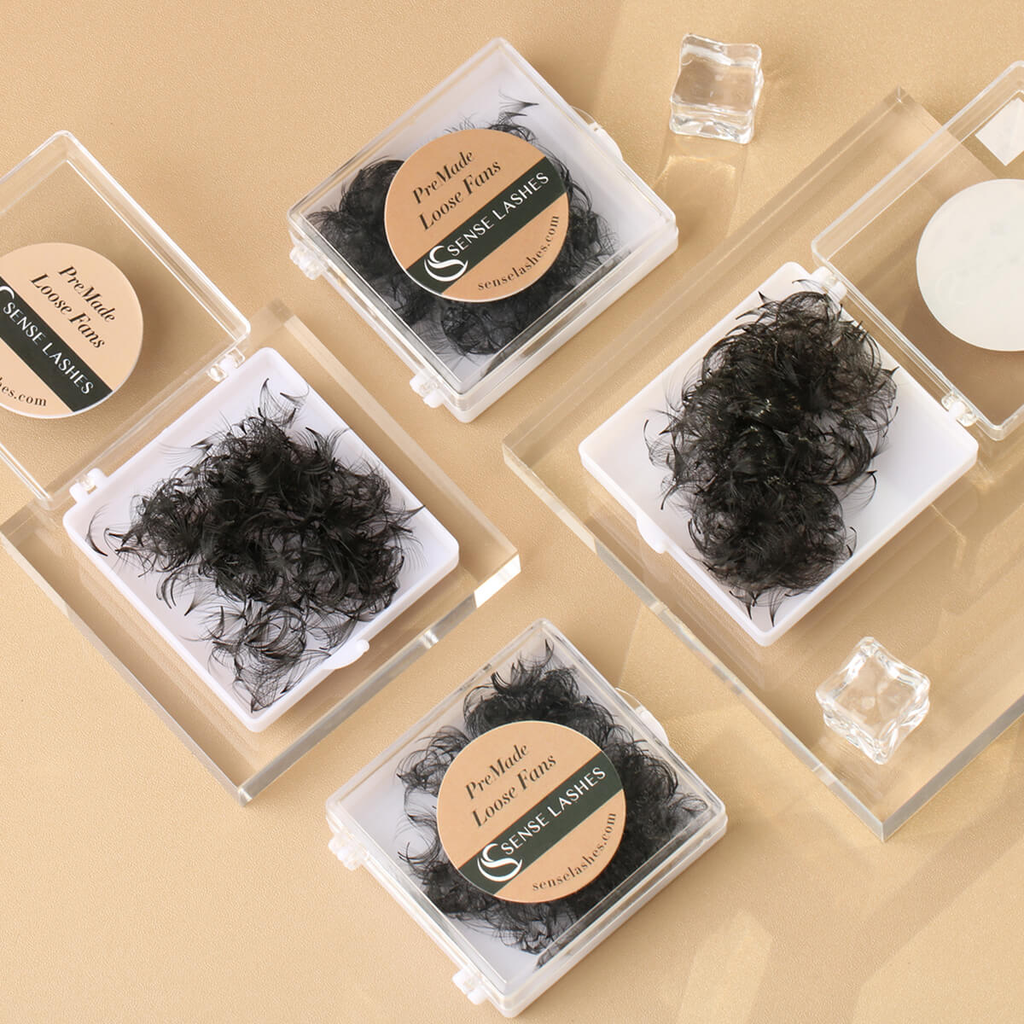
For clients seeking a natural or "soft" look, brown lashes are the gold standard. However, a glossy brown lash often looks artificial because natural hair rarely has a high-specular sheen. By using matte brown fibers, such as those found in Brown 8D PreMade Loose Fans - 0.07 - 500 Fans, the artist ensures that the warm, chocolate tones are the primary focus.
The matte finish allows the brown pigment to absorb light, creating a soft, velvety appearance that blends seamlessly with the client's natural lashes. This is especially effective when Matching Lash Finishing to Client Skin Tones and Ages, as older clients or those with fair complexions often benefit from the reduced harshness of a matte, colored set.
Strategic Highlighting
While matte is generally preferred for the base layer to build depth, glossy lashes can be used strategically as "highlights." Placing a few glossy or glitter lashes within a matte set creates dimension. The glossy fibers catch the light and act as focal points, adding "twinkle" to the eyes without sacrificing the overall color saturation of the set.

Clinical Safety and Ocular Health: Beyond the Aesthetic
As professional lash artists, our primary responsibility is the safety and health of the client's eyes. The materials we use, including the fibers and adhesives, must meet strict safety standards to prevent complications.
Preventing Ocular Surface Disorders
According to a 2024 study published in PubMed, eyelash extensions can contribute to a spectrum of ocular disorders if not applied or maintained correctly. These include mechanical damage to the eyelid and chemical toxicity from low-quality adhesives.
One of the most significant risks is the development of Blepharitis, an inflammation of the eyelids often caused by bacteria buildup at the base of the lashes. The Mayo Clinic notes that poor hygiene is a leading cause. This underscores the necessity of using high-quality, non-porous PBT fibers that do not harbor bacteria and educating clients on the importance of daily cleansing with a professional lash shampoo.
Allergic Reactions and Cyanoacrylate Safety
The adhesive used to bond these fibers is typically based on Ethyl Cyanoacrylate. While effective, it can cause allergic contact dermatitis in sensitive individuals. A case study in PubMed highlights the importance of distinguishing between simple irritation (caused by fumes) and a true immune response (allergy).
To mitigate these risks, it is essential to use adhesives that are compliant with global standards. Health Canada's 2023-2024 Enforcement Report emphasizes the need for proper labeling and chemical safety in lash adhesives. Artists should always perform a patch test, as patterns of contact dermatitis can be delayed by 48 hours or more.
Protecting the Ocular Microbiome
Recent research in PMC (2024) suggests that long-term extension wear can alter the ocular surface microbiome and tear film stability. This makes the use of pH-balanced primers and sealants non-negotiable. By restoring the lash pH after application, artists can help protect the delicate balance of the eye's natural defenses.
Furthermore, the American Academy of Ophthalmology (AAO) warns against the risks of infection and trauma associated with extensions. This is why using high-quality, sterilized consumables—like those produced in factory-direct environments where quality control is stringent—is vital for risk management.
Practical Application: Troubleshooting and Environmental Factors
Even with the best products, environmental factors can influence the final appearance and health of a lash set.
The Humidity Factor
Humidity does more than just affect adhesive cure speed; it can also subtly alter the perceived sheen of certain fiber coatings over time. In high-humidity environments, a microscopic layer of moisture can settle on the fibers, temporarily increasing their reflectivity. This is another reason why a "Super Matte" fiber is a safer choice for consistent results across different climates.
Scenario Modeling: The "Studio Light" Trap
- Scenario A (The High-Gloss Mistake): An artist uses high-gloss black lashes for a client who works under bright office lights. The result is a set that looks "plastic" and lacks depth, as the specular reflection creates a constant glare on the lash line.
- Scenario B (The Matte Solution): The artist uses 0.07mm Royal Sable Volume Eyelash Extensions(Super Black, Super Matte). Even under intense lighting, the lashes remain a deep, void-like black. The diffuse reflection ensures that the color is visible from all angles, providing a more professional and natural-looking result.
Avoiding Mechanical Trauma
Mechanical damage, such as corneal abrasions, can occur during the application or removal process. A case report in PMC details abrasions caused by mechanical rubbing and improper removal. To prevent this, artists should prioritize non-drip cream removers and ensure that eye pads are placed correctly to prevent chemical burns, as outlined in PMC's research on chemical injury.
Technical Summary for the Professional
Choosing the right fiber finish is a technical decision that impacts both the aesthetic outcome and the health of the client. By prioritizing matte finishes for depth and color vibrance, and understanding the physical mechanisms of light reflection, artists can deliver superior results.
- Matte finishes scatter light, allowing the true pigment of the PBT to show, resulting in higher color saturation.
- Glossy finishes reflect light at a single angle, often causing colors to appear "washed out" or grayish under bright lights.
- Fiber diameter (e.g., 0.07mm) provides more surface area for pigment, enhancing vibrance compared to thinner fibers (0.03mm).
- Safety is paramount. Always use compliant adhesives and educate clients on hygiene to prevent conditions like Blepharitis and Demodex infestations, as recommended by the CDC.
By mastering the science of sheen, you transition from a technician to an expert artist capable of manipulating light and material to create the perfect look for every client.
Disclaimer: This article is for informational purposes only and does not constitute professional medical or legal advice. Always consult with a qualified healthcare professional regarding eye health concerns and ensure compliance with local cosmetic regulations.
References
- American Academy of Ophthalmology (AAO) - Eyelash Extension Safety
- Centers for Disease Control and Prevention (CDC) - Conjunctivitis Prevention
- Health Canada - Cosmetic Regulations Enforcement Report
- Mayo Clinic - Blepharitis Symptoms and Causes
- PubMed - Ocular Disorders Associated with Eyelash Extensions (2024)
- PMC - Ocular Surface Microbiome and Extension Wear (2024)